Showing posts with label Atonement. Show all posts

Sunday, February 10, 2019

BAFTA predictions, 2019.

Last year’s BAFTA results were ridiculously disappointing, with them mirroring the Oscars for all four acting categories. This year, I actually feel like they’re going to exercise more independent thought, so, here we go!

Best film: Roma

It’s difficult to call this category this year, as there isn’t an obvious frontrunner. When that’s the case, it’s tempting to apply the ‘predict the most British film’ rule, in which case, I ought to be predicting The Favourite. And indeed, in years where the Best Film race has been a tightly-judged affair, BAFTA have tended to go with the British option (they gave Best Film to Atonement when No Country for Old Men won the Oscar).


Friday, October 13, 2017

LFF Film review: ON CHESIL BEACH (Dominic Cooke, 2018)


Summer 1962. In a Dorset hotel, overlooking the seaside, two virgins, Edward and Florence, navigate their wedding night with shared trepidation, although the root of their anxiety are worlds apart. He, a History graduate from a humble but loving home, can’t wait to get his hands on his beautiful bride. She, a talented violinist from a richer family, is filled with revulsion at the thought of sexual contact with anyone.

Tuesday, July 04, 2017

Four Adjectives for Four Classification Issues

That Harry Styles movie, Dunkirk got its BBFC rating today, and as with Christopher Nolan's last six feature-length films, it's a 12A:


What stood out for me is that the short insight, for the four things in the film that render it 12A-worthy, each feature a different adjective:
- sustained threat (as was used in the short insight for Nolan's The Dark Knight, still by far the most complained about movie in recent years to the BBFC)


Tuesday, July 05, 2016

Review: CINEWORLD UNLIMITED CARD.


Last July, after got my MSc Summer exam results and I fared better on them than I was expecting, I treated myself to a Year's Cineworld Unlimited card subscription as a celebratory impulse buy. I figured it would be win-win, as I study in central London, which is quite close to several of the Cineworld cinemas, and I was planning to revive my dormant blog in 2015-2016 as it was the year that Leonardo DiCaprio would finally win his Oscar, so I figured I'd have a tonne of online fangirling to do.

Well, I was half-right. Leo did win the Oscar for The Revenant, and such is my affection for his acting work in William Shakespeare's Romeo + Juliet, The Aviator, Titanic, The Depahted, Blood Diamond, The Wolf of Wall Street, Django Unchained, Catch Me If You Can etc etc etc that I would never for a second entertain the thought that it was undeserved. I feel he was the best in his category (hey, it's not my fault Jacob Tremblay and Andrew Garfield weren't nominated), and even if him rolling around in the mud for 2.5 hours isn't a fraction as good as, say, his physical comedy in the Quaaludes scene in WoWS, I was delighted my man finally got his trophy.

But such was my ambivalence, nay, downright antipathy towards Alejandro González Iñárritu's thirsty Oscar-begger overall (don't know if you heard, it was a cold shoot. And Leo had to eat RAW BISON LIVER #thirst), that The Revenant, and all its awards buzz, made me a little reticent in the Oscar race, and as such, I wasn't quite as prolific with my film-critque as I was in 2008, when I was earnestly campaigning for Saoirse Ronan to win for Atonement, or 2009, when I declaring my love for Slumdog Millionaire from the rooftops, etc.

Anyway, I digress. The purpose of this entry is to review the Cineworld Unlimited card. I shall start with the pros: it was extremely easy (and versatile) to use. I could book tickets on the day of the film at the cinema desk, or, if it was a film I felt might sell out (for example, Captain America: Civil War was one of the movies I saw on the day of its release), I could pre-book tickets online. You could also book tickets for friends, and my friend Anusiya has an Unlimited card too, and we were able to book for each other, no problem.


I visited several central London cinemas (and a few suburban ones) in my year on the Cineworld Unlimited card, and the cinema which I enjoyed the most was, unsurprisingly, the newly-built Picturehouse Central. It was so plush, polished and sleek; I absolutely adored watching films in there, even if the picture was crap, like Legend. What's more, when Picturehouse Central had just started out last Summer, they had particular films where if you watched them, you could get a free drink/popcorn/poster. So if anything, they were treating you for going to that cinema! I loved it.

Unfortunately, Cineworld Unlimited holders were only eligible to watch films at Picturehouse Central for free until the end of September, after which they had to pay a £5 uplift. I was damned if I was going to shell out £5 a movie when I'd paid in excess of £230 to watch as many films as I wanted for free.

And so, I set up cinematic digs mainly at Cineworld West India Quay and Haymarket, both of which were fine; perfectly functional. I've actually had a Cineworld Unlimited card in 2006 (when my blog was first incepted) as I'd come Runner-up in a Young Film Critic of the Year competition, and I must admit I gained some sweet nostalgia from using a new Cineworld card in the same place, some ten years on. Some highlights of my cinemagoing experience on the Unlimited card include the beautiful love story between Cate Blanchett and Rooney Mara in Carol, Pixar's innovative, cerebral Inside Out,  Brazilian comedy of manners The Second Mother, Andy Garfield unleashing his inner Brando in 99 Homes and Saoirse Ronan giving a cinematic tour-de-force as a young woman torn between two men - and two countries, in Brooklyn.

Unfortunately, as you can probably tell from the 42 films I've recorded in the spreadsheet above, Cineworld are, shall we say, selective in the types of films they screen. One film that I had been dying to see was the Oscar nominated Mustang, but not one of the Cineworlds in central London (or around) screened it. So I still haven't watched a film that has been described by critics as 'the Turkish Virgin Suicides'. The Virgin Suicides, FYI, is one of my favourite films, so I consider this poor.

In fact, if I wanted to watch any arthouse, foreign or independent film, I was generally left wanting. Only the Picturehouse Central screened a decent selection of foreign films (indeed, that's where I watched The Second Mother and A Girl at My Door, both solid 8/10s or above), and as I couldn't go there without a surcharge after October, it meant I wasn't able to enrich my otherwise quite Hollywood-range of films I viewed.

But it wasn't just obscure arthouse films that Cineworld let its audience down with. In January, Quentin Tarantino's much-heralded The Hateful Eight was released in the UK, yet Cineworld were unable to obtain rights to screen it, as the Odeon managed a coup on that. As it turned out, The Hateful Eight was a pretty hateful movie, with far too much casual racism and misogyny for me, but it's the principle of the matter: if Cineworld couldn't obtain rights to H8, what would be next? It sets a dangerous precedent.

The excuse that Cineworld had for not screening Hateful Eight was that they didn't have the fancy 70mm Ultra Panavision presentation equipment to show it. To put that into Real Talk, obtaining the rights to it would have been too expensive and they didn't want to put themselves out of pocket. They're more than happy to take your money, folks, but when it comes to spending it, they're a bit more reserved. Funny, that.

And, because I'm not one to be dicked around (in my film subscriptions, as in life, I prescribe to Rosamund Pike in Gone Girl's mantra: let the punishment fit the crime), I shan't be renewing my Cineworld Unlimited card. I will be taking my business to their rivals, the Odeon, who have also released an unlimited card-type business model. After all, the Odeon actually show the films I want to see.

Grade: C

Friday, July 01, 2016

8 Things I Learnt from the BBFC Annual Report for 2015

You know the BBFC. The British Board of Film Classification. I never talk about them. Honest guvnor.


Every year they release an Annual Report in which they talk generally about how they’re doing, before discussing a few contentious decisions in each age category. I love poring over these reports with a magnifying glass and thank the BBFC for the transparency they offer in their rating decisions. You can read the 2015 report, released today, here.

Below are eight things that stood out for me from 2015’s Annual Report.

1. Spectre was the most complained about film of 2015

I’d called this one a while back. As a hardened (then) 25-year-old who has watched far too many films for my own good, the torture scene with the miniature drill, as well as the eye-gouging, didn’t register as particularly unsettling in the grand scheme of violence in movies. However, for a 12A, those two scenes were pretty dicey. Whilst they didn’t quite reach the ceiling-of-a-12A-rated-film that Heath Ledger impaling someone with a pencil did in The Dark Knight, I figured there would be some pretty disgruntled parents who’d have something to say about the presence of those two scenes in a 12A rated film, indeed, they amounted to 40 complaints.

2. The ‘strong sex’ in 45 Years might have been a bit of an oversell


In their report, the BBFC remark on the ‘gentle tone’ of 45 Years, which tells the story of a woman (terrifically played by Queen Charlotte Rampling, who earnt a coveted spot in my Top Performance of 2015 list) who, on the week leading up to her 45th wedding anniversary, learns about the depths of her husband’s feelings for his previous flame, who has been found dead. Indeed, the majority of the film barring the swearing and the sex scene could have been placed at PG. 

The film is classified a 15 for 8 uses of the f-word and one marital sex scene. The former is pretty open-and-shut; you can just about get away with 6 uses of the f-word in a 12A film, and that’s only if you’re Richard Curtis (About Time is a 12A for 6 f-words, whereas Brazilian movie The Second Mother featured identically the same number of f-bombs and is a 15. #consistency). 

But the sex scene left me underwhelmed in terms of its legitimacy as a 'strong sex scene' in a 15 rated film. Not, I hasten to add, because the extent of my voyeurism is so depraved that I wanted to watch 2 geriatrics romping vigorously. But the BBFC promised me ‘strong sex’ in their rating justification and the scene itself, where the husband gets excited and then loses his erection (all under sheets), was anything but strong. The BBFC just about acknowledge this fact, conceding that the scene was ‘honest and comic’, and the dialogue, featuring discussion of changing positions and the loss of wood contributed to the 15, rather than any excessive visual detail.

3. The difference between a 12A-rated love scene and a 15-rated love scene? Carol.

This isn’t so much a new lesson learnt as a reinforcement of what I already knew. The sensuous sex scene in Carol, which is far and away my favourite love scene in 2015 and quite probably my second in a film, ever (first would have to be James McAvoy and Keira Knightley’s steamy library shag in Atonement), features sight of Rooney Mara’s boobs (I’ve seen them before in Girl with a Dragon Tattoo and Side Effects, but, always thing a beauty) and Cate Blanchett’s head between her legs, two elements of visual detail that tipped the exquisitely tasteful scene into 15. (FYI: oral sex can be hinted at in a 12A rated film (see To the Wonder), but it has to be off-screen or implied rather than overtly shown.

Whilst I love both Carol and Blue is the Warmest Colour, I much preferred the sex scene in the former to the frantic scenes of copulating in the latter, which had pervy male gaze painted all over them. The scene in Carol was so romantic and tender; I loved the way Carol and Therese held and kissed each other, and when Cate Blanchett undid Rooney’s pyjama top to reveal her breasts, before she breathed, ‘I’ve never looked as good as you’ was unbelievably erotic. Sometimes, less is more.

4. The BBFC can be draconian A F when they want to be

On the whole, the BBFC get complaints because people think that the rating they awarded wasn’t high enough. In Spectre’s case, people felt the 12A should have been a 15. However, the BBFC can sometimes rate a film higher than it probably should be. In 2014, I contested the 15 rating for 2 Days, 1 Night, which was given due to a scene of failed Xanax overdose. I didn’t find that scene too traumatic at all, and the context and way it was handled made it quite clear that this wasn’t an action that the directors were prescribing for members of the audience.

It’s harder for me to comment on My Skinny Sister, which I haven’t seen. But the justification – for eating disorder theme – seemed off to me. A film about eating disorders could prove extremely beneficial for the impressionable teenage age band to watch, particularly as the film is told from the young sister’s point of view, who sees the detrimental effect of her sister’s bulimia. A quick scan over the rating given to My Skinny Sister from other European countries, Germany: 6, Netherlands: 9, Switzerland: 6, suggests that the BBFC may have rated this one too cautiously.

5. Some people have too much time on their hands

The U-rated Minions movie also received a prominent number of complaints – 16 – mainly for a scene of ‘torture set in a dungeon’. OK…………

I’ll be the first to write lengthy blog discourses that no-one reads when I feel the BBFC have done something wrong, but even I draw a line somewhere. To write the BBFC an email or letter of complaint takes time. Admittedly, most people in this day and age type at a pretty rapid pace, but still, you’ve got to gather your thoughts, not to mention find out the email address to direct your grievances to. Some battles are worth picking, others are a mild nuisance which should be allowed (for example, I wasn’t too pleased to hear ‘crappy’ in the U-rated The Road to El Dorado, but I have 99 problems and emailing the BBFC about trifling concerns that wasn’t gonna be one).

So the fact that 16 people actually took the time to formulate their thoughts about a clearly comic scene in a film about minions which AREN’T EVEN A REAL THING, amuses me no end. It tells me that there are people out there who are even more pedantic when it comes to the BBFC than I am. And I didn’t think that was possible.

6. There weren’t a prominent number of complaints for The Revenant’s 15 certificate

When The Revenant was first screened in the States, a film critic by the name of Jeffrey Wells (no? me neither) dismissively wrote in his Twitter reaction to the film "Forget women seeing this." Charming. However, his sentiment (other than being a loathsome sexist) was echoed by other critics: The Revenant was a brutal frontier film with mounds of brutal frontier violence. Also, a grisly bear attack that had to be watched through the finger tips.

Given how full-on the violence in The Revenant was, as well as the sadomasochistic detail in which the film’s production crew went to REALLY ACCENTUATE LEO’S SUFFERING (more ranting about that thirsty movie here), I half-expected The Revenant to gather a substantial number of complaints. But it couldn’t have received more than 15, else, the BBFC would have flagged it in their most complained about section of the report. Minions gained more complaints than The Revenant.

Looking back, I think a 15 is about right (although I wouldn’t have contested an 18 either). The Revenant sits bang on the border of those two ratings. In fact, the IFCO, the Irish version of the BBFC, who have a ‘16’ rating for cinematic release and usually award 16s to hard 15s or soft 18s (example of uses of 16 in each case: Deadpool (15 over here), Gone Girl (18 over here)) enlisted the 16 for The Revenant

The BBFC cite the lack of sadistic violence in its decision to award The Revenant a 15, and I think that’s accurate: whilst the violence was frequent, choppy and painful to watch, there was never a sense that any character was really getting off on the killing. It was more a survival thing.

7. Kingsman was the second most complained about film of 2015

I’ve not seen this one so sadly can’t comment (although my brother was a fan), but I’m not surprised it gained complaints as director Matthew Vaughn also directed Kick-Ass, a film which really straddled the 15/18 line quite precariously due to its cartoonish violence.

I should probably check this film out though; Taron Egerton seems cool.

8. The BBFC awards U ratings more readily than their American counterparts

My second favourite film of 2015, Inside Out, a very witty homage to the ideas of Sigmund Freud and Carl Jung and a complete tear-jerker, was rated U for ‘very mild threat’. The Americans rated it PG for ‘mild thematic elements’. The BBFC touch on these in their report, referring to them as ‘sad scenes’, but conclude that the positive message of the film, showing it is OK to feel sad sometimes, makes them suitable for a U. 

I think the British are right here. The MPAA also rated Finding Dory a PG (it got a U over here), and whilst I’m yet to see it, I feel the BBFC are right to award Pixar movies, with their fantastically empathetic morals, the rating that allows them to receive as Universal an audience as possible.


By the way, such is the strength of my emotions towards this terrifically ingenious film, that I welled up just reading the BBFC description of the plot, haha.
Sunday, May 08, 2011

Film review: HANNA (Joe Wright, 2011)

She's on the right track baby, she was born this way

Flashback 4 years ago. I’d blagged myself tickets to a preview screening of Joe Wright’s Atonement, meaning that, I’d, rather smugly, gotten to see it before most of the British population, and I could not wait to gush about it on my blog. James McAvoy, according to me, was flawless, the score, musical genius, the cinematography and costumes, divine. 

However, I’d gone into the film expecting an acting masterclass from Romola Garai, and, whilst she was indeed very good, it was the younger incarnation of her character in the film – played by blue-eyed Irish lass Saoirse Ronan that really, really impressed. Briony Tallis is one of my least favourite literary gals of all time, yet Ronan’s depiction of her, whilst capturing how annoying and meddling her character was, managed to do something that I felt Ian McEwan was unable to do in his book – humanise her. It was, I felt, the most impressive performance by a child actress of the new millennium, and I went on to wax lyrical about her acting in The Lovely Bones, which, like Atonement, was a book that I didn’t particularly care for and wasn’t even originally intending on watching, but when I heard that Ronan was cast as the lead, I just knew that I had to. 

I had a whole list of problems with Peter Jackson’s film, writing but Ronan was a shining star. When I first walked past the poster for Hanna in the London undergrounds, I checked my walk just to give it a second look (which, if you know Londoners, you’ll understand is saying something) when I realised that it was Miss Ronan on the front. Truth be told, there’s been a few too many female assassin films in recent years for my liking, but the fact that Saoirse Ronan was starring in Hanna meant that I knew I was gonna watch it.

Quality-wise, of the film, I’d say it sits comfortably in between The Lovely Bones – extremely poor, and Atonement – excellent. One can’t help feeling that Joe Wright wished he could have made a more violent film, but was constrained by the need for commercial success – and hence the lucrative PG-13/12A rating. Indeed, some of the fight scenes are definitely the most violent scenes I’ve seen in a 12A rated film, but they are staged excellently, with a kind of gusto that reminded me of the jolly fight scenes in Pirates of the Caribbean (the first one, before they turned bad.) 

Eric Bana and Saoirse Ronan sport these bizarre sounding European accents that made it somewhat difficult to take the things that they said seriously, but in terms of bad accents, Cate Blanchett takes the biscuit. In fact, she should take the whole cookie jar in terms of poor acting, because the woman was not good. A lot of the casting in this film confused me, to be honest, and I’m torn between the joy of seeing some of my favourite stars and the confusion of seeing them in such poorly written roles. 

Nobody exemplified this better than Tom Hollander, who, if you remember, I loved so much that I went through an entire month of watching films with just him in. In Hanna, he plays a crooked sort of-Mafia character, and spends the film in the weirdest range of tracksuits that look like they've come from Primark (and at one point, these skimpy white shorts that leave nothing to the imagination, lol) and his German accent is so camp that I refuse to believe he didn’t do it with a lol inside his mind. I love Hollander and I love how he isn’t afraid to take a role and make it his own with silliness – his Mr Collins in Pride & Prejudice is one of my most endearing memories of his acting – but in Hanna, the fact that he’s meant to be a character to fear, yet he’s wearing all this Primark-style tracksuits and looking dangerously like he’s wearing mascara; it doesn’t all come together, really.

As with Atonement and Pride & Prejudice, the musical score is amazing. Dario Marianelli scored the former two, but his celli strings and piano surges may have been somewhat out of place in a child-hitman film, so the Chemical Brothers were employed instead, and, as with Daft Punk’s score to Tron, the aurals were so strong that it often made me forget about the pictures. One scene in particular, when Hanna is being pursued by Tom Hollander and his two not-altogether-very-effective goons near a building campsite and there’s a whole lot of running away on her part; the music is just incredible.

And of course, Hanna herself. The film begins with Hanna, out in the wild, shooting a dear for food. Her arrow wounds the deer and kills it, but, as she pulls the arrow out, she notes “I just missed your heart.” The screen fills with HANNA in white-and-red writing, to eerie effect, and without giving too much away, the symmetry around this gives the film a nice sense of closure. But to be honest, that’s the only sense of closure we get. Hanna sports more holes in a plot than a piece of Swiss cheese, and it gets to the point where I can’t just brush them under the carpet. But the main character is never not beguiling. Saoirse Ronan really does have the most electric, arresting blue eyes, and the camera picks up on that, and, indeed, much of Ronan’s subtle acting is in her eyes. Emma Watson should take note of this. The eyes, not the eyebrows, lady. :p And, although her character is a killer, it is, as the film points out, out of survival. 

There’s an engaging subplot in which Hanna latches on to a marauding bohemian family and their somewhat spoilt teenage daughter, Sophie. The blossoming friendship between the two is sweet and moving, although I felt the scene in the tent – in which the two share a Sapphic moment – was indulgence on Joe Wright’s part rather than any kind of strong storytelling. It’s a shame, because some of the more understated scenes between Hanna and Sophie were a joy to behold, and captured the dynamic of culture clashes and budding friendships well, and then that somewhat out-of-place romantic overtone killed that off and made it somewhat ~laddish~ and seedy. 

The fight scenes were well-staged but on the storytelling side, I felt Hanna lacked depth. But even in the face of poor directing and poor writing, Saoirse Ronan is never not a queen. She is the film’s anchor, its emotional core, and without her, Hanna would be a fine, fine mess. As it was, it was managed to be a fairly interesting action thriller that was too flawed to take seriously, but definitely had some good things going for it.

Monday, August 11, 2008

OTPs.


As you might have noticed, I quite like Brokeback Mountain. As you also may have noticed, I really quite liked the part when Ennis and Jack re-united after four years, and it all came out in that beautiful, sexy, wonderful kiss. It was probably my first viewing of Brokeback Mountain, on January 7th 2006, when I should have been attending orchestra practice in Bromley, but I was really in a cinema, avidly watching the kiss, that piqued my weird (but not uncommon amongst teenage girls) love for manlove. So, I present thee, my three favourite male OTPs.

Jack Twist and Ennis & Mar
Well, naturally. Nothing more about their beauty can be said that hasn’t been said a million times already on this blog, so before I piss anyone off by repeating myself further, just bathe in these gorgeous images from my 6th favourite film of all time:
“Banana

“Banana

“Banana

“Banana

“Banana

John-Paul McQueen & Kieron
Aka the hot resident from Hollyoaks and the priest-become-devoted boyfriend. Pretty much the sole reason I watch Hollyoaks (aside from the much-loved schadenfreude factor), and I just love the idea that a man would change his beliefs entirely to be with the person he loves. There’s something of the Romeo Montague about it.

Robbie Keane & Gareth Bale (DISCLAIMER: UNTRUE!!!)
I’m particularly fond of this pairing as I invented it all myself, beginning with cute young Gareth getting an innocent crush on his Tottenham teammate in part 1 to the two men finally bunging in part 7. Along the way, I do more than my share of Atonement-references, especially in part 5, Robbie's Note, which borrows a plot device from McEwan’s novel (sorry!). Until a few weeks ago Gareth was the same age as me, and as such, I poured a lot of myself into him, something which my friends who’ve read the slash will vouch for. It’s not ever going to be a literary piece of gold (especially as I repeat the fact that Robbie has blue eyes, Gareth has blue eyes, Robbie is Irish and Gareth is Welsh about a million times), not to mention the liberal borrowing from Nina Simone and Feist song lyrics, but I do think it’s good for a laugh in a High School Musical kind of way. Especially when I make Robbie say “Bung it in”, which becomes somewhat of a euphemism by the end.

Top 5 of 2007 Vs. Top 5 of 2006.

Naff pic I know but I’ve only just gotten Photoshop so there!

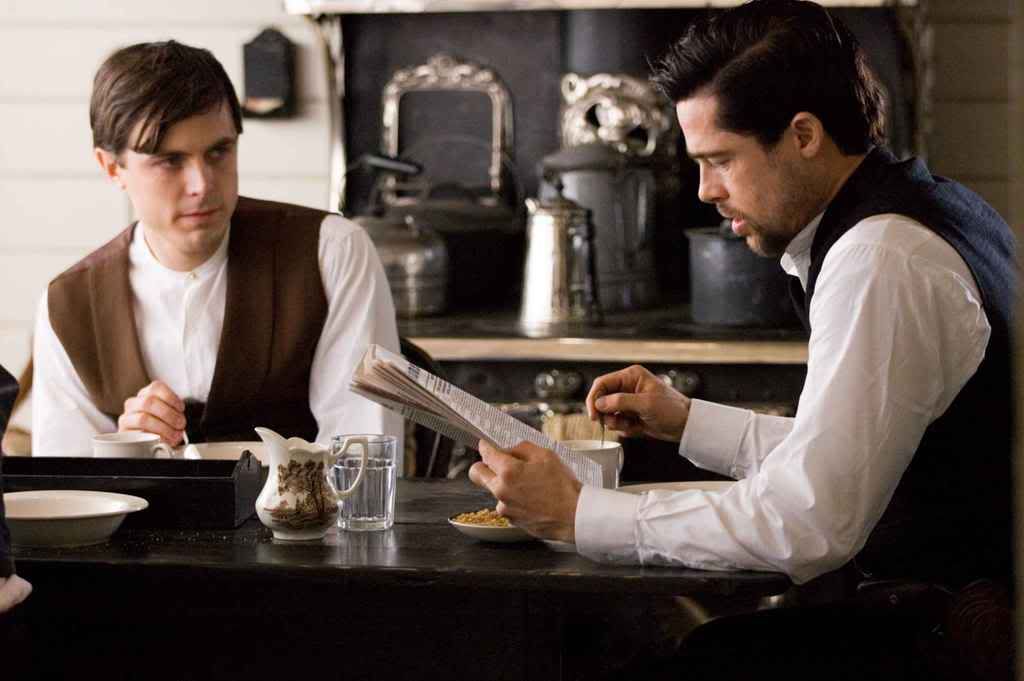
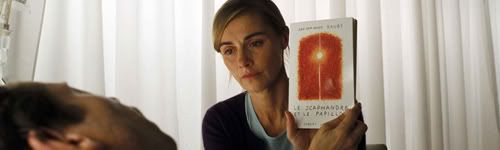
In the blue corner, we have The Diving Bell and the Butterfly, Atonement, Persepolis, No Country for Old Men and The Assassination of Jesse James by the Coward Robert Ford

In the red corner, we have Pan’s Labyrinth, The History Boys, Offside, Volver, and Red Road.

Now, for me, Diving Bell < Pan’s
Atonement = History Boys
Persepolis < Offside
No Country for Old Men < Volver
and
The Assassination of Jesse James by the Coward Robert Ford > Red Road

With three wins and a draw, 2006 takes it.

Monday, February 18, 2008

A Look ahead to Best Supporting Actress.

It’s half term and my computer at home keeps sporadically disallowing me from connecting to the Internet, so I don’t know how many of these I’ll be able to do this week. I will try my best though, I think I'll be fine.

Anyway.

The nominees:
- Cate Blanchett, I’m Not There.
- Ruby Dee, American Gangster
- Saoirse Ronan, Atonement
- Amy Ryan, Gone Baby Gone
- Tilda Swinton, Michael Clayton

How I did: 60%. I predicted Catherine Keener (buzz and other nominations swayed me) and Kelly Macdonald (blind faith.)

I haven’t seen Amy Ryan in Gone Baby Gone, so I can only give comments on 4 of the performances.

01. Saoirse Ronan, Atonement
Although I’ve whored and whored this performance many a time, it never gets old to talk about one of my favourite performances of the year, so let us recap: Saoirse RonaThe Beauty and the Skinny.n plays Briony Tallis, a self-proclaimed “writer” with a massive imagination. When she was younger, she had developed a crush on her family’s gardener, Robbie, which she believed to be love. Several years later, at 13, she witnesses Robbie and her sister Cecilia loitering around at the fountain, and this, along with a note that Robbie writes, sets off her imagination in the worst way.

Saoirse is… transcendent. There are few performances from young actresses that have really amazed me (Wei Minzhi in Not one Less, Ivana Baquero in Pan’s Labyrinth and Ana Torrent in The Spirit of the Beehive being some of the select few) but Ronan’s is one of them. From the very start of the film, where she runs excitedly to mummy to show off her new script, to the way she tries to direct Lola and her two brothers into acting, to the confused way she tells on Robbie, she’s got Briony down to a t - impulsive, a know-it-all, nosy, but essentially, just a child. Saoirse Ronan captures Briony’s flaws and mannerisms perfectly (her reaction at reading the c-word was hilarious), and, when I saw the more pathetic version of her later in the film, (Romola Garai in the “I am very very sorry…” scene kind of echoed Ronan when she thanked McAvoy for saving her life), I appreciated her performance even more. In Garai and Ronan we have a character who is still “just a kid”, who made a huge mistake, and, though Ronan’s selfish teenager didn’t know it, they would have to pay for it big-time.

She’s just wonderful, basically. I am both hugely jealous and in awe of 2007’s star in the making. With Emma Watson giving us so much eyebrow acrobatics and histrionics, Saoirse Ronan's subtle, haunting portrayal of Briony Tallis is exactly what cinema needs. A

^^ you knew I was just looking for an excuse to show my friend Hannah's picture again.

02. Cate Blanchett, I’m Not There.
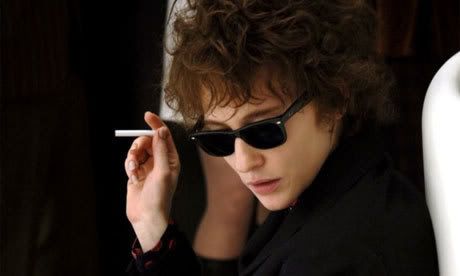
Before I saw this movie I was pretty sniffy toward Miss Blanchett for three reasons – 1) that she’d gotten nominated for her non-supporting overacting masterclass in Notes of a Scandal last year, 2) that she got nominated this year in Lead Actress for nothing but a rehash of a performance she did better a few years back and 3) that she was gonna be taking the Oscar off Saoirse. But, watching I’m Not There., I have to grudgingly concede that this performance is more than just the whole “woman playing man” gimmick; Cate is actually pretty good. She represents the artistic Bob Dylan, and, perversely, is probably the best out of all the “Bob Dylans” at well, playing Bob Dylan (though to be fair he was kinda androgynous during that era). Aside from all the obvious ticks and mannerisms, I think she portrayed Dylan’s emotions perfectly – he was twitchy and sarcastic, yet she still conveys a layer of vulnerability. So, who woulda thunk it? An actress I’ve been hating on all Oscar season, bungs up and impresses me with their craft! B+/A-.
03. Tilda Swinton, Michael Clayton
Although I still can’t see her as anything other than the White Witch off Narnia, Tilda Swinton plays a woman who tries to act like one of the big boys in the legal world, has sold her soul to the corporation, but actually can’t cope. Although I wasn’t bowled over by this performance, I still found Swinton, as ever, compelling to watch. B-

04. Ruby Dee, American Gangster
I’d hate to accuse Oscar of nominating someone out of pity or something… but that’s what it must be, because there was nothing memorable or special about Dee’s performance! With the plethora of talented supporting actresses this year, you bung this in?!?!?!?!?! I’m sorry, I know it must piss you all off by now, this phrase that I keep using, but, really: “Are you havin’ a laff?” E

So.
Who will win: Cate Blanchett.
Who deserves to win: Saoirse Ronan
Who deserved to get nominated:

Three performances, actually:
Charlotte Gainsbourg in I’m Not There
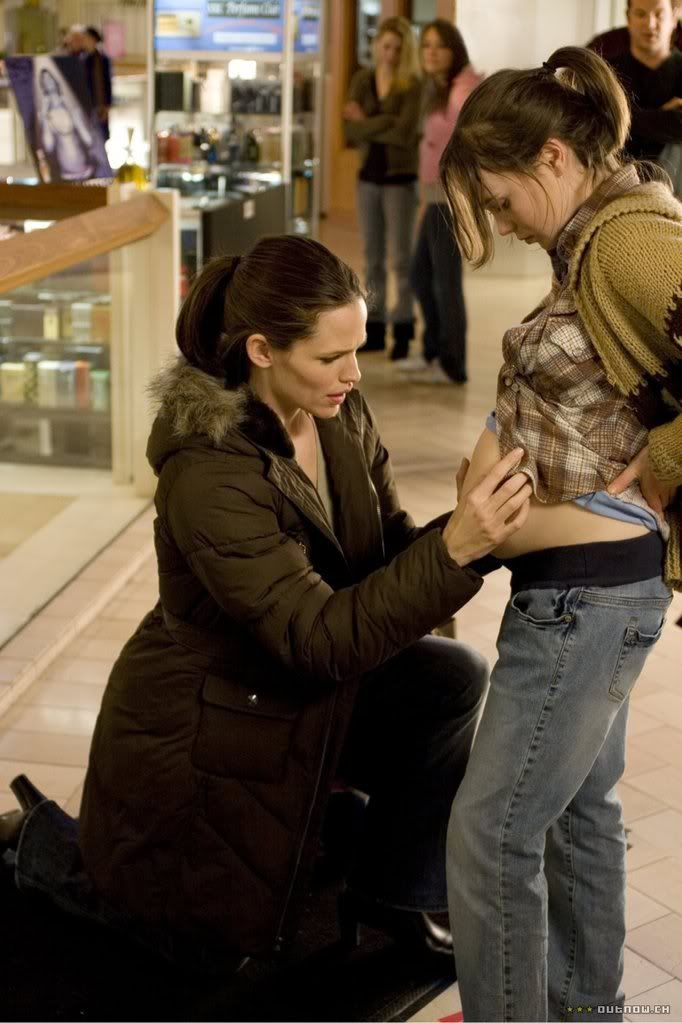
Jennifer Garner in Juno
&
Kelly Macdonald in No Country for Old Men

Also, a note about Romola Garai in Atonement, ‘cos I’ve been thinking about this for a while: -

I think I may have underrated her performance on original viewing. She was terrific in the scene with the French soldier, but in my original review I said that her delivery of the “I am very very sorry” line was “a bit wooden.” Well, thinking about it, I think she was meant to be!! It was meant to sound rehearsed, I think, like she’d planned how she was going to say it for the past 5 years… and then on the big occasion, she bottles it. There really was a lot more depth to that performance than I’d originally noted.

So, thinking about it, I think it’s been a wonderful year for Supporting Actresses.

Wednesday, February 13, 2008

A Look Ahead to Best Cinematography.

The nominees are:
The Assassination of Jesse James by the Coward Robert Ford, Roger Deakins
Atonement, Seamus McGarvey
The Diving Bell and the Butterfly, Janusz Kaminski
No Country for Old Men, Roger Deakins
There Will Be Blood, Robert Elswit

How I did: 100%. My only 100%! Yay.

Having watched three of these films last week, the cinematography is still fresh in my mind.

01. The Assassination of Jesse James
It’s double nominations for Shawshank Redemptioner Roger Deakins this year, and they have never been this deserved. Much of The Assassination of Jesse James is set outside, in beautiful, full landscapes with willowy wheat fields and Deakins absolutely goes to town with his camera, whether it be through changes in focus, rich colours, dazzling use of light sources, careful manipulations of time, or fade-outs. In some parts of the film, Deakins even blurrs the edges of the frame to make it resemble like an old photograph. And the train robbery scene is shot masterfully. Some of the key themes of the film are conveyed through the camerawork, one of the key examples being of Jesse James himself, being viewed through the “lens”, as a poetic myth, some kind of legend that he could never live up to. Brilliant art, and it made the film ever more poignant. A*.

02. Atonement
Atonement, with its pretty costumes and stunning sets is an absolute visual feast, but the cinematography is arguably one of the best technical aspects of the film. Capturing the mood of a wealthy 1930s household, cinematographer Seamus McGarvey’s first task was to convey the sweltering heat, which he did, through resourceful use of Christian Dior stockings over the lenses. Panning shots of Briony walking around the house as well as wide shots of the two sisters lying in the grass are amongst my favourites; they’re simple but beautiful. McGarvey manages to capture the beauty of Atonement in the grittier war scenes which included scenes of a bomber in flight reflected on the surface of an irrigation ditch. And of course, there’s that Dunkirk scene, which despite only taking two takes, probably took several months to choreograph. A.

= 03. No Country for Old Men
Another Roger Deakins work, and another film of a Western motif. Set in the sun-dried landscapes of 80’s, his cinematography perfectly illuminates the indifferent backdrop, portraying the Texas as a moral wasteland. The Coens are renowned for using cinematography to contribute to the mood and tension of their films, and Deakins does this here. The Devon-born Roger Deakins had been nominated 5 times before this year (for Fargo, The Shawshank Redemption, The Man Who Wasn’t There, Kundun and O Brother Where Art Thou?), but never won. If he doesn’t win this year for either Jesse James or this, there will be an assassination of and no country for the old men who voted… or something. (Basically, he needs an Oscar.) A-

= 03. The Diving Bell and the Butterfly
The filming of DB&B is beautiful through its dreamlike uses of colour which fitted in seamlessly with the music, contributing to the uplifting and inspirational feel of the film. Cinematographer Janusz Kaminski (a regular Steven Spielberg collaborator) took home the grand technical prize at Cannes for his innovative approach to the visual style of the film, which features shots from the POV of Bauby, through one eye, so we can experience what its like to have his physical cripplement. In doing so, the movie screen is rife with life and beauty, despite the seemingly depressing subject matter, illustrating the film’s key point – that you don’t need a healthy body to live life to its full. A-

= 03. There Will Be Blood
Although there wasn’t anything hugely flashy in There Will Be Blood, I really liked many of the symbolic images and shots. One I really liked though was the long tracking shot as he carries the injured H.W. to the building and we see him run away from the burning derrick. Tis all very intense. A-

In short, all five films were very deserved nominees. They were all stunning.

Who should win: The Assassination of Jesse James by the Coward Robert Ford
Who will win: No Country for Old Men
Who deserved to get nominated: no-one else aside from these 5. :D

Monday, November 19, 2007

I like.

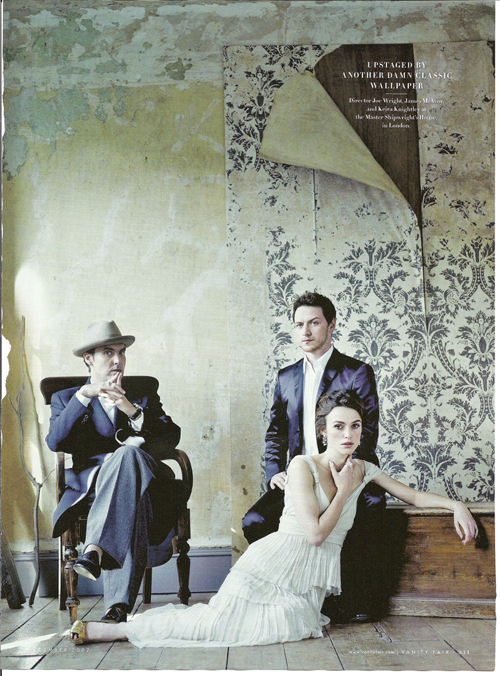
Vanity Fair's Atonement:

Banana.

^^Joe Wright, James McAvoy & Keira Knightley.
Saturday, November 17, 2007

For Your Consideration...

Well, there's 99 days to the Oscars and I'm trying to, er, atone for my lack of Oscar-relating blogging by doing lots now.

Atonement.

My own personal FYCs this year.

Film
Atonement
“Joe Wright and Working Title have made a film to be proud of. Amidst some incredible scenes (an extremely erotic library non-reading session between Robbie and Cecelia) as well as the fountain scene are amongst the many that will remain with viewers long after the credits have rolled. The quality and calibre of films that Working Title have turned out recently have been brilliant and Atonement ranks up there along with my personal favourites from them, Dead Man Walking and The Hudsucker Proxy. It is a wonderfully crafted, beautifully lush and immensely moving film that shows, above all, how storytelling can both destroy and heal.”

Actor
James McAvoy, for Atonement
“James McAvoy is the star of Atonement. In the Q&A that followed the screening of the film, director Joe Wright described Robbie as the highest form of a human being, and he is. Raised by a single mother, Robbie worked hard for everything in his life, but with success he is still a brilliantly warm and humble person. Even after he is put in the war to avoid staying in prison for longer, he does not whinge about it, but instead, gets through the day with the hope of seeing Cecelia guiding him through. James McAvoy plays this special individual with compassion and understanding. He has the accent and physicality of Robbie down to a T, but, more importantly, conveys his goodness, without ever having to resort to histrionics. McAvoy’s performance is a masterclass in subtle acting. In some pivotal scenes, it is actually his beautiful blue eyes that do the acting more than anything, and they speak more words than Briony’s ostentatious prose ever could.”

Actress
Tannishtha Chatterjee, for Brick Lane
“Chatterjee, the centrepiece of the movie, gives a performance of extreme sensitivity and intelligence. Playing Nazneen, a young woman from the Sylhet, Bangladesh, she is forced into an arranged marriage from a young age, from which she raises a family in the grim East End of London. Brick Lane is a film about a woman who is trapped, in her life, in love and in her Muslim religion, and Tannishtha Chatterjee’s raw performance is utterly heart-wrenching, more so, if we consider that she is a Hindu. ”

Supporting Actor
Rupert Grint, for Harry Potter and the Order of the Phoenix
“My darling Rupert is a joy. His ginger hair, large blue eyes, bumbling demeanour and spot-on comedy timing make him the true star of the show, and every scene that he features in benefits as a result of his appearance. Simply put, he is Godly.”

Supporting Actress
Saoirse Ronan, for Atonement
“As the young Briony, Saoirse Ronan is pitch-perfect, conveying her youthful innocence as well as whiny nosiness. Her sense of knowing about things she clearly doesn’t is infuriating, but Ronan prevents us from denouncing her entirely, reminding us that she is, after all, just a child. I have high hopes for her, and eagerly await her turn as Susie Salmon in 2008’s film adaptation of the atmospheric The Lovely Bones.”

Song
“Spider Pig”, from The Simpsons Movie
“Le Festin”, from Ratatouille

Friday, November 16, 2007

No Oscar predictions until now? And I call this a film blog?

Anyway, here are my current predictions for the nominations of the major categories:

BEST PICTURE
Atonement
Charlie Wilson’s War
The Kite Runner
No Country for Old Men
There Will Be Blood

BEST DIRECTOR
Joe Wright - Atonement
Ridley Scott - American Gangster
Joel and Ethan Coen - No Country for Old Men
Paul Thomas Anderson – There Will Be Blood
Mike Nichols - Charlie Wilson's War

BEST LEAD ACTOR
Daniel Day-Lewis - There Will Be Blood
James McAvoy - Atonement
Johnny Depp – Sweeney Todd
Emile Hirsch - Into the Wild
Ryan Gosling - Lars and the Real Girl

BEST LEAD ACTRESS
Marion Cotillard - La Vie en Rose
Ellen Page - Juno
Laura Linney - The Savages
Julie Christie - Away From Her
Nicole Kidman - Margot at the Wedding

BEST SUPPORTING ACTOR
Javier Bardem - No Country for Old Men
Russell Crowe - American Gangster
Casey Affleck - The Assasination of Jesse James
Hal Holbrook - Into the Wild
Philip Seymour Hoffman - Charlie Wilson's War

BEST SUPPORTING ACTRESS
Saoirse Ronan - Atonement (wishful thinking)
Cate Blanchett - I'm Not There
Jennifer Jason Leigh - Margot at the Wedding
Ruby Dee - American Gangster
Amy Adams - Charlie Wilson's War

BEST ORIGINAL SCREENPLAY
Diablo Cody - Juno
Brad Bird - Ratatouille
Tamara Jenkins - The Savages
Steven Knight - Eastern Promises
Todd Haynes & Oren Moverman – I’m not There

BEST ADAPTED SCREENPLAY
Christopher Hampton - Atonement
Joel and Ethan Coen - No Country for Old Men
Steven Zaillian - American Gangster
Paul Thomas Anderson - There Will Be Blood
Aaron Sorkin - Charlie Wilson's War

BEST ANIMATED FEATURE
Ratatouille
The Simpsons Movie
Persepolis

Monday, August 20, 2007

Film review: ATONEMENT (Joe Wright, 2007)

Britain’s bestselling author Ian McEwan is a wonderfully rich and articulate writer, but he has often struck me (and I know I'm probably alone here) as a man of too many words. Enduring Love, despite its unique and gripping plot, was overly descriptive, and even his recent novella, On Chesil Beach, could have done with being 50 pages shorter. I felt exactly the same way about Atonement when I first started reading it, there were too many “rhymes”, too many adjectives, to a point where it almost seem to obsess with the minutiae and try to hold the story back.

Then I realised that this time, it was intentional. Bringing the surprising turn of events that served the book so well onto the big screen was a huge challenge, but Joe Wright, who’s 2005 effort Pride & Prejudice ranked amongst one of the loveliest films of that year, was more than apt a man to do it: talented, engaging with his actors, focused and precise, he has given Atonement the big-screen fare, and more.