1. Aguirre, Wrath of God (Herzog) [yes]
2. Apocalypse Now (Coppola) [Meh]
3. Citizen Kane (Welles) [sooooooooooooo overrated and boring. Sorry, but it is!]
4. Dekalog (Kieslowski) [bah]
5. La dolce vita (Fellini) [masterpiece]
6. The General (Keaton) [Yeah, decent]
7. Raging Bull (Scorsese) [slightly overrated, imo]
8. 2001: A Space Odyssey (Kubrick) [I detest Kubrick, Lolita's his only acceptable film.]
9. Tokyo Story (Ozu) [yes]
10. Vertigo (Hitchcock) [yes]
My thoughts: "meh".
Wednesday, October 31, 2007


Tuesday, October 30, 2007

Friday, October 26, 2007

Thursday, October 25, 2007
"You know you love me. gossip girl. xoxo"
 I’ve been at a sleepover at a friend’s house for the past day and a bit, and she had the first five episodes of gossip girl downloaded, this American TV programme that “Manhattan’s elite” through their daily lives of school, boyfriends and
  partying. Based on the extremely popular novels by Cecily von Ziegesar, it revolves around Serena van der Woodsen, a former it girl and popular New York socialite who has been on hiatus for 6 months and returned to the city to be with her younger brother, who has just attempted suicide. However, coming back is never as easy as it seems, and she has more than a bit of explaining to do to her best friend Blair, whom she left without a goodbye. [The reason for Serena’s departure is revealed soon enough, don’t worry.]
gossip girl could be likened to The O.C. for several reasons - the protagonists are rich, almost numb with money, and for that it is initially quite
 difficult to connect with them. Josh Schwartz produced both. Blair, in particular (played well by Leighton Meester) is highly reminiscent of Summer in her early stages in The O.C., judging people purely by their riches and social status, and perfectly willing to use people for her own means. Serena is a lot more likeable, and Blake Lively (who played the besotted teenager on sports camp in The Sisterhood of The Travelling Pants) plays her well. The supporting cast also include more than its fair share of attractive male stars, from the actors who play Nate, to Dan, to Serena’s younger brother (don’t know any of their names.)
To add to the eye candy, the clothes are an absolute feast. Here are kids who
 clearly know what colours are slimming and what not to wear, because in every frame of the show, everyone looks spectacular. The music is good too, with usages of “The Way I Am” from Timbaland and “Happy Ending” from Mika to contribute to the hip, happening style of the show.
 But the icing on the cake is the narration from the eponymous gossip girl, an anonymous writer of a blog that dishes all the dirt on everyone in Manhattan. Voiced with a biting scathe by Veronica Mars’ Kristen Bell, you hold on to every word she says. And honestly, this show is everything an aspiring property-owner-in-Chelsea looks for, it has fashion, it has scandal, it has cute lads, and it even has moments of poignancy.
So, yeah. When this show gets aired in the UK, I recommend it. C’est très très chic!
Tags:
 gossip girl,
  blake lively,
  fashion,
  new york,
  class,
  haute couture.
And to end with, some icons for today.










Tuesday, October 23, 2007
Explore the varied ways in which Rose Tremain presents the situation and its possible impact on the reader. You should support your answer with close reference to the text.
The entire passage contains just one scene, and contains a balance of dialogue and descriptions. It begins with an ominous description describing Celia “wrapped up in a cloak”, as “her long hair fell loose on her face, like a curtain”. These images have connotations of darkness and suffering, and foreshadows the atmospheric qualities of the scene that are to follow. By using images of a “lighted candle” and descriptions of the coldness, Tremain effectively draws in the reader and creates an ambiance of ambiguity as to the events and speech that is to follow.
Celia speaks to the narrator in whispers of “great urgency” and tells him that “Your bird is dying”, which accentuates to the bleak atmosphere already created. We learn from Celia that the narrator is a physician, and that only he can save the bird. This contributes to the sense of danger, and we realise that the narrator is integral to the plot.
We are made aware of the time period when we learn that the narrator “forgot to wind [his] timepiece”, as well as the fact that he works for the King. Tremain hints at tension when she writes, “if I had been the King, I would have had a diversity of clocks to choose from”. The narrator writes this in brackets perhaps because it is an obvious fact, yet he chooses to state it anyway, which could be a sign of resentment or even mocking at the King’s wealth, as opposed to the squalor in which the narrator lives in, where the night is “so cold that [he] can see [his] breath by the candle.” This image contributes to the sense of discomfort in which the narrator lives, and the candle imagery is sustained from before. This alerts the reader to perhaps later danger, as the fire has links with danger.
The word “candle” is repeated again, as Celia is said to have “fled” from the room. Again, this sustains the tension and pace of the extract, as well as prefiguring the upcoming violence. We are then taken into the narrators thoughts regarding Celia, “I wondered why in the world Celia had been looking at my bird in this peculiar hour”, and we as the reader feel that something is not right. However, when the narrator reveals “I was more puzzled by this than filled with worry for my bird”, we come to realise that the narrator has strong feelings towards Celia, and in this passage, there will be three players – Merivel, Celia, and the nightingale.
In describing the nightingale, Tremain uses language of vulnerability to evoke the pain felt by it, such as “fallen over” and “feebly flapping.” It can be argued that like the poor conditions in which Merivel lives, the bird is equally poor and weak. However, amidst the bird suffering, “legs in the air”, it is interesting that the narrator’s focus is with Celia, “I was so utterly astonished that she should appear to care so much”, showing that his feelings for her overtake his regard for the pet. This adds an extra psychological edge to the passage, and it is interesting that in a time where his pet is suffering, the narrator feels “astonishment” as his primary emotion.
Tremain successfully conveys the suffering felt by the nightingale through the usage of colour imagery, especially in showing how it was and how it is – the “clouded” eye, usually “bright” and “marigold”. Further compassion is felt for the nightingale when the narrator asserts, “I know not what is to be done”, which suggests the futility in attempting to aid him.
Merivel, who concentrates on his own shortcomings, “Starved of sleep”, he seems to show a surprising lack of interest in the nightingale, and this is contrasted starkly to Celia’s urgent worry – “Then try something! Get out your instruments!”
Ironically, it is Celia’s urgency that inspires Merivel to save the nightingale. We as the audience see his thought processes, “If I could save the bird, I would no doubt earn a little respect from her”, and his intentions are apparent. It is now that the action truly begins, and Tremain marks this with a litany of objects- “I returned with a strong physic, a senna and rhubarb preparation, some linen bandages.”
Tremain marks out Celia as different from the stereotypes of women in the time when she shows her stronger qualities – “Celia did not flinch.” It is likely that these are the type of qualities that drew the narrator to her. In the description of saving the bird, the imagery of light is uses once again – “we worked by three candles”, to accentuate the “shadowy” conditions in which Merivel is working in, as well as, perhaps his “shadowy” knowledge of the bird’s physiology. This creates a sense of impending doom, not only for the fate of the bird, but for Merivel as well.
Bizarrely, the narrator comments that “A stranger entering the room would have assumed that we were at cards or dice”, as the tension conjured in this scene could easily be present in a game of cards or dice. However, the scenario here is completely different. The nightingale is described to “kicked its legs”, but calms itself once within Celia’s hands. This suggests that she bears peaceful characteristic, which again could be something that attracts her to the narrator.
Celia also reveals that “[she] is concerned for the bird, for if it should die, [she] cannot but feel some misfortune that may follow”, which shows her to be practical. This also raises the question to the audience as to what the misfortune may be.
Celia believes the nightingale to be a gift from the King, when we learn that it was in fact a bribe, and not from the King. This somewhat justifies the apathetic attitude that Merivel has shown the nightingale. Merivel interestingly chooses not to correct Celia about where the nightingale comes from, because he “did not wish Celia to desert me in the middle of it”, showing that our previous suspicions about Merivels’ feelings toward Celia may indeed be correct.
Tremain then reveals some technical information about the scene, and the description of the blood-letting is highly evocative, with short, staccato words describe the process. The lack of hope felt by Merivel and Celia is apparent, through words such as “anxiety”, “piteously” and “exceedingly tragic.” By now, the audience should feel pathos toward both the nightingale and the two attending it. A particularly haunting image used is “Celia picked it up and held it close to her face, trying to feel its heartbeat.” This evokes ideas of birth and a human dying, and intensifies the tragedy of this scene.
After this attempt to save the nightingale comes time for reflection. Celia asks Merivel a question that clearly touches a nerve, and it leads to a heated conversation, so much so that Merivel tells us “I shall spare you the little discourse that followed”, one that left him “deeply vexed.” However, even in his feelings of annoyance, he “does not wish to wound Celia.”
Autumn time, and the living is cold.
Films watched this week:

A Common Thread
When I first saw this film in 2003, I completely fell head-over-h eels in love with Marlon Brando, the art of acting, and movies. Having studied the text for English Literature AS and had to sit an exam on it (“Stella is also a victim. Discuss.”), I feel I know the text quite well, and am truly amazed with what Brando did with Stanley.
Breakfast at Tiffany’s
We had my favourite actor, now let’s talk about my favourite ac tress, the Goddess that is Audrey Hepburn. Breakfast at Tiffany’s has everything that I love about New York, Henry Mancini's score is a classic (Audrey singing Moon River is one of the most iconic moments in cinema), and 99% of the supporting players are likeable (Mickey Rooney is my second least favourite Rooney of all time; his racist “performance” is a joke.)
The film hasn't aged well (it is not acceptable to have a Caucasian play an East Asian character, and a stereotype of one at that), but is still worth watching for Hepburn's movie-star charisma alone.
Far from Heaven
I love the lushness and richness of the set design so much in this movie that I have to watch this every October to relate to the falling leaves and glorious colours in the movie.
Autumn Sonata

A Common Thread
Claire Moutiers is an emotional, unusual teenager with a head full of curly pre-Raphaelite hair a serious predilection for embroidery. She also happens to be pregnant. The film follows her journey as she gives up her humdrum job in a supermarket to work for famous sequinist Mme. Mélikian, who is mourning the loss of her son.
Directed with meticulous detail by Éléonore Faucher and with gorgeous scenes of the two women working on a piece of embroidery, A Common Thread is quite slow-moving and definitely goes with its own pace, but it’s a seriously beautiful movie encompassing themes such as maternity, creation and loneliness.
Directed with meticulous detail by Éléonore Faucher and with gorgeous scenes of the two women working on a piece of embroidery, A Common Thread is quite slow-moving and definitely goes with its own pace, but it’s a seriously beautiful movie encompassing themes such as maternity, creation and loneliness.
Lola Naymark is terrific as the mercurial, feisty lead, and you find yourself rooting for her throughout, even if you don’t know her that well. And there is an unbelievably erotically charged scene where the love interest (played by Thomas Laroppe) kisses a highly pregnant Claire near a tree which is pretty much my highlight of the whole movie.
A Streetcar Named DesireWhen I first saw this film in 2003, I completely fell head-over-h
 eels in love with Marlon Brando, the art of acting, and movies. Having studied the text for English Literature AS and had to sit an exam on it (“Stella is also a victim. Discuss.”), I feel I know the text quite well, and am truly amazed with what Brando did with Stanley.
Actually, in many ways, he presented Stanley in too nice a light; in several scenes he lacks the edge of maliciousness that Stanley Kowalski had in the novel and his choice to tell Mitch seems more about Blanche’s history seems to genuinely be out of concern for his mate rather than a personal vindication, but, considering all the moral codes of the 50s, Elia Kazan really manages to stay as true to the play as he can, and the film contains two of the best male and female performances of all time.
Breakfast at Tiffany’s
We had my favourite actor, now let’s talk about my favourite ac
 tress, the Goddess that is Audrey Hepburn. Breakfast at Tiffany’s has everything that I love about New York, Henry Mancini's score is a classic (Audrey singing Moon River is one of the most iconic moments in cinema), and 99% of the supporting players are likeable (Mickey Rooney is my second least favourite Rooney of all time; his racist “performance” is a joke.)
The film hasn't aged well (it is not acceptable to have a Caucasian play an East Asian character, and a stereotype of one at that), but is still worth watching for Hepburn's movie-star charisma alone.
Far from Heaven
I love the lushness and richness of the set design so much in this movie that I have to watch this every October to relate to the falling leaves and glorious colours in the movie.
Technicals aside, this is also one of my favourite movies for emotional reasons; the story of Cathy Whitaker, the “perfect wife” whose life slowly falls apart in front of her as she discovers of her husband’s interest in men is heartbreaking as it is engrossing, and Julianne Moore transcends as Cathy, giving one of my favourite performances of all time.
She’s a joy to watch from start to finish, and in particular, he scenes 24’s Dennis Haysbert tingle erotically with the unsaid. Oh, and Elmer Bernstein’s score is beautifully evocative of the era.
She’s a joy to watch from start to finish, and in particular, he scenes 24’s Dennis Haysbert tingle erotically with the unsaid. Oh, and Elmer Bernstein’s score is beautifully evocative of the era.
Autumn Sonata
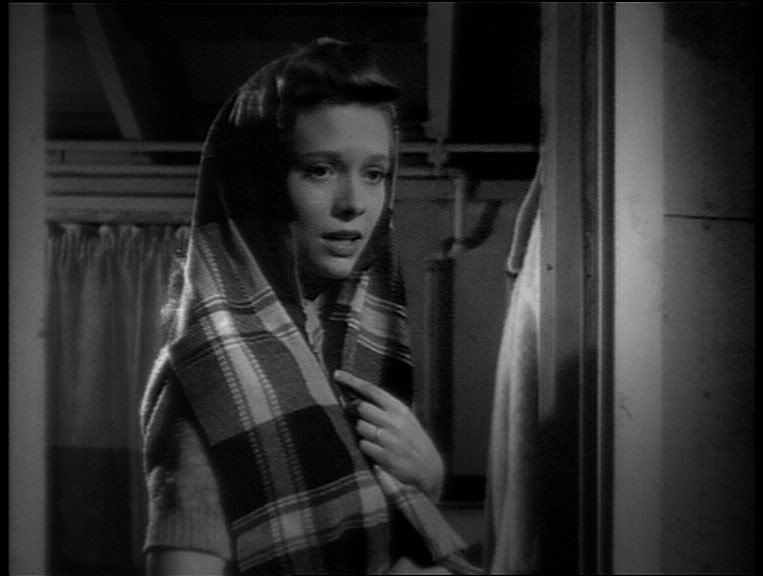
A truly magnificent film, and I love it more than many if Bergman’s more critically acclaimed ones, such as The Seventh Seal. A powerful and almost unbearable tense drama on family, inadequacy and playing the piano, Liv Ullman is so incredible that she even outshines Ingrid Bergman.
The late night showdown between the mother (Bergman) and Ullman (daughter) is one of the most painful and draining scenes in cinema history.
Monday, October 22, 2007
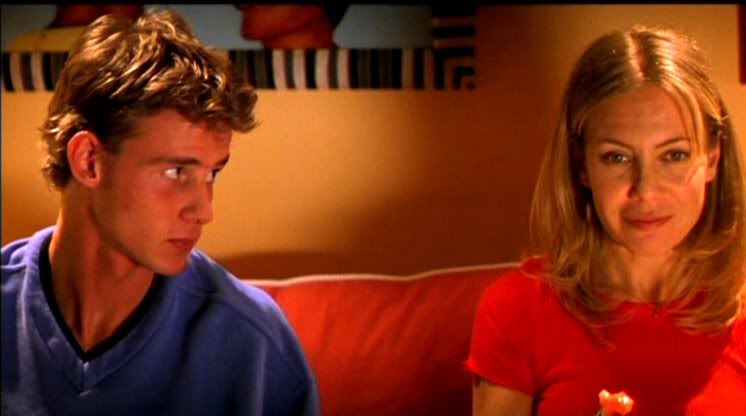
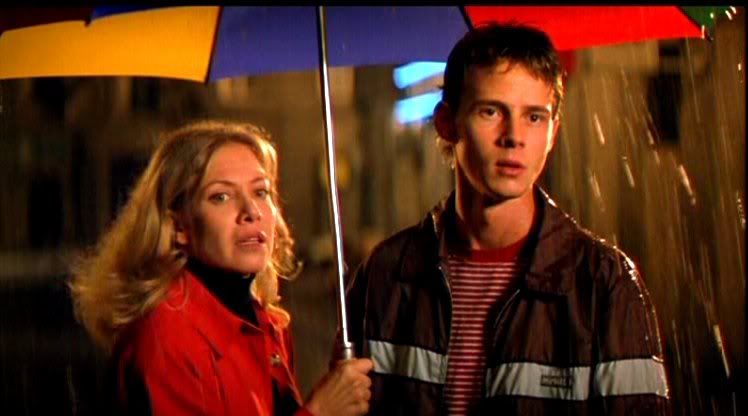
49. The Road Home (Zhang Yimou, 1999).

Speaking of reasons to be proud to be Chinese, just watch this. Have you ever seen someone so talented?
P.S. - I still want my readers' Facebooks!
Grumpy Autumn Evening Corner: Slough by John Betjeman.

I'm currently not in a very good mood, so I just thought I'd post one of the finest pieces of bitchery in poetry: Slough by John Betjeman, as read with disgust by The Office's David Brent:
Come friendly bombs and fall on Slough!
It isn't fit for humans now,
There isn't grass to graze a cow.
Swarm over, Death!
Come, bombs and blow to smithereens
Those air -conditioned, bright canteens,
Tinned fruit, tinned meat, tinned milk, tinned beans,
Tinned minds, tinned breath.
Mess up the mess they call a town-
A house for ninety-seven down
And once a week a half a crown
For twenty years.
And get that man with double chin
Who'll always cheat and always win,
Who washes his repulsive skin
In women's tears:
And smash his desk of polished oak
And smash his hands so used to stroke
And stop his boring dirty joke
And make him yell.
But spare the bald young clerks who add
The profits of the stinking cad;
It's not their fault that they are mad,
They've tasted Hell.
It's not their fault they do not know
The birdsong from the radio,
It's not their fault they often go
To Maidenhead
And talk of sport and makes of cars
In various bogus-Tudor bars
And daren't look up and see the stars
But belch instead.
In labour-saving homes, with care
Their wives frizz out peroxide hair
And dry it in synthetic air
And paint their nails.
Come, friendly bombs and fall on Slough
To get it ready for the plough.
The cabbages are coming now;
The earth exhales.
· Slough, one of Betjeman’s most cutting poems, was published in 1937 in the collected works Continual Dew. Slough was becoming increasingly industrial and some housing conditions were very cramped. In willing the destruction of Slough, Betjeman urges the bombs to pick out the vulgar profiteers but to spare the bald young clerks. However, on the centenary of the poet's birth, Betjeman’s daughter apologised for the poem. Candida Lycett-Green said her father "regretted having ever written it". During her visit, Ms Lycett-Green presented Mayor of Slough David MacIsaac with a book of her father's poems. In it was written: "We love Slough"
· Slough is written in the conventional quatrain scheme, with rhyme pattern of AAAB. Betjeman’s usage of three rhymes in each stanza adds an ironic lyrical quality to a poem describing a place as “Hell” and the shorter fourth line of each stanza acts as a conclusion of the quatrain. These are shorter, using hard words such as “belch” and “yell” to add impact. Slough is divided into ten stanzas, showing there is plenty of information to convey about this area.
· Whereas many of Betjeman’s poems are about his love of topography, Slough expresses his hatred of this area. This is apparent from the beginning, where he asks for “friendly bombs, come fall on Slough.” The juxtaposition of “friendly” and “bombs” are ironic, and paint a Hellish image, of the area, and this is sustained with words like “Death”, “mess” and “Hell.” Furthermore, the imagery of the poem is violent and horrific, “They’ve tasted Hell”, and “dry it in the synthetic air”, further adding to the negativity of Slough.
· War imagery is rife, from the repetition of “tinned”: “tinned fruit, tinned milk, tinned bins”, which creates the image of rationing and constriction. Betjeman then personifies this with “tinned minds, tinned breath”, implying that it is not just the area that is bad, but the people too. His social satire continues when he mentions “that man with the double chin” and “the bald young clerks”, further continuing the “repulsive” description of Slough. The people, like the place, are conveyed violently, with repetitions of “smash”.
· However, Betjeman does not just satirise the appearances of these people, but also their personalities. They tell “boring dirty jokes” and are by his description “mad”, showing that the terrible state of Slough reflects in its residents, and that “it isn’t fit for humans now.” He describes the residents as uncultured, “It’s not their fault they do not know the birdsong from the radio”, and uses vulgar words to reflect the vulgarity of their actions, “belch” and even implies misogyny, “Who washes his repulsive skin in women’s tears.” Furthermore, Betjeman offers sarcastic sympathy to the “cheats” by repetition of the phrase “It’s not their fault”, which suggest the opposite, and that his derogatory comments to the people are deserved.
· Many of the key words and phrases in Slough deal with the superficial, which could be used to convey his dislike of change. He describes the banal actions with derision, “with care/Their wives frizz out peroxide” and “bogus Tudor bars”, which, relating to “tinned minds”, show the people’s inability to appreciate the better aspects of life. Instead of “see the stars”, they “belch.”
· The final stanza repeats the first line of the poem to accentuate the awfulness of it. When the last line, “the earth exhales” is completed, the reader feels the full sense of the “Hell” and repulsion that has been apparent throughout.
Sigh. I miss English Literature.

Saturday, October 20, 2007



Wednesday, October 17, 2007



Sunday, October 14, 2007

Monday, October 01, 2007
A critical analysis of Slough by John Betjeman

picture of Rooney Mara that is nothing to do with article but putting it in because a commenter said I needed more photos
Slough is written in the conventional quatrain scheme, with rhyme pattern of AAAB. Betjeman’s usage of three rhymes in each stanza adds an ironic lyrical quality to a poem describing a place as “Hell” and the shorter fourth line of each stanza acts as a conclusion of the quatrain. These are shorter, using hard words such as “belch” and “yell” to add impact. Slough is divided into ten stanzas, showing there is plenty of information to convey about this area. The poem has a regular form, reflecting Betjeman’s decisiveness and determination to have the place blown to “smithereens”.
Whereas many of Betjeman’s poems are about his love of topography, Slough expresses his hatred of this area. This is apparent from the beginning, where he asks for “friendly bombs, come fall on Slough.” The juxtaposition of “friendly” and “bombs” are ironic, and paint a Hellish image, of the area, and this is sustained with words like “Death”, “mess” and “Hell.” Furthermore, the imagery of the poem is violent and horrific, “They’ve tasted Hell”, and “dry it in the synthetic air”, further adding to the negativity of Slough.
War imagery is rife, from the repetition of “tinned”: “tinned fruit, tinned milk, tinned bins”, which creates the image of rationing and constriction. Betjeman then personifies this with “tinned minds, tinned breath”, implying that it is not just the area that is bad, but the people too. His social satire continues when he mentions “that man with the double chin” and “the bald young clerks”, further continuing the “repulsive” description of Slough. The people, like the place, are conveyed violently, with repetitions of “smash”.
However, Betjeman does not just satirise the appearances of these people, but also their personalities. They tell “boring dirty jokes” and are by his description “mad”, showing that the terrible state of Slough reflects in its residents, and that “it isn’t fit for humans now.” He describes the residents as uncultured, “It’s not their fault they do not know the birdsong from the radio”, and uses vulgar words to reflect the vulgarity of their actions, “belch” and even implies misogyny, “Who washes his repulsive skin in women’s tears.” Furthermore, Betjeman offers sarcastic sympathy to the “cheats” by repetition of the phrase “It’s not their fault”, which suggest the opposite, and that his derogatory comments to the people are deserved.
Many of the key words and phrases in Slough deal with the superficial, which could be used to convey his dislike of change. He describes the banal actions with derision, “with care/Their wives frizz out peroxide” and “bogus Tudor bars”, which, relating to “tinned minds”, show the people’s inability to appreciate the better aspects of life. Instead of “see the stars”, they “belch.”
Interestingly for Betjeman, there are no contrasts in tones of the poem, with only a hateful voice used throughout, which adds to how strongly Betjeman’s hatred of the place is. However, there are contrasts in scope. Whereas the first and last stanzas represent the macrocosm of Slough, speaking of it generally, the rest of the poem looks at individual examples. By doing this, Betjeman adds to the idea that all of Slough is “dirty” and that there are no redeeming qualities to it,
Although Betjeman never once explicitly says that he despises Slough, it is still apparent that he does, through many of his descriptions and anecdotes, as well as calling for a bomb to “blow to smithereens” the area. The usage of this colloquial word suggest that he does not have enough of an opinion of Slough to use a better word.
The final stanza repeats the first line of the poem to accentuate the awfulness of it. It ends with a note of calmness, as if Betjeman has imagined the bomb to have gone off. When the last line, “the earth exhales” is completed, the reader feels the full sense of the “Hell” and repulsion that has been apparent throughout.
--
If you found this interesting and would like access to my other GCSE and A-level English lit essays, email me at lemon_and_lime7@hotmail.com
Subscribe to:
Posts (Atom)