Monday, November 26, 2007


Sunday, November 25, 2007
Friday, November 23, 2007


Monday, November 19, 2007
Sunday, November 18, 2007
Saturday, November 17, 2007
For Your Consideration...
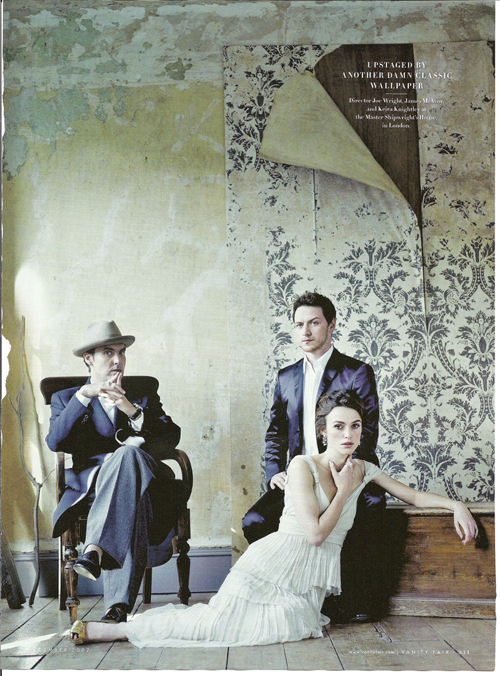
Well, there's 99 days to the Oscars and I'm trying to, er, atone for my lack of Oscar-relating blogging by doing lots now.

My own personal FYCs this year.
Film
Atonement
 “Joe Wright and Working Title have made a film to be proud of. Amidst some incredible scenes (an extremely erotic library non-reading session between Robbie and Cecelia) as well as the fountain scene are amongst the many that will remain with viewers long after the credits have rolled. The quality and calibre of films that Working Title have turned out recently have been brilliant and Atonement ranks up there along with my personal favourites from them, Dead Man Walking and The Hudsucker Proxy. It is a wonderfully crafted, beautifully lush and immensely moving film that shows, above all, how storytelling can both destroy and heal.”
Actor
James McAvoy, for Atonement
“James McAvoy is the star of Atonement. In the Q&A that followed the screening of the film, director Joe Wright described Robbie as the highest form of a human being, and he is. Raised by a single mother, Robbie worked hard for everything in his life, but with success he is still a brilliantly warm and humble person. Even after he is put in the war to avoid staying in prison for longer, he does not whinge about it, but instead, gets through the day with the hope of seeing Cecelia guiding him through. James McAvoy plays this special individual with compassion and understanding. He has the accent and physicality of Robbie down to a T, but, more importantly, conveys his goodness, without ever having to resort to histrionics. McAvoy’s performance is a masterclass in subtle acting. In some pivotal scenes, it is actually his beautiful blue eyes that do the acting more than anything, and they speak more words than Briony’s ostentatious prose ever could.”
Actress
Tannishtha Chatterjee, for Brick Lane
“Chatterjee, the centrepiece of the movie, gives a performance of extreme sensitivity and intelligence. Playing Nazneen, a young woman from the Sylhet, Bangladesh, she is forced into an arranged marriage from a young age, from which she raises a family in the grim East End of London. Brick Lane is a film about a woman who is trapped, in her life, in love and in her Muslim religion, and Tannishtha Chatterjee’s raw performance is utterly heart-wrenching, more so, if we consider that she is a Hindu. ”
Supporting Actor
Rupert Grint, for Harry Potter and the Order of the Phoenix
“My darling Rupert is a joy. His ginger hair, large blue eyes, bumbling demeanour and spot-on comedy timing make him the true star of the show, and every scene that he features in benefits as a result of his appearance. Simply put, he is Godly.”
Supporting Actress
Saoirse Ronan, for Atonement
“As the young Briony, Saoirse Ronan is pitch-perfect, conveying her youthful innocence as well as whiny nosiness. Her sense of knowing about things she clearly doesn’t is infuriating, but Ronan prevents us from denouncing her entirely, reminding us that she is, after all, just a child. I have high hopes for her, and eagerly await her turn as Susie Salmon in 2008’s film adaptation of the atmospheric The Lovely Bones.”
Song
“Spider Pig”, from The Simpsons Movie
“Le Festin”, from Ratatouille

My own personal FYCs this year.
Film
Atonement
 “Joe Wright and Working Title have made a film to be proud of. Amidst some incredible scenes (an extremely erotic library non-reading session between Robbie and Cecelia) as well as the fountain scene are amongst the many that will remain with viewers long after the credits have rolled. The quality and calibre of films that Working Title have turned out recently have been brilliant and Atonement ranks up there along with my personal favourites from them, Dead Man Walking and The Hudsucker Proxy. It is a wonderfully crafted, beautifully lush and immensely moving film that shows, above all, how storytelling can both destroy and heal.”
Actor
James McAvoy, for Atonement
“James McAvoy is the star of Atonement. In the Q&A that followed the screening of the film, director Joe Wright described Robbie as the highest form of a human being, and he is. Raised by a single mother,
 Robbie worked hard for everything in his life, but with success he is still a brilliantly warm and humble person. Even after he is put in the war to avoid staying in prison for longer, he does not whinge about it, but instead, gets through the day with the hope of seeing Cecelia guiding him through. James McAvoy plays this special individual with compassion and understanding. He has the accent and physicality of Robbie down to a T, but, more importantly, conveys his goodness, without ever having to resort to histrionics. McAvoy’s performance is a masterclass in subtle acting. In some pivotal scenes, it is actually his beautiful blue eyes that do the acting more than anything, and they speak more words than Briony’s ostentatious prose ever could.”
Actress
Tannishtha Chatterjee, for Brick Lane
“Chatterjee, the centrepiece of the movie, gives a
 performance of extreme sensitivity and intelligence. Playing Nazneen, a young woman from the Sylhet, Bangladesh, she is forced into an arranged marriage from a young age, from which she raises a family in the grim East End of London. Brick Lane is a film about a woman who is trapped, in her life, in love and in her Muslim religion, and Tannishtha Chatterjee’s raw performance is utterly heart-wrenching, more so, if we consider that she is a Hindu. ”
Supporting Actor
Rupert Grint, for Harry Potter and the Order of the Phoenix
“My darling Rupert is a joy. His ginger hair, large blue eyes, bumbling demeanour and spot-on comedy timing make him the true star of the show, and every scene that he features in benefits as a result of his appearance. Simply put, he is Godly.”
Supporting Actress
Saoirse Ronan, for Atonement
“As the young Briony, Saoirse Ronan is pitch-perfect, conveying her youthful innocence as well as whiny nosiness. Her sense of knowing about things she clearly doesn’t is infuriating, but Ronan prevents us from denouncing her entirely, reminding us that she is, after all, just a child. I have high hopes for her, and eagerly await her turn as Susie Salmon in 2008’s film adaptation of the atmospheric The Lovely Bones.”
Song
“Spider Pig”, from The Simpsons Movie
“Le Festin”, from Ratatouille
Friday, November 16, 2007
The use of Setting in A Streetcar Named Desire
 In the opening stage directions of the play, the area in New Orleans where Elysian Fields is located is said to have a “raffish charm”. This quality of have a disreputable charm can be see in Stanley and his friends, as well as everyone living there, including the Negro woman who starts off the play with her scandalous anecdote. Immediately, the sleazy, open, yet friendly atmosphere of Elysian Fields is established. The people here all seem to know on another, and, if tested by an intruder, their loyalties would be with each other.
The buildings are described lyrically by Williams, from the “tender blue, turquoise” sky to the smells of “bananas and coffee,” and he creates a very unique setting for the play, a place that sounds appealing despite the poorness. The poorness is nonetheless apparent, where the stairs are “faded,” and the people live in very close proximity. The crowded set-up evokes a sense of claustrophobia, and there may be little space for an extra person.
The name of the area, Elysian Fields, is misleading, as it conjures up ideas of a paradise, with the “white columns” that Blanche was accustomed to in Belle Reve. Blanche is therefore very surprised to find Elysian Fields as how it is, as it would have gone against her illusions of waterfalls and white columns, as well as the grand, spacious place where she had lived. The poorness of this area is highlighted when she arrives, wearing a white suit, necklace and pearl earrings, and her dress shows that the place she had dressed for does not live up to her expectations. Her shock upon seeing it, “They mustn’t have understood” hints at the conflict between her background, culture and class, and that of the people who live her, which will come later.
 When Blanche enters Stanley and Stella’s home, she is even less impressed, as there is little space for two people, let alone a third. This again foreshadows future tensions due to the claustrophobia and cramped conditions. The place is not described favourably, and Eunice’s claim that “when it’s cleaned, it’s real sweet” is not taken seriously by Blanche. Blanche does not think this place is good enough for her, and this will be one of the main things to annoy Stanley about her later. When Blanche finally meets Stella, she slips out, “Never in my worst dreams could I picture! Only Poe!”, rudely implying that their home is like something in a horror story. By doing this, she is insulting Stanley as well as Stella, and she will continue to insult Stanley on a range of things, which will eventually lead to her downfall.
No Oscar predictions until now? And I call this a film blog?
Anyway, here are my current predictions for the nominations of the major categories:
BEST PICTURE
Atonement
Charlie Wilson’s War
The Kite Runner
No Country for Old Men
There Will Be Blood
BEST DIRECTOR
Joe Wright - Atonement
Ridley Scott - American Gangster
Joel and Ethan Coen - No Country for Old Men
Paul Thomas Anderson – There Will Be Blood
Mike Nichols - Charlie Wilson's War
BEST LEAD ACTOR
Daniel Day-Lewis - There Will Be Blood
James McAvoy - Atonement
Johnny Depp – Sweeney Todd
Emile Hirsch - Into the Wild
Ryan Gosling - Lars and the Real Girl
BEST LEAD ACTRESS
Marion Cotillard - La Vie en Rose
Ellen Page - Juno
Laura Linney - The Savages
Julie Christie - Away From Her
Nicole Kidman - Margot at the Wedding
BEST SUPPORTING ACTOR
Javier Bardem - No Country for Old Men
Russell Crowe - American Gangster
Casey Affleck - The Assasination of Jesse James
Hal Holbrook - Into the Wild
Philip Seymour Hoffman - Charlie Wilson's War
BEST SUPPORTING ACTRESS
Saoirse Ronan - Atonement (wishful thinking)
Cate Blanchett - I'm Not There
Jennifer Jason Leigh - Margot at the Wedding
Ruby Dee - American Gangster
Amy Adams - Charlie Wilson's War
BEST ORIGINAL SCREENPLAY
Diablo Cody - Juno
Brad Bird - Ratatouille
Tamara Jenkins - The Savages
Steven Knight - Eastern Promises
Todd Haynes & Oren Moverman – I’m not There
BEST ADAPTED SCREENPLAY
Christopher Hampton - Atonement
Joel and Ethan Coen - No Country for Old Men
Steven Zaillian - American Gangster
Paul Thomas Anderson - There Will Be Blood
Aaron Sorkin - Charlie Wilson's War
BEST ANIMATED FEATURE
Ratatouille
The Simpsons Movie
Persepolis
BEST PICTURE
Atonement
Charlie Wilson’s War
The Kite Runner
No Country for Old Men
There Will Be Blood
BEST DIRECTOR
Joe Wright - Atonement
Ridley Scott - American Gangster
Joel and Ethan Coen - No Country for Old Men
Paul Thomas Anderson – There Will Be Blood
Mike Nichols - Charlie Wilson's War
BEST LEAD ACTOR
Daniel Day-Lewis - There Will Be Blood
James McAvoy - Atonement
Johnny Depp – Sweeney Todd
Emile Hirsch - Into the Wild
Ryan Gosling - Lars and the Real Girl
BEST LEAD ACTRESS
Marion Cotillard - La Vie en Rose
Ellen Page - Juno
Laura Linney - The Savages
Julie Christie - Away From Her
Nicole Kidman - Margot at the Wedding
BEST SUPPORTING ACTOR
Javier Bardem - No Country for Old Men
Russell Crowe - American Gangster
Casey Affleck - The Assasination of Jesse James
Hal Holbrook - Into the Wild
Philip Seymour Hoffman - Charlie Wilson's War
BEST SUPPORTING ACTRESS
Saoirse Ronan - Atonement (wishful thinking)
Cate Blanchett - I'm Not There
Jennifer Jason Leigh - Margot at the Wedding
Ruby Dee - American Gangster
Amy Adams - Charlie Wilson's War
BEST ORIGINAL SCREENPLAY
Diablo Cody - Juno
Brad Bird - Ratatouille
Tamara Jenkins - The Savages
Steven Knight - Eastern Promises
Todd Haynes & Oren Moverman – I’m not There
BEST ADAPTED SCREENPLAY
Christopher Hampton - Atonement
Joel and Ethan Coen - No Country for Old Men
Steven Zaillian - American Gangster
Paul Thomas Anderson - There Will Be Blood
Aaron Sorkin - Charlie Wilson's War
BEST ANIMATED FEATURE
Ratatouille
The Simpsons Movie
Persepolis
Wednesday, November 14, 2007
Saturday, November 10, 2007
Kazan wrote, “Blanche is a woman of enormous emotional variety, imperious, self-assertive to fluttering helplessness, feverish gaiety to pathetic terr
How much can we sympathise with Blanche in A Streetcar Named Desire?
(essay I wrote for English Literature AS last year, one of my favourites.)

One of the considered titles originally for Streetcar was The Moth, and from the opening introduction to Blanche from the stage directions, “her delicate beauty must avoid a strong light”, an image of a fluttering, self-destructive moth is painted. During the course of the play, elements of her personality reveal her to be vulnerable, such as her alcoholism and history of dependence on men. But she is also a highly flawed character that the audience has difficulty siding with. These dual components to her personality are what make her so interesting, although at times, it can be hard to sympathise with her.
From the start, Blanche manages to annoy other characters as well as the audience with her actions and speech, for example in the insensitive way she criticizes Stella’s house to the way she speaks about Stanley, making her appear self-indulgent, especially as she continues to patronize her sister, “You messy child!” She further loses the approval of the audience through her how egocentric she is, always managing to turn the topic of conversation to herself, “I want you to look at my figure!” However, at the same time, her low self-esteem is clear in how she frequently fishes for a compliment, “Would it be possible to think I was once considered attractive?” showing that her fragility in her seeking of approval. This humanizes her character somewhat, and when she tells Stella, “you’re all I’ve got in the world,” her isolation and loneliness is felt.
Stanley, on the other hand, has plenty of friends and “acquaintances,” all of which he is able to use to his advantage, where he does. He is the antithesis of the Southern gentleman that Blanche is accustomed to. When he takes his shirt off in front of her, Blanche is clearly uncomfortable, and will continue to take offence to a lot of his behaviour through the rest of the play. The audience can partially sympathise with Blanche for this, but her actions make it difficult to take sides for either character, such as her constantly calling Stanley “unrefined”. Whereas Stella has made an adjustment to his behaviour, she knows that her sister won’t, “Try not to compare him with the men we went out with at him.” She is right, and it would be very different for Blanche to get used to this change.
When more is revealed about Blanche’s past, the audience are able to sympathise with her more. She had married young, but with tragic consequences, and it is clear that the events still haunt her, from her emotional exhaustion when discussing it. The sense of mystery surrounding Blanche’s peculiar arrival in New Orleans takes on a sinister taint, and Blanche’s reluctance to be in bright light calls attention to this mysterious nature. Bright light, whether from a naked bulb or the midday sun, reveals Blanche’s true age. She can claim to be a woman of twenty-five in semi-darkness, but the glare of sharp light reveals a woman who has seen more, suffered more, and aged more. In addition, probing questions and honest speech function as a metaphorical light that threatens to reveal Blanche’s past and her true nature.
Whilst we can sympathise somewhat with Blanche about the cultural differences between her and Stanley, she does nothing to make the situation easier. Stanley tells her not to call him a “Polack”, yet she continues to. This could be either conscious or done unconsciously, but either way, it leads the audience to feel Stanley’s frustration at Blanche. His anger at her is further shown in his short sentences, “Huh.” Stanley feels his privacy invaded and wishes for things to be back the way they were, “It’s gonna be all right again between you and me the way it was.” Furthermore, Blanche forever bathes and drinks, treating the house as her own, which riles Stanley, “soaking in the hot tub?” especially if we consider that Blanche does not earn an income, and Stanley is the sole provider. Some argue that whereas Stanley did destroy Blanche through the rape, she was also responsible for destroying Stella and Stanley’s home life during her stay.
However, the main thing done by Blanche to invoke hatred in Stanley is her constant trying to tell Stella that he is not good enough for her. This is felt strongly in Scene Four, where Stanley eavesdrops on Blanche describing him as “common” and “an animal”. Here, the audience hears this insults through Stanley’s ears, and the dislike towards Blanche is felt by us. Part of Blanche’s disparaging comments about Stanley are out of concern for her sister – she had in the previous scene witness her being attacked by him, but the patronizing and judgemental way in which Blanche speaks about Stanley, “But the only way to live with such a man is to go to bed with him!” makes it apparent that she is hurting Stella, and that she is unlikely to take her sister’s advice. In Scene Four, Williams uses dramatic irony to make us feel fear for Blanche, and when Stella hugs Stanley in Blanche’s full view, this also prefigures the end of the play, where Stella will choose her husband over her sister.
A lot of Blanche’s questionable behaviour loses the sympathy of the audience. When she throws herself at the young newspaper boy, Blanche reveals her hypocrisy—she is lustful underneath her genteel, morally upright façade that she creates, “The Hotel Flamingo is not the sort of establishment that I would dare be seen in!” Blanche condemns Stanley and Stella’s purely sexual relationship, but we see that her urges are every bit as strong as Stella’s, yet, as this involves somebody underage, less appropriate. Suddenly, compared with Blanche’s behaviour, Stella’s love life looks healthy and wholesome.
At the same time, however, something of Blanche’s hypocrisy makes her a figure of pity. She is creating the image in the hope of finding a suitor. She is a liar, and knows she is; but never in malice “I never lied inside my heart.” She lied to Mitch because she could never believe that he would truly love her for what she actually is, which makes her lies more tragic. She is obviously someone who is used to and needs sheltering and kindness and is not equipped to deal with ugliness and naked truths (such as the naked light bulbs), so her lies can be understood, if not justified.
And the component in Blanche’s personality is her refusal to face reality, “I don’t realism – I want fantasy!” Stanley is the opposite, practical and realistic. Stella finally sides with Stanley, just because of lack of courage but because the social constrictions of the time made her with baby so she was dependent on him. Blanche’s impracticalities in even taking notes – she uses an eyeliner and writes on paper are humorous, but also highlight how strongly fantasy features in her ideas. Someone once said, “Blanche is a lovely, damaged flower who is not equipped to deal with the harsh realities of life, namely Stanley Kowalski.” Stanley crushes all her delusions, but it can be argued that Blanche’s final dignified exit shows that he has not destroyed all of her self-respect, and for that, she can be seen as a heroine.
Tishler said, “The plot is simple. It moves from hope and frustration to destruction and despair.” This plot shape is similar to that of a tragedy, and Blanche is the tragic hero. At the end of Scene 6, there seems to be an opening for redemption, “Sometimes – there’s a God – so quickly!” but immediately in the next scene, Mitch has left Blanche. Stanley is the cause of this destruction. Blanche is left practically alone, and when she tries to justify her actions to Mitch, by explaining how much he meant to her, “a cleft in the rock” he still casts her aside, “You’re not clean enough to bring into the house with my mother.” By the end of Scene Nine, as she gives up hope, she begins to lose her grip on reality as well.
But of course the ultimate act of tragedy for Blanche is the rape. Throughout the course of the play, Stanley has destroyed many of the things she holds dear, including her relationship with Mitch, but the rape is the worst. In this scene, the plastic theatre is apparent to enhance the paranoia and emotional exhaustion felt by Blanche, such as the shadows of “lurid and menacing form.” This could emulate the fear that she has come to feel of Stanley. In this scene, jungle imageries are rife, accentuating Williams’ “survival of the fittest” theme of the play. In A Streetcar Named Desire, Blanche simply isn’t “fit” enough, and will be devoured and destroyed by the Stanleys of the world.
Sympathy is felt for Blanche in the final scene through Mitch. He lashes out at Stanley angrily, betraying his uneasiness, and showing that he still cares for her. He is unable to concentrate on the game when he hears Blanche’s voice, although several weeks have passed since their previous meeting. He, like many of the audience, blames Stanley for interfering with a relationship that should have been left alone, but then he collapses in ineffectual sobs. Mitch fails by realizing too late the vulnerable beauty of Blanche and thus, he is left as lonely and alone as Blanche.
Blanche tells Stanley “deliberate cruelty is unforgivable.” Whilst Stanley has done some deliberately cruel things – giving Blanche the train ticket on her birthday, the rape, Blanche has not. She has found love in wrong places, lied to people, and made some bad decisions, but she has never been deliberately cruel. Blanche’s entire world was destroyed when her husband killed himself - something that she entirely blames on herself. She spends her life trying to expiate herself from this sin, yet, after arriving at Elysian Fields, her life is just made worse by Stanley. Blanche was someone who was “ahead of her time” in her strong passion, but, in her sexual encounters, never found true love, and was ultimately lead to insanity by her desire. For this reason, I feel a huge amount of sympathy for her.
(essay I wrote for English Literature AS last year, one of my favourites.)
One of the considered titles originally for Streetcar was The Moth, and from the opening introduction to Blanche from the stage directions, “her delicate beauty must avoid a strong light”, an image of a fluttering, self-destructive moth is painted. During the course of the play, elements of her personality reveal her to be vulnerable, such as her alcoholism and history of dependence on men. But she is also a highly flawed character that the audience has difficulty siding with. These dual components to her personality are what make her so interesting, although at times, it can be hard to sympathise with her.
From the start, Blanche manages to annoy other characters as well as the audience with her actions and speech, for example in the insensitive way she criticizes Stella’s house to the way she speaks about Stanley, making her appear self-indulgent, especially as she continues to patronize her sister, “You messy child!” She further loses the approval of the audience through her how egocentric she is, always managing to turn the topic of conversation to herself, “I want you to look at my figure!” However, at the same time, her low self-esteem is clear in how she frequently fishes for a compliment, “Would it be possible to think I was once considered attractive?” showing that her fragility in her seeking of approval. This humanizes her character somewhat, and when she tells Stella, “you’re all I’ve got in the world,” her isolation and loneliness is felt.
Stanley, on the other hand, has plenty of friends and “acquaintances,” all of which he is able to use to his advantage, where he does. He is the antithesis of the Southern gentleman that Blanche is accustomed to. When he takes his shirt off in front of her, Blanche is clearly uncomfortable, and will continue to take offence to a lot of his behaviour through the rest of the play. The audience can partially sympathise with Blanche for this, but her actions make it difficult to take sides for either character, such as her constantly calling Stanley “unrefined”. Whereas Stella has made an adjustment to his behaviour, she knows that her sister won’t, “Try not to compare him with the men we went out with at him.” She is right, and it would be very different for Blanche to get used to this change.
When more is revealed about Blanche’s past, the audience are able to sympathise with her more. She had married young, but with tragic consequences, and it is clear that the events still haunt her, from her emotional exhaustion when discussing it. The sense of mystery surrounding Blanche’s peculiar arrival in New Orleans takes on a sinister taint, and Blanche’s reluctance to be in bright light calls attention to this mysterious nature. Bright light, whether from a naked bulb or the midday sun, reveals Blanche’s true age. She can claim to be a woman of twenty-five in semi-darkness, but the glare of sharp light reveals a woman who has seen more, suffered more, and aged more. In addition, probing questions and honest speech function as a metaphorical light that threatens to reveal Blanche’s past and her true nature.
Whilst we can sympathise somewhat with Blanche about the cultural differences between her and Stanley, she does nothing to make the situation easier. Stanley tells her not to call him a “Polack”, yet she continues to. This could be either conscious or done unconsciously, but either way, it leads the audience to feel Stanley’s frustration at Blanche. His anger at her is further shown in his short sentences, “Huh.” Stanley feels his privacy invaded and wishes for things to be back the way they were, “It’s gonna be all right again between you and me the way it was.” Furthermore, Blanche forever bathes and drinks, treating the house as her own, which riles Stanley, “soaking in the hot tub?” especially if we consider that Blanche does not earn an income, and Stanley is the sole provider. Some argue that whereas Stanley did destroy Blanche through the rape, she was also responsible for destroying Stella and Stanley’s home life during her stay.
However, the main thing done by Blanche to invoke hatred in Stanley is her constant trying to tell Stella that he is not good enough for her. This is felt strongly in Scene Four, where Stanley eavesdrops on Blanche describing him as “common” and “an animal”. Here, the audience hears this insults through Stanley’s ears, and the dislike towards Blanche is felt by us. Part of Blanche’s disparaging comments about Stanley are out of concern for her sister – she had in the previous scene witness her being attacked by him, but the patronizing and judgemental way in which Blanche speaks about Stanley, “But the only way to live with such a man is to go to bed with him!” makes it apparent that she is hurting Stella, and that she is unlikely to take her sister’s advice. In Scene Four, Williams uses dramatic irony to make us feel fear for Blanche, and when Stella hugs Stanley in Blanche’s full view, this also prefigures the end of the play, where Stella will choose her husband over her sister.
A lot of Blanche’s questionable behaviour loses the sympathy of the audience. When she throws herself at the young newspaper boy, Blanche reveals her hypocrisy—she is lustful underneath her genteel, morally upright façade that she creates, “The Hotel Flamingo is not the sort of establishment that I would dare be seen in!” Blanche condemns Stanley and Stella’s purely sexual relationship, but we see that her urges are every bit as strong as Stella’s, yet, as this involves somebody underage, less appropriate. Suddenly, compared with Blanche’s behaviour, Stella’s love life looks healthy and wholesome.
At the same time, however, something of Blanche’s hypocrisy makes her a figure of pity. She is creating the image in the hope of finding a suitor. She is a liar, and knows she is; but never in malice “I never lied inside my heart.” She lied to Mitch because she could never believe that he would truly love her for what she actually is, which makes her lies more tragic. She is obviously someone who is used to and needs sheltering and kindness and is not equipped to deal with ugliness and naked truths (such as the naked light bulbs), so her lies can be understood, if not justified.
And the component in Blanche’s personality is her refusal to face reality, “I don’t realism – I want fantasy!” Stanley is the opposite, practical and realistic. Stella finally sides with Stanley, just because of lack of courage but because the social constrictions of the time made her with baby so she was dependent on him. Blanche’s impracticalities in even taking notes – she uses an eyeliner and writes on paper are humorous, but also highlight how strongly fantasy features in her ideas. Someone once said, “Blanche is a lovely, damaged flower who is not equipped to deal with the harsh realities of life, namely Stanley Kowalski.” Stanley crushes all her delusions, but it can be argued that Blanche’s final dignified exit shows that he has not destroyed all of her self-respect, and for that, she can be seen as a heroine.
Tishler said, “The plot is simple. It moves from hope and frustration to destruction and despair.” This plot shape is similar to that of a tragedy, and Blanche is the tragic hero. At the end of Scene 6, there seems to be an opening for redemption, “Sometimes – there’s a God – so quickly!” but immediately in the next scene, Mitch has left Blanche. Stanley is the cause of this destruction. Blanche is left practically alone, and when she tries to justify her actions to Mitch, by explaining how much he meant to her, “a cleft in the rock” he still casts her aside, “You’re not clean enough to bring into the house with my mother.” By the end of Scene Nine, as she gives up hope, she begins to lose her grip on reality as well.
But of course the ultimate act of tragedy for Blanche is the rape. Throughout the course of the play, Stanley has destroyed many of the things she holds dear, including her relationship with Mitch, but the rape is the worst. In this scene, the plastic theatre is apparent to enhance the paranoia and emotional exhaustion felt by Blanche, such as the shadows of “lurid and menacing form.” This could emulate the fear that she has come to feel of Stanley. In this scene, jungle imageries are rife, accentuating Williams’ “survival of the fittest” theme of the play. In A Streetcar Named Desire, Blanche simply isn’t “fit” enough, and will be devoured and destroyed by the Stanleys of the world.
Sympathy is felt for Blanche in the final scene through Mitch. He lashes out at Stanley angrily, betraying his uneasiness, and showing that he still cares for her. He is unable to concentrate on the game when he hears Blanche’s voice, although several weeks have passed since their previous meeting. He, like many of the audience, blames Stanley for interfering with a relationship that should have been left alone, but then he collapses in ineffectual sobs. Mitch fails by realizing too late the vulnerable beauty of Blanche and thus, he is left as lonely and alone as Blanche.
Blanche tells Stanley “deliberate cruelty is unforgivable.” Whilst Stanley has done some deliberately cruel things – giving Blanche the train ticket on her birthday, the rape, Blanche has not. She has found love in wrong places, lied to people, and made some bad decisions, but she has never been deliberately cruel. Blanche’s entire world was destroyed when her husband killed himself - something that she entirely blames on herself. She spends her life trying to expiate herself from this sin, yet, after arriving at Elysian Fields, her life is just made worse by Stanley. Blanche was someone who was “ahead of her time” in her strong passion, but, in her sexual encounters, never found true love, and was ultimately lead to insanity by her desire. For this reason, I feel a huge amount of sympathy for her.
Friday, November 09, 2007

The Spirit of the Beehive & Ana’s Belief.
In participation with the Film & Faith blogathon going on over at Strange Culture, I thought I’d give my thoughts about Victor Erice's beautiful The Spirit of the Beehive, one of my personal favourites.

The Spirit of the Beehive is a haunting look at childhood in t he setting is a small Castilian village in the early 1940s, as echoes of the Spanish Civil War can still be felt throughout the countryside. Following a town-hall showing of James Whale's Frankenstein, Ana starts seeing the world in a completely different light. She cannot get the movie out of her mind, and discusses it constantly with her older, more cynical sis Isabel. As the audience, we wonder if she’s using her imagination to escape the grim realities of life. Beehive is an intriguing look at innocence and what it takes to believe. It then gets rather weird as Isabel makes Ana believe that Frankenstein is a spirit who can come alive if the human belief in him is strong enough, using their religious beliefs to do so. According to her, only those who truly have faith can do this.
In a sense, Beehive could be construed as a film about blind faith. Ana shields here eyes when watching the movie of Frankenstein, and in the classroom she puts the eyes on the wooden body and Isabel tells Ana to close her eyes and if she believes in the monster he will come. Isabel shares none of the whimsical fancy of her sister; whereas Ana tries to escape life's harshnesses, Isabel is obsessed with it. Now, the monster; Frankenstein's monster is used in this film is quite enigmatic in both image and figure. And even if we don't believe the story being told, it's enough that we believe in Ana's belief.

The Spirit of the Beehive is a haunting look at childhood in t
 he setting is a small Castilian village in the early 1940s, as echoes of the Spanish Civil War can still be felt throughout the countryside. Following a town-hall showing of James Whale's Frankenstein, Ana starts seeing the world in a completely different light. She cannot get the movie out of her mind, and discusses it constantly with her older, more cynical sis Isabel. As the audience, we wonder if she’s using her imagination to escape the grim realities of life. Beehive is an intriguing look at innocence and what it takes to believe. It then gets rather weird as Isabel makes Ana believe that Frankenstein is a spirit who can come alive if the human belief in him is strong enough, using their religious beliefs to do so. According to her, only those who truly have faith can do this.
In a sense, Beehive could be construed as a film about blind faith. Ana shields here eyes when watching the movie of Frankenstein, and in the classroom she puts the eyes on the wooden body and Isabel tells Ana to close her eyes and if she believes in the monster he will come. Isabel shares none of the whimsical fancy of her sister; whereas Ana tries to escape life's harshnesses, Isabel is obsessed with it. Now, the monster; Frankenstein's monster is used in this film is quite enigmatic in both image and figure. And even if we don't believe the story being told, it's enough that we believe in Ana's belief.
As well as dextriously weaving lines about the mundane quality of life, the Franco era and a young girl's overpowering belief,
 The Spirit of the Beehive is a technically stunning movie with some individual, unforgettable shots - Ana and her sister walking down a hill. Ana standing transfixed by the railway line as a train comes near. The family sitting at dinner without a word being spoken, and a lingering silence and stillness. Isabel and Ana making faces over soup. And Ana Torrent’s performance, led by her large eyes, wouldn't be out of place in a stain-glassed window. Goddessly.
P.S. - if you liked this, see Pan's! There are definitely echoes of The Spirit of the Beehive in Pan's Labyrinth.
Wednesday, November 07, 2007

Tuesday, November 06, 2007
Actors with commonly mispronounced names.
Off the top of my head…
Joaquin Phoenix (H-Wakeen)
Kirsten Dunst (Keersten)
Saoirse Ronan (Seersha)
Ioan Gruffudd (Yo-an Griffith)
Jake & Maggie (Jyllenhall)
Gael Garcia Bernal (Ga-yel Gar-thia Bernal)
Ralph Fiennes (Rafe Fines)
Cillian Murphy (Killian)
Jonathan Rhys-Meyers (Rees-meyers)
If you can think of any others please add them in the comments and I’ll update the main blog entry!
Joaquin Phoenix (H-Wakeen)
Kirsten Dunst (Keersten)
Saoirse Ronan (Seersha)
Ioan Gruffudd (Yo-an Griffith)
Jake & Maggie (Jyllenhall)
Gael Garcia Bernal (Ga-yel Gar-thia Bernal)
Ralph Fiennes (Rafe Fines)
Cillian Murphy (Killian)
Jonathan Rhys-Meyers (Rees-meyers)
If you can think of any others please add them in the comments and I’ll update the main blog entry!
Subscribe to:
Posts (Atom)