Showing posts with label There Will Be Blood. Show all posts

Wednesday, September 28, 2016

Dual roles blogathon: Paul Dano in THERE WILL BE BLOOD (2007)


Slight spoilers for TWBB ahead, so, I would recommend you don’t read this piece if you haven’t seen the movie!

--

Paul Thomas Anderson's modern masterpiece, There Will Be Blood, is a fascinating tale of Daniel Plainview (Daniel Day-Lewis)'s journey as an oil tycoon, and the strategic moves he make during his ascent to the top. His rise to power is both facilitated and impeded by two characters, both played by Paul Dano: twins Paul and Eli Sunday.

The decision to cast Dano as both the Sunday brothers (and ergo, making them twins) wasn't originally in director P.T. Anderson's plans. Kel O'Neill was initially pencilled in to play the mild-mannered brother Paul. But the actor was too intimidated by the director, and pulled out at the last minute, causing some creative problem-solving in the form of casting Dano as both the characters, and making them twins.

Dano's role as Paul Sunday consists of a brief appearance, but is crucial to the plot. At the start of the film, he seeks out Plainview to alert him about a lucrative area to drill for oil in. Dano plays Paul Sunday with a meek, child-like quality. It helps that Paul Dano has one of those ageless faces. He is 32 but could pass for a teenager, a helpful trait to have in the ageist world of Hollywood casting, but one Dano capitalises on only to embark on projects that fulfil him, rather than chase the next money train, which he could easily do.

(Incidentally, for the movie nerds out there, Dano playing a character called Paul in this film means that both Daniel Day-Lewis and Dano play characters with the same Christian names as themselves). #Symmetry

With Paul Sunday's tip, Daniel Plainview makes his way to Little Boston, California to scout out this piece of land. It requires buying acres from the Sunday family, where Eli Sunday, an ambitious preacher, drives a hard bargain for his father's land. He wants whatever Daniel’s offering, and $5,000 for Eli's church. 

Plainview takes an instant dislike to Eli Sunday and his sanctimonious ways, finding the way Eli constantly badgers him about his debt to the church infuriating. Eli's compelling sermons also draw workers away from working on Plainview's ranch and towards his church.

But the thing about Eli that Daniel Plainview loathes the most is that he can read Eli like a magazine, and he sees himself in him. Both men are con artists, who will do and say whatever the audience wants to hear to get what they want. They just go about it in different ways. Plainview sees Eli as a low-rent version of himself, and Eli knows that. Eli isn’t buying what Plainview is selling, and vice versa.

There Will Be Blood undoubtedly belongs to Daniel Day-Lewis, who won a well-deserved Best Actor Oscar for his mesmeric, unforgettable performance. It truly is a spectacular, charismatic piece of acting, and what impressed me most about it is that DDL, like other actors who I admire (Saoirse Ronan, Rooney Mara), does 95% of his emoting with his pupils.

But it his scenes with Dano which linger the memory the most, the way the men interact and play off each other, being spurred on by their mutual dislike, makes the power struggle between them in There Will Be Blood so gripping. The fact that the Dano was pretty much ignored come Awards Season 2008, with only BAFTA acknowledging his excellence in TWBB with a nomination, makes me sad.


The baptism scene, where Eli makes a spectacle of exorcising the past from Daniel, humiliating him, shouting at and even slapping at Plainview to exorcise the bad spirits from him. It's a hypnotic and darkly comic scene, and I definitely noticed a rise in Dano's character's spirits, like he was mirroring the mannerisms of the man he was preaching at. The way he goads Plainview about his Achilles Heel - his son - illustrated that, in that scene at least, Eli had the control over him, and he was going to make the most of it.

Because Dano plays both the Sunday brothers, some film-goers have wondered if they were supposed to be the same character pretending to be two people, particularly as you never see both of them on screen at the same time. But I read Paul and Eli Sunday as unambiguously, two different people. Eli's rant at his father about his 'stupid son Paul', as well as the final scene, where Daniel lauds over Eli how he paid Paul off and how is brother is a winner, and he, a loser, pretty much put that to bed.

Nonetheless, having the same actor play two different roles does have an inherent element of confusion and trickery. The kind of odd cinematic game you wouldn’t put past Paul Thomas Anderson, who’s offbeat Punch-Drunk Love teased out a fine serious turn from Adam Sandler, of all people. If anyone can turn the tables and pull the rug from underneath you, it’s P.T. Anderson.

I've got a lot of time for Paul Dano, who constantly surprises me with his off-kilter acting choices. I squeed with delight when I spotted him playing the fictional embodiment of the Tolstoy in the BBC’s War and Peace this year (my brother was watching).

The fact that he's not a conventional Hollywood heartthrob yet has still done very well for himself in a predominantly superficial industry is a testament to his talent (incidentally, this is precisely the reason why I idolise Jonah Hill, even if the two men’s acting styles are quite different), and I like how Dano pursues film roles for the art, rather than the money. I also dig that he doesn’t thirst for awards like some (tho, seriously. Just because he doesn't strive for recognition doesn't excuse him being passed over by the Award bodies for his work in this movie).

There Will Be Blood ranks as one of his finest performances, and certainly the best film he's appeared in. Of Dano’s upcoming projects, I'm most psyched for his writing & directorial debut, where he will direct his Prisoners co-star Jake Gyllenhaal in a tale of a relationship falling apart. I will be first in the queue to see it at the cinemas.

Godspeed, Mr. Dano. Cinema needs more auteurs like you.

--

This post is my entry in Christina Wehner's blogathon about Dual Roles in movies. Head on over to read other fabulous articles from bloggers on actors who have played more than one role in a film!


Wednesday, January 12, 2011

Language. Sex. Violence. Other?

I don’t think I need to tell you about my weird little obsessive compulsive obsession with film ratings and what film gets classified what. For example, I found it dead interesting that Paul Thomas Anderson’s There Will Be Blood originally got a 12A in the UK, then the distributors themselves actually asked for the rating of the film to be lifted to a 15 (for that scene where Daniel Day-Lewis attacks Paul Dano). I really loved that they did this; I watched the film when it was a 15, and although I doubt many under-12s would fancy watching a film like that with their parents, the memory of watching films like King Kong and The Dark Knight with a bunch of boisterous chavs in the audience, almost ruining said films for me, is almost too much. So I respect that the distributors of There Will Be Blood went against the grain in appealing film ratings (usually, as in the case of films like Chicago and The Da Vinci Code, the distributors ask for the film to be down-rated (usually from an 15 to a 12), to broaden the audience and hence revenue.) It’s very refreshing to see in one case, that the distributors cared more about getting the right people to watch their film, not caring a jot about how much/little their film made.

Photobucket

I’m writing this entry mainly about two 2010 films, both produced by the Weinstein Corporation, both tipped for Oscar nominations. The first, The King’s Speech, is one of the front-runners. Starring Colin Firth, Geoffrey Rush and Helena Bonham Carter, it tells the story of King George VI of the House of Windsor and how, through the guidance of his maverick speech therapist, he manages to overcome his stammer. I’m yet to see the film, but I just know I’ll adore it; I welled up at the trailers alone and it just seems to be the kind of inspirational, funny British movie that sits very well with the House of Bung. This film drew particular attention for its MPAA and BBFC ratings, both of which were appealed by the Weinsteins; in the former case they were unsuccessful and the film stayed an R, in the latter they succeeded and the film went down from a 15 to a 12. This film was a curious case, because the reason it originally got the 15-rating was due to, ironically enough, 15 uses of the f-word. Now, BBFC are usually quite rigid in their treatment of the f-word; say it once or twice in a film that’s already in 12A territory, fine (for example, The Tourist, The Social Network), say it thrice or more when the film is already cutting the fine line between a 12A and a 15, and it could well be the f-bomb that broke the camel’s back (many feel that Slumdog Millionaire, though vaguely disturbing at points, was chiefly rated a 15 due to the four or five uses of the f-word, in Hindi and in English.) Thus, by just looking at statistics, by all intents and purposes, The King’s Speech ought to be rated 15, fair and square. However, the case for appeal in this situation is that all 15 uses of the f-word came in one word, and, as indicated by the film warning that the BBFC have on the film poster, the word is not used aggressively (Made in Dagenham, which probably contains around 15 uses of the f-word, merits its 15 because many of those usages were angrily said), not directed sexually, but rather, in the context of speech therapy. It’s certainly a bit different. By keeping it a 15, they would have deprived quite a substantial audience from watching the film, and, unlike There Will Be Blood, The King’s Speech strikes me as the sort of film that a wide range of ages would want to watch. Bearing in the mind that the rest of the film is apparently harmless, I think the BBFC got this one right. A 12A seems its correct rating, and the MPAA should follow suit and down-rate it to a PG-13.

The other film is as contentious over the rating, but this time it is not about a few curse words. Blue Valentine, starring Ryan Gosling and Michelle Williams, charts the dysfunctional and ultimately shattering relationship between their characters Dean and Cindy. It's all very "love will tear us apart, again", and the film intercuts the decline of their marriage with earlier scenes of bliss together, and, unsurprisingly, sex is an integral part of the film. It is sex that is the cause for contention here; the film originally got an NC-17, which baffled director Derek Cianfrance, Ryan Gosling and the Weinsteins themselves. Apparently it is one emotionally charged oral sex scene (man-on-woman) that got the NC-17 rating, and Ryan Gosling was quoted to have questioned the decision, comparing Blue Valentine’s NC-17 to Black Swan’s R-rating, when both films had licky-licky. This situation of a film getting bumped up from an R to an NC-17 due to a scene of male-on-female head has happened before, in 2003, with The Cooler. It interests me greatly that in both these films, they both got a 15 rating, not even the highest rating in the UK, no questions asked, though comments were made in the BBFC profile of Blue Valentine that the sex scenes pushed the upper boundaries of a 15. Blue Valentine was finally given the R-rating that distributors wanted, and rightly so, I say; a little oral sex never hurt anyone.

The BBFC rating films which were originally given the NC-17 in the US like the aforementioned Blue Valentine, The Cooler and Monster’s Ball a mere 15 raises an interesting point; we’re Brits, we’re supposed to be prudes and slap a ban on sex and sex on film. Yet it’s interesting, because quite evidently, sex scenes (provided they’re between consenting legals) are not that big a deal over here. A smattering of films crossed the line between PG-13 and R in the US due to their supposed sexual content, such as last year’s Never Let Me Go (Andrew Garfield, unf), and from earlier years, Marie Antoinette, Match Point, Three Times and 2046. Yet each and every one of these films got a mere 12A in the UK, meaning that as long as the kids were with their parents or an older brother/sister, a five-year-old could watch Scarlett Johansson do kinky stuff to Johnathan Rhys-Meyers, or watch Tony Leung embark on his voyage of sexual discovery, etc. Here is where my opinion differs with that of the BBFC; I think that each and every one of those films (bar perhaps Marie-Antoinette, which could do with being a 12A I guess), really pushed the 12A boundaries, and the BBFC would have done better to err on the side of caution and bung them a 15-rating. With the BBFC, violence and horror is generally more of an issue in films; films like The Sixth Sense and Season of the Witch got passed a 15 for their scenes of horror. Said films only got a PG-13 in the US. The bigger issue here is with violence, rather than sex.

One thing that I am in agreement with the BBFC with though, is whilst they have a fairly lenient treatment of sex, they are nonetheless not afraid to make overly-crude films a 15. From this and last year alone, Dinner for Schmucks, Date Night and Couple’s Retreat, three films evidently made for the PG-13 audience (and indeed, that is the rating they got in America), got a 15 rather than a 12A over here. Although I am yet to see the latter, I’ve seen both Steve Carrell outings, Dinner for Schmucks and Date Night, and think that a 15 is the right call. In the former, there is just far too much discussion of the clitoris and in the latter, jokes about nipple clamps and orgies are scattered about smuttily. I think parents ought to be very grateful that the BBFC has sacrificed those film’s commercial appeal in favour of avoiding a conversation with their eight year old kid that goes something like “mummy, what’s anal sex?” (James Franco and Mila Kunis’ characters have an argument about the matter in Date Night, latter wants it, the formers doesn’t. LOLZ).

All in all though, I really love reading the BBFC warnings for each individual film that is released in the UK. It interests me a lot that The Lovely Bones’ trailer had a higher rating (15) than the film itself (12A). This makes me chuckle because I would say that was indicative of the quality, too. It also interests me to know that both The Da Vinci Code and it’s pre/sequel Angels and Demons had to have certain scenes bunged out to achieve the 12A rating that it wanted. Also, reading the BBFC descriptions give me a fair warning to have my wits about with certain films, such as The Girl with the Dragon Tattoo. Furthermore, by checking out the bbfc website and reading their write-ups, it also gives me an idea of what films I never want to see, and The Serbian Film, which sounds absolutely revolting, is one that I wouldn't watch with a ten-foot-bargepole. On the whole, I do think that the BBFC does a good job, although their consistency has to be questioned now and then. Whilst I’m not particularly fussed by their decision to rate The Dark Knight a 12A (it was very dark, but it got a PG-13 and so big is the Batman franchise, that I sort of knew they would; they got massive backlash for it but I imagine that had they rated it a 15, the backlash would have been even greater due to the quantity of kids who wanted to but couldn't view the film), but their stance on the c-word confuses me somewhat. It used to be that just one or two aggressive uses of it could automatically make a film an 18 instead of a 15. Yet, Chloe Moretz, playing an 11-year-old, says it in Kick-Ass, AND there’s already a tonne of graphic violence in that film, yet it only got a 15. The BBFC definitely “Dark Knight”-ed things there; ie forewent perhaps the true deserved rating of the film in favour of pleasing the masses. But then, I’m having Double Standards now, because if the c-word were to automatically make a film an 18, then Atonement should be one, and I think that film is very definitely a 15.

So at the end of the day, whilst there is an element of science to classifying films in the UK, personal judgement comes into it too. Sitting there with a tickbox of the amount of times certain words, lewd acts occur, etc, are important, but equally important is just using your head, and thinking “would I want my kid to see this?” My little brother picks up far worse language than is displayed in The King’s Speech at a Spurs game, so I would have no qualms taking him to see that with me. Answering nosy questions about where the clitoris (as Steve Carrell does in Dinner for Schmucks) is though? Probably not. And also, it is worth bearing in mind that different things trigger “danger” for different people. One homophobic idiot sent the BBFC a letter of complaint about Mamma Mia! being rated a PG because it showed two men kissing. Now that, ladies and gentlemen, is dumb.

Sunday, August 10, 2008

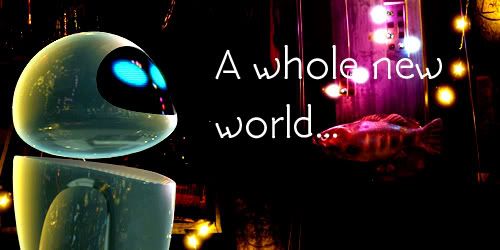
A random thought I had about Wall-E…

For assorted reasons, it reminds me of last year’s Western of sorts, There Will Be Blood and No Country for Old Men.

It reminds me of There Will Be Blood in how it shows the evils of consumerism and corporate control, as well as the scene with Eve blowing up the spaceship reminding me of the burning derrick scene in There Will Be Blood. Also, the opening 16 minutes of Wall-E was wordless, as was the opening sequence to those two films, when no dialogue was spoken. And lastly, the “look” of Wall-E just resembled the look of NCFOM at parts. (Although I’m probably imaging things seeing as I know that Roger Deakins was a consultant on Wall-E)

OK, so that’s not an awful lot to go by. But I just wanted to say.

How cute was Eve, by the way? Her giggle was just adorable:
Bung.

Wednesday, February 13, 2008

A Look Ahead to Best Cinematography.

The nominees are:
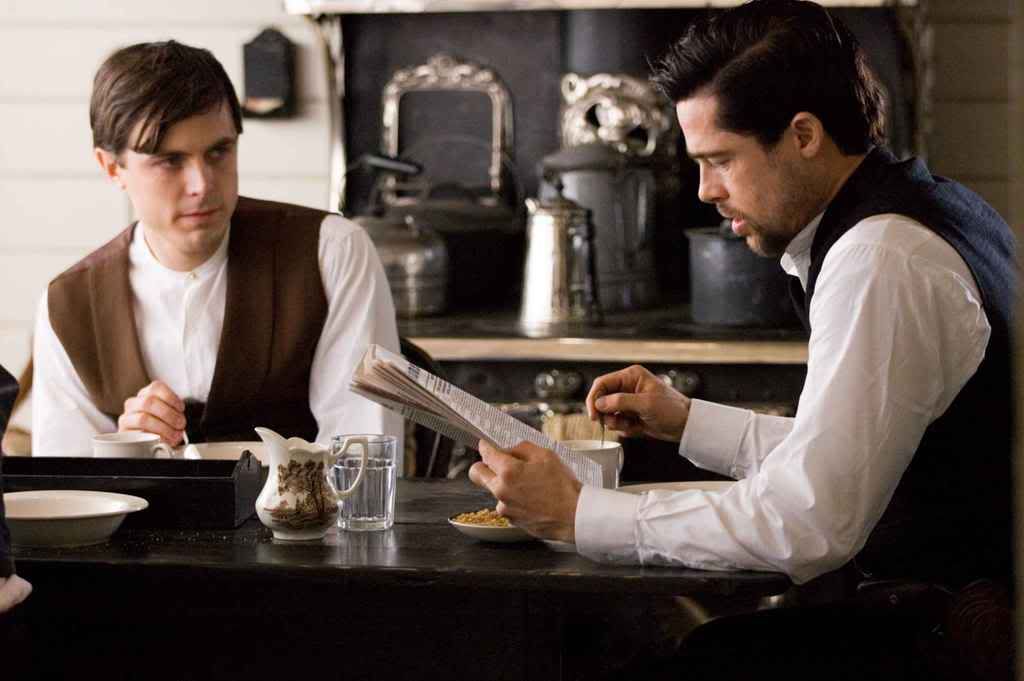
The Assassination of Jesse James by the Coward Robert Ford, Roger Deakins
Atonement, Seamus McGarvey
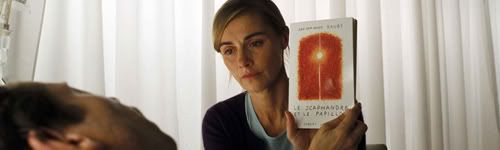
The Diving Bell and the Butterfly, Janusz Kaminski
No Country for Old Men, Roger Deakins
There Will Be Blood, Robert Elswit

How I did: 100%. My only 100%! Yay.

Having watched three of these films last week, the cinematography is still fresh in my mind.

01. The Assassination of Jesse James
It’s double nominations for Shawshank Redemptioner Roger Deakins this year, and they have never been this deserved. Much of The Assassination of Jesse James is set outside, in beautiful, full landscapes with willowy wheat fields and Deakins absolutely goes to town with his camera, whether it be through changes in focus, rich colours, dazzling use of light sources, careful manipulations of time, or fade-outs. In some parts of the film, Deakins even blurrs the edges of the frame to make it resemble like an old photograph. And the train robbery scene is shot masterfully. Some of the key themes of the film are conveyed through the camerawork, one of the key examples being of Jesse James himself, being viewed through the “lens”, as a poetic myth, some kind of legend that he could never live up to. Brilliant art, and it made the film ever more poignant. A*.

02. Atonement
Atonement, with its pretty costumes and stunning sets is an absolute visual feast, but the cinematography is arguably one of the best technical aspects of the film. Capturing the mood of a wealthy 1930s household, cinematographer Seamus McGarvey’s first task was to convey the sweltering heat, which he did, through resourceful use of Christian Dior stockings over the lenses. Panning shots of Briony walking around the house as well as wide shots of the two sisters lying in the grass are amongst my favourites; they’re simple but beautiful. McGarvey manages to capture the beauty of Atonement in the grittier war scenes which included scenes of a bomber in flight reflected on the surface of an irrigation ditch. And of course, there’s that Dunkirk scene, which despite only taking two takes, probably took several months to choreograph. A.

= 03. No Country for Old Men
Another Roger Deakins work, and another film of a Western motif. Set in the sun-dried landscapes of 80’s, his cinematography perfectly illuminates the indifferent backdrop, portraying the Texas as a moral wasteland. The Coens are renowned for using cinematography to contribute to the mood and tension of their films, and Deakins does this here. The Devon-born Roger Deakins had been nominated 5 times before this year (for Fargo, The Shawshank Redemption, The Man Who Wasn’t There, Kundun and O Brother Where Art Thou?), but never won. If he doesn’t win this year for either Jesse James or this, there will be an assassination of and no country for the old men who voted… or something. (Basically, he needs an Oscar.) A-

= 03. The Diving Bell and the Butterfly
The filming of DB&B is beautiful through its dreamlike uses of colour which fitted in seamlessly with the music, contributing to the uplifting and inspirational feel of the film. Cinematographer Janusz Kaminski (a regular Steven Spielberg collaborator) took home the grand technical prize at Cannes for his innovative approach to the visual style of the film, which features shots from the POV of Bauby, through one eye, so we can experience what its like to have his physical cripplement. In doing so, the movie screen is rife with life and beauty, despite the seemingly depressing subject matter, illustrating the film’s key point – that you don’t need a healthy body to live life to its full. A-

= 03. There Will Be Blood
Although there wasn’t anything hugely flashy in There Will Be Blood, I really liked many of the symbolic images and shots. One I really liked though was the long tracking shot as he carries the injured H.W. to the building and we see him run away from the burning derrick. Tis all very intense. A-

In short, all five films were very deserved nominees. They were all stunning.

Who should win: The Assassination of Jesse James by the Coward Robert Ford
Who will win: No Country for Old Men
Who deserved to get nominated: no-one else aside from these 5. :D