Showing posts with label cinematography. Show all posts

Wednesday, August 01, 2018

Film review: METROPOLIS (Fritz Lang, 1927)

The city of Metropolis is separated into the wealthy upper class, who live an opulent lifestyle above the ground. Below the ground are the impoverished labourers, who’s hard work keeps the city running so the rich can enjoy themselves.


Freder, the son of the calculating overlord who oversees Metropolis, Joh Fredersen, was living in blissful ignorance until one day, Maria, a saintly woman who instils hope in the beleaguered workmen, infiltrates his lavish habitat and implores him for his help.

Monday, April 30, 2018

Film review: FALLEN ANGEL (Otto Preminger, 1945)


Eric Stanton, a penniless, down on his luck conman arrives in a Californian coastal town and instantly falls for Stella, the resident siren. Unfortunately for him, he’s not the only one to have fallen under her spell, as all the men in the town are equally smitten with her.

Monday, April 09, 2018

Film review: DUNKIRK (Christopher Nolan, 2017)

I tried to write a review of Dunkirk without using the vernacular 'twink', or slagging off Cokehead Delevingne. Did I succeed? Read on to find out...

---

The evacuation of 400,000 British men from Northern France during World War II is depicted from three viewpoints: that of the Allied soldiers on the beach, the civilians who bought them back to Britain in their personal boats, and the pilots caught trying to protect the soldiers from German attack overhead. Three time scales are employed in the film; we follow the soldiers for a week, the civilians for one day and the pilots for an hour, as their arcs converge to one pivotal moment.


Thursday, February 01, 2018

A whole lot of DUNKIRK talk.


I’ve recently been losing a lot of time down the rabbit hole that is TV tropes, which outlines common storytelling devices, arcs and techniques employed in film and TV. It doesn’t just dissect the plot of films but the cast and credits as well, and one of their pages, ‘And Starring’, offered some food for thought.


Monday, January 22, 2018

Oscar nomination predictions, 2018.

The Oscar nominations come out tomorrow, and, as movie award commentary is one of the chief functions of my blog, I thought I’d predict them! The rankings are from most to least likely.


Saoirse Ronan and Beanie Feldstein (Jonah Hill's sister!) in Lady Bird


Best Film
01. The Shape of Water
02. Three Billboards Outside Ebbing, Missouri
03. Get Out
04. Dunkirk
05. Lady Bird
06. Call Me By Your Name
07. The Post

I forsee there being 7 nominees in Best Picture, but with the expanded Best Pic facilitating as many as 10 nominees, the extra predictions, should there be that many nominees...
08. Phantom Thread
09. The Florida Project
10. I, Tonya


I, Tonya has been performing very well with the Guilds (nominations for Producers Guild, at the WGA and Editing), but I'm hoping that what is ultimately a morally bankrupt movie which makes light of a woman complicit in her opponent having her kneecaps smashed in doesn't get enough #1 votes to make the Best Film shortlist!

Friday, August 12, 2016

Film review: SORRY, WRONG NUMBER (Anatole Litvak, 1948)


This post is as part of Midnite Drive-In’s Film-noir blogathon. Movie bloggers all over the internet are coming together to discuss a wide range of film noirs, both well-known and less established, so do head on over to that fabulous blogathon and enrich your film knowledge!

-- 

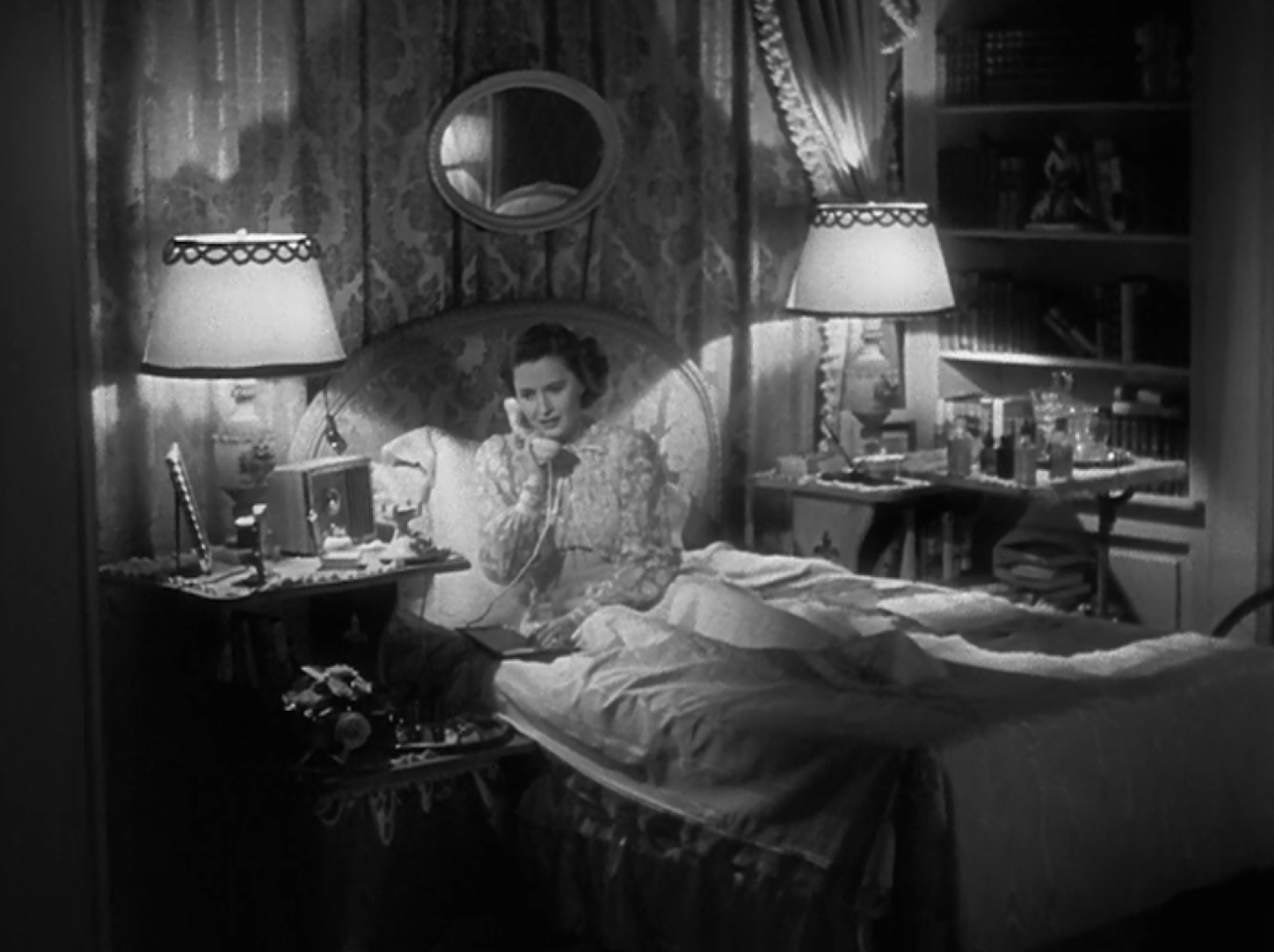
Leona Stevenson is the rich only daughter of a pharmaceutical magnate. She is also invalid, and in NYC from Chicago to consult with a doctor about her health issues. At the start of the fil m, it is apparent that her husband is avoiding her, screening her calls. His absence is even more gaping by the empty chair he leaves, which Leona addresses plaintively. In a stroke of (mis)fortune, she overhears two men’s plots to murder a woman at 11:15pm, with the time meticulously chosen so that the sound of the crime will be masked by a passing train. 

She reports it to the police and then her father, but both efforts fall on deaf ears. As she becomes increasingly agitated alone in the Manhattan apartment, she tries to locate her errant husband, only to inadvertently piece together the context of the phone call she overheard, which she involves her more than she’d care for.

One of Barbara Stanwyck’s four Oscar nominations for Best Actress, Sorry Wrong Number came out four years after her iconic turn as conniving seductress in Double Indemnity. Both are film noirs with a heavy sense of foreboding, but playing a bedridden character, her physical repertoire is limited here. Whilst she slinked around (who can forget that anklet and the way she shimmies down the stairs to show it off?) in Double Indemnity, she spends the majority of Sorry, Wrong Number fretting in bed. It’s a difficult role that only someone with the screen presence and acting guile Stanwyck is blessed with could pull off.

Graciously for her, she does get to stand up at some point in the film: a good proportion of the 
story is told via flashback. We discover how she and her husband (Burt Lancaster) met: he was actually at a dance with a girl called Sally Hunt, who plays an integral part in helping Leona piece together the clues. Leona, never having been deprived anything she wanted in her life, boldly makes a play for Henry. He’s initially put off by her entitled attitude, but, nonetheless, his head is turned by her wealth. Stanwyck conveys her character’s bratty attitude wonderfully: in one scene, she regards her husband with a contemptuous glance in that signature way Barbara Stanwyck looks people up and down. You mirror Lancaster's character's feeling of belittlement when it occurs.

Lucille Fletcher penned the script for Sorry, Wrong Number, which was originally a radio play by her. The translation is effective: few sets are required in Sorry, Wrong Number, and the art decoration of Leona’s grand but stuffy bedroom is conveyed excellently: she has expensive trinkets and bottles, but her loneliness is clear. The moral that money can’t buy happiness is an age-old one in cinema, but this message is conflated with another: money being the root of all evil, which motivates some shady actions by certain characters. Thus, the script, ahead of its time in this sense, touches on an almost Kafkian problem: the more Leona feels her husband pulling away, the more she tries to throw money in the problem, which in turn, makes him increasingly more detached towards her.

The cinematography dextrously plays with light and shade, true to the genre, to create ambiance and dread throughout the film. Also, in the vein of film noirs, there are few truly "good" characters (I would argue only Sally, Leona's former classmate who's love she stole in such a cavalier manner, is), and plenty of murky ones. Even our protagonist, who finds herself in increasing danger, is somewhat hard to take and completely root for, her arriviste persona accentuated by her plush wardrobe, multitude of expensive rings, and Stanwyck's virtuoso performance as a woman who refuses to see what's going on right under her nose, causing the audience to fear the moment the House of Cards will crumble.


The employment of flashbacks and the film being played in real time give Sorry, Wrong Number a real sense of urgency, and the protagonist being confined to their room gives them a powerless sense that makes this film a worthy predecessor to the more polished Rear Window. The beating heart of the film is Barbara Stanwyck; I can’t believe she never won a proper Oscar during her lifetime especially when frauds like Jennifer Lawrence and Natalie Portman have them! As mentioned, Leona is not likeable at all, treating other characters in the film as below her and talking down to everyone. Yet Stanwyck is able to inject sympathy into even an upstart like this! By the end of the picture, she has you rooting for Leona, warts and all.

The Academy gave her an honorary award in 1982, whilst she was still alive, though, for “For superlative creativity and unique contribution to the art of screen acting”, and that is exactly what she has, in spades, here. Without her, Sorry, Wrong Number would have been a fairly exciting film. With her, it’s a complete and utter thriller.

Tuesday, January 19, 2016

Film review: THE REVENANT (Alejandro González Iñárritu, 2015)

if this review reads a little awkward, it's because I've shoe-horned Taylor Swift references throughout. just so you get the same feeling of unnecessary bits of indulgence feels like when you read the review of a film that featured plenty of unnecessary indulgence.

A group of fur trappers, including the fearless and distinguished Hugh Glass (Leonardo DiCaprio) have just fled from attack by the Native American Arikara Indians from which who’s land they had been occupying. Due to his extensive experience in fur trapping, Glass has influence over the route the hunting party will take to get home, which is resented by a fellow member of his group, John Fitzgerald (Tom Hardy), who taunts Glass about his son, who is half Indian, cruelly naming him a ‘halfbreed’. 

One morning, when he’s out hunting alone, Glass is brutally attacked by a bear. She tosses him about, scratches her claws into him and presses her entire body weight against his skull, then saunters off. Just as you think Glass is out of the woods, however, the bear comes back, goes in harder, and leaves him on the edge of death. Never in your wildest dreams would you expect anyone to survive such a vicious mauling.


The rest of Glass’ group find him and try their best to piece him back together with their limited resources, but there’s no denying that on a journey in treacherous terrain, he’s slowing them down. The decent captain of the group, Andrew Henry (Domhnall Gleeson), finding himself incapable of committing a mercy-killing, offers a monetary reward to any of the team who will stay by Glass’ side until he passes away. Glass’ son, Hawk, and a soft-hearted young man named Jim Bridger (Will Poulter) who during the siege at the start of the film had almost been killed by the Native Indians, and Fitzgerald himself volunteer.

Unsurprisingly, give the bad blood between Glass and Fitzgerald and Fitz's disdain for Glass’ son which he hasn’t bothered to hide, this doesn’t lead to a happily ever after. Fitzgerald kills Hawk in front of Glass’ own eyes and then tricks Bridger into leaving Glass for dead. But, through sheer force of will, Glass survives, with the sole raison d’être of hunting Fitzgerald down and making him pay for the murder of his son.

Alejandro González Iñárritu won the Oscar for Best Director last year at the Oscars, as well as picking up Best Picture for Birdman, his cheeky satire on actors and their craft, which pretty much crowned him Hollywood’s Golden Boy and allowed him carte blanche with which to do whatever he fancied for his next picture. Unfortunately, The Revenant isn’t half as fun to watch as Birdman. It isn’t even 0.0000001%.

This is certainly through no fault of the performers. Much has been made of how much Leonardo DiCaprio suffered to play Hugh Glass (we could wryly note that this is because the cast and crew don’t miss an opportunity to tell us so at any possible opportunity), but even if you were to strip away all of the mud, blood and physical unpleasantness he had to endure, it is still a masterclass in physical theatre.

DiCaprio isn’t given many lines in The Revenant, and when so much is conveyed through his body language, it is of paramount important he gets it right. As he lies on his makeshift deathbed, refusing to give in, determined to survive, we feel the same. When the bear attacks Glass, we flinch as if the attack is happening to us. DiCaprio (and the very convincing makeup staff) are that credible.

Tom Hardy also excels in the villainous role. With a sneer and sarcastic mumble mouth, you know he is trouble when he walks in. John Fitzgerald has regard for nobody but himself, and with that, no conscience. Of course, this isn’t the first time Tom Hardy has played a baddie who’s speech you struggle to comprehend, being cast as Bane in 2012’s The Dark Knight Rises. But here he is far less cartoonish. Fitzgerald is the antagonist, but with his wild, darting eyes, Hardy injects pathos into this dislikable character. It is because Fitzgerald is so pitiable that he is so terrifying.

Other standout performers include Domhnall Gleeson, aka Bill Weasley. The red-haired Irishman seemed to be ubiquitous in 2015, appearing in Brooklyn, Ex Machina and Star Wars: The Force Awakens. Those three movies and The Revenant, have all been Oscar-nominated, although the man himself hasn’t been. I’d argue that his performance as the honest Captain in The Revenant is deserving of a nomination. He excels at depicting Captain Henry’s balancing act between being an authoritative figure who is also compassionate, but will bar his teeth when needs be. Incidentally, the raw display of masculinity from Gleeson when the Captain furiously discovers Fitzgerald lied to him about Glass is a thing to behold; Domhnall has never been sexier. Finally, English actor Will Poulter delivers a poetic, sweet performance, acting as a perfect foil to Hardy’s mercenary.

For all of the outstanding performances from the committed cast, they are let down by the sheer narcissism of the director, who evidently let that Best Director Oscar get to his head. The Revenant was a difficult shoot and a difficult picture to make. Of this I have no illusions. And to the film’s credit, it contains some handsome scenes.

The scene at the beginning where the fur hunters come under attack is beautifully shot, with the hyperkinetic camera busily trying to capture flying spears hitting their targets from every angle. But at some point, and this will vary depending on the attention span of the viewer, but for me it was just before the hour mark, it becomes blatantly clear that Iñárritu has made a film for himself rather than the audience.

Long, needless shots punctuate dramatic scenes to bloat up the running time in a manner so laborious that it makes Terrence Malick look like Michael Bay. In one late combative scene, blood flies from a character onto the camera and rather than shake it off to make the scene look more polished, AGI leaves it there, as a reminder of what an EXCELLENT director he is and how AUTHENTIC the shoot was. 

With a running time of 2 hours and 36 minutes, The Revenant is the longest of the eight Best Picture nominees this year, and boy do those 156 minutes drag on. As the screen was lathered with brazen Oscar-begging misery porn in the form of Leo’s cracked skin, gory detail of his bear wounds or an unsavoury sexual assault on one of the Pawnee women, I was reminded of Ricky Gervais’ comment to Steve Carrell about The Office US v UK: it’s quality, not quantity.

Other aspects of the film don’t sit well with me either. The score, by Ryuichi Sakamoto, Alva Noto and Bryce Dessner, sound like a bizarre melange of noises rather than anything mellifluous. Proponents of The Revenant will argue that they contribute to the frosty frontier setting of the film, but I know these sparse atonal sounds all too well, and rarely do the signify a film that I’ll enjoy.

And sadly, due to the pretentious direction, The Revenant ends up being, lamentably, much less than the sum of its parts. Leo will finally take home the Oscar at the end of February, and in addition to it being long overdue, he deserves it on the strength of his wonderful work. It’s just a shame that film itself, which plays out to be a clunkier, less emotionally engaging, more Oscar-thirsty version of Gladiator, doesn’t match the quality of his performance.

6/10

Sunday, May 08, 2011

Film review: HANNA (Joe Wright, 2011)

She's on the right track baby, she was born this way

Flashback 4 years ago. I’d blagged myself tickets to a preview screening of Joe Wright’s Atonement, meaning that, I’d, rather smugly, gotten to see it before most of the British population, and I could not wait to gush about it on my blog. James McAvoy, according to me, was flawless, the score, musical genius, the cinematography and costumes, divine. 

However, I’d gone into the film expecting an acting masterclass from Romola Garai, and, whilst she was indeed very good, it was the younger incarnation of her character in the film – played by blue-eyed Irish lass Saoirse Ronan that really, really impressed. Briony Tallis is one of my least favourite literary gals of all time, yet Ronan’s depiction of her, whilst capturing how annoying and meddling her character was, managed to do something that I felt Ian McEwan was unable to do in his book – humanise her. It was, I felt, the most impressive performance by a child actress of the new millennium, and I went on to wax lyrical about her acting in The Lovely Bones, which, like Atonement, was a book that I didn’t particularly care for and wasn’t even originally intending on watching, but when I heard that Ronan was cast as the lead, I just knew that I had to. 

I had a whole list of problems with Peter Jackson’s film, writing but Ronan was a shining star. When I first walked past the poster for Hanna in the London undergrounds, I checked my walk just to give it a second look (which, if you know Londoners, you’ll understand is saying something) when I realised that it was Miss Ronan on the front. Truth be told, there’s been a few too many female assassin films in recent years for my liking, but the fact that Saoirse Ronan was starring in Hanna meant that I knew I was gonna watch it.

Quality-wise, of the film, I’d say it sits comfortably in between The Lovely Bones – extremely poor, and Atonement – excellent. One can’t help feeling that Joe Wright wished he could have made a more violent film, but was constrained by the need for commercial success – and hence the lucrative PG-13/12A rating. Indeed, some of the fight scenes are definitely the most violent scenes I’ve seen in a 12A rated film, but they are staged excellently, with a kind of gusto that reminded me of the jolly fight scenes in Pirates of the Caribbean (the first one, before they turned bad.) 

Eric Bana and Saoirse Ronan sport these bizarre sounding European accents that made it somewhat difficult to take the things that they said seriously, but in terms of bad accents, Cate Blanchett takes the biscuit. In fact, she should take the whole cookie jar in terms of poor acting, because the woman was not good. A lot of the casting in this film confused me, to be honest, and I’m torn between the joy of seeing some of my favourite stars and the confusion of seeing them in such poorly written roles. 

Nobody exemplified this better than Tom Hollander, who, if you remember, I loved so much that I went through an entire month of watching films with just him in. In Hanna, he plays a crooked sort of-Mafia character, and spends the film in the weirdest range of tracksuits that look like they've come from Primark (and at one point, these skimpy white shorts that leave nothing to the imagination, lol) and his German accent is so camp that I refuse to believe he didn’t do it with a lol inside his mind. I love Hollander and I love how he isn’t afraid to take a role and make it his own with silliness – his Mr Collins in Pride & Prejudice is one of my most endearing memories of his acting – but in Hanna, the fact that he’s meant to be a character to fear, yet he’s wearing all this Primark-style tracksuits and looking dangerously like he’s wearing mascara; it doesn’t all come together, really.

As with Atonement and Pride & Prejudice, the musical score is amazing. Dario Marianelli scored the former two, but his celli strings and piano surges may have been somewhat out of place in a child-hitman film, so the Chemical Brothers were employed instead, and, as with Daft Punk’s score to Tron, the aurals were so strong that it often made me forget about the pictures. One scene in particular, when Hanna is being pursued by Tom Hollander and his two not-altogether-very-effective goons near a building campsite and there’s a whole lot of running away on her part; the music is just incredible.

And of course, Hanna herself. The film begins with Hanna, out in the wild, shooting a dear for food. Her arrow wounds the deer and kills it, but, as she pulls the arrow out, she notes “I just missed your heart.” The screen fills with HANNA in white-and-red writing, to eerie effect, and without giving too much away, the symmetry around this gives the film a nice sense of closure. But to be honest, that’s the only sense of closure we get. Hanna sports more holes in a plot than a piece of Swiss cheese, and it gets to the point where I can’t just brush them under the carpet. But the main character is never not beguiling. Saoirse Ronan really does have the most electric, arresting blue eyes, and the camera picks up on that, and, indeed, much of Ronan’s subtle acting is in her eyes. Emma Watson should take note of this. The eyes, not the eyebrows, lady. :p And, although her character is a killer, it is, as the film points out, out of survival. 

There’s an engaging subplot in which Hanna latches on to a marauding bohemian family and their somewhat spoilt teenage daughter, Sophie. The blossoming friendship between the two is sweet and moving, although I felt the scene in the tent – in which the two share a Sapphic moment – was indulgence on Joe Wright’s part rather than any kind of strong storytelling. It’s a shame, because some of the more understated scenes between Hanna and Sophie were a joy to behold, and captured the dynamic of culture clashes and budding friendships well, and then that somewhat out-of-place romantic overtone killed that off and made it somewhat ~laddish~ and seedy. 

The fight scenes were well-staged but on the storytelling side, I felt Hanna lacked depth. But even in the face of poor directing and poor writing, Saoirse Ronan is never not a queen. She is the film’s anchor, its emotional core, and without her, Hanna would be a fine, fine mess. As it was, it was managed to be a fairly interesting action thriller that was too flawed to take seriously, but definitely had some good things going for it.

Sunday, August 10, 2008

A random thought I had about Wall-E…

For assorted reasons, it reminds me of last year’s Western of sorts, There Will Be Blood and No Country for Old Men.

It reminds me of There Will Be Blood in how it shows the evils of consumerism and corporate control, as well as the scene with Eve blowing up the spaceship reminding me of the burning derrick scene in There Will Be Blood. Also, the opening 16 minutes of Wall-E was wordless, as was the opening sequence to those two films, when no dialogue was spoken. And lastly, the “look” of Wall-E just resembled the look of NCFOM at parts. (Although I’m probably imaging things seeing as I know that Roger Deakins was a consultant on Wall-E)

OK, so that’s not an awful lot to go by. But I just wanted to say.

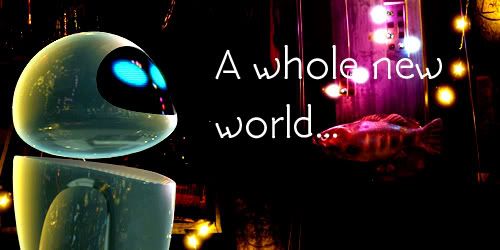
How cute was Eve, by the way? Her giggle was just adorable:
Bung.

Wednesday, February 13, 2008

A Look Ahead to Best Cinematography.

The nominees are:
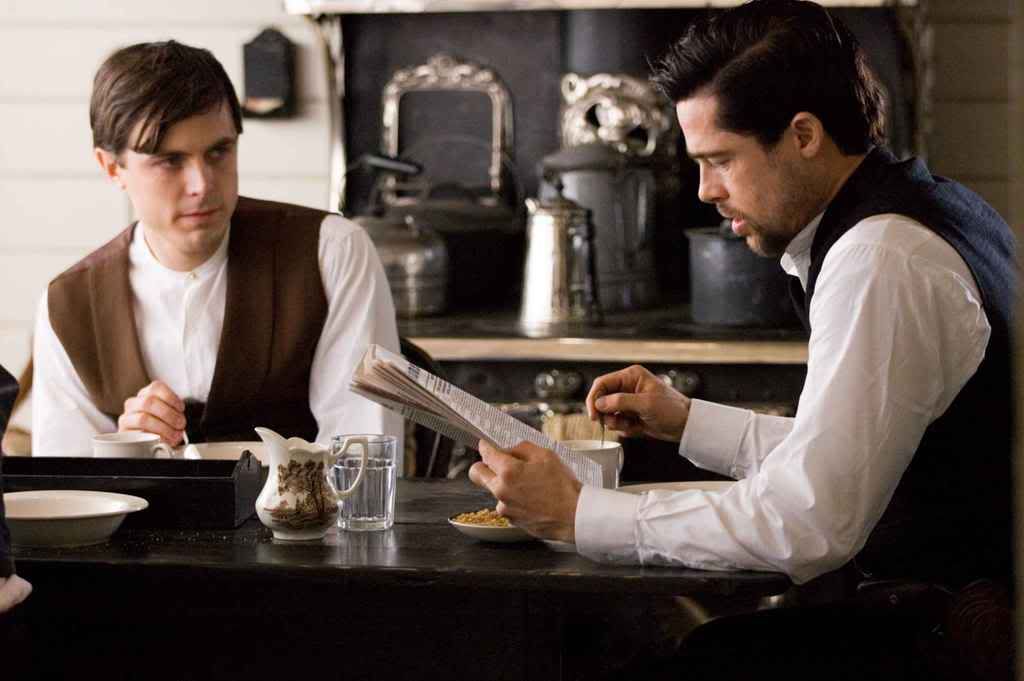
The Assassination of Jesse James by the Coward Robert Ford, Roger Deakins
Atonement, Seamus McGarvey
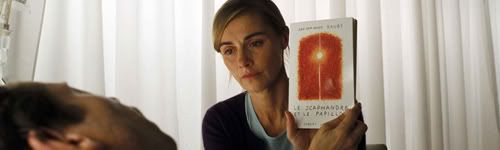
The Diving Bell and the Butterfly, Janusz Kaminski
No Country for Old Men, Roger Deakins
There Will Be Blood, Robert Elswit

How I did: 100%. My only 100%! Yay.

Having watched three of these films last week, the cinematography is still fresh in my mind.

01. The Assassination of Jesse James
It’s double nominations for Shawshank Redemptioner Roger Deakins this year, and they have never been this deserved. Much of The Assassination of Jesse James is set outside, in beautiful, full landscapes with willowy wheat fields and Deakins absolutely goes to town with his camera, whether it be through changes in focus, rich colours, dazzling use of light sources, careful manipulations of time, or fade-outs. In some parts of the film, Deakins even blurrs the edges of the frame to make it resemble like an old photograph. And the train robbery scene is shot masterfully. Some of the key themes of the film are conveyed through the camerawork, one of the key examples being of Jesse James himself, being viewed through the “lens”, as a poetic myth, some kind of legend that he could never live up to. Brilliant art, and it made the film ever more poignant. A*.

02. Atonement
Atonement, with its pretty costumes and stunning sets is an absolute visual feast, but the cinematography is arguably one of the best technical aspects of the film. Capturing the mood of a wealthy 1930s household, cinematographer Seamus McGarvey’s first task was to convey the sweltering heat, which he did, through resourceful use of Christian Dior stockings over the lenses. Panning shots of Briony walking around the house as well as wide shots of the two sisters lying in the grass are amongst my favourites; they’re simple but beautiful. McGarvey manages to capture the beauty of Atonement in the grittier war scenes which included scenes of a bomber in flight reflected on the surface of an irrigation ditch. And of course, there’s that Dunkirk scene, which despite only taking two takes, probably took several months to choreograph. A.

= 03. No Country for Old Men
Another Roger Deakins work, and another film of a Western motif. Set in the sun-dried landscapes of 80’s, his cinematography perfectly illuminates the indifferent backdrop, portraying the Texas as a moral wasteland. The Coens are renowned for using cinematography to contribute to the mood and tension of their films, and Deakins does this here. The Devon-born Roger Deakins had been nominated 5 times before this year (for Fargo, The Shawshank Redemption, The Man Who Wasn’t There, Kundun and O Brother Where Art Thou?), but never won. If he doesn’t win this year for either Jesse James or this, there will be an assassination of and no country for the old men who voted… or something. (Basically, he needs an Oscar.) A-

= 03. The Diving Bell and the Butterfly
The filming of DB&B is beautiful through its dreamlike uses of colour which fitted in seamlessly with the music, contributing to the uplifting and inspirational feel of the film. Cinematographer Janusz Kaminski (a regular Steven Spielberg collaborator) took home the grand technical prize at Cannes for his innovative approach to the visual style of the film, which features shots from the POV of Bauby, through one eye, so we can experience what its like to have his physical cripplement. In doing so, the movie screen is rife with life and beauty, despite the seemingly depressing subject matter, illustrating the film’s key point – that you don’t need a healthy body to live life to its full. A-

= 03. There Will Be Blood
Although there wasn’t anything hugely flashy in There Will Be Blood, I really liked many of the symbolic images and shots. One I really liked though was the long tracking shot as he carries the injured H.W. to the building and we see him run away from the burning derrick. Tis all very intense. A-

In short, all five films were very deserved nominees. They were all stunning.

Who should win: The Assassination of Jesse James by the Coward Robert Ford
Who will win: No Country for Old Men
Who deserved to get nominated: no-one else aside from these 5. :D