
Showing posts with label 50s. Show all posts
Showing posts with label 50s. Show all posts
Tuesday, December 27, 2016


Wednesday, November 30, 2016
Film review: HOUSEBOAT (Melville Shavelson, 1958)
This review is my entry to Phyllis Loves Classic Movies’s fabulous Cary Grant blogathon, where every entry is a celebration of the man’s varied and illustrious CV. Head on over there to read about all the films he’s been in!
--
Tom Winston (Grant), a recently widowed father of three young kids, and Cinzia Zaccardi (Sophia Loren), the aristocratic daughter of an Italian count who plays childminder to the kids, find unlikely love (and a whole lot of miscommunication) in Melville Shavelson’s gentle 50s comedy.

Wednesday, February 09, 2011
04. Les quatre cent coups (François Truffaut, 1959)

12-year-old Antoine Doinel just can’t seem to get it right. At home, his mother and father neglect him. At school, all he ever seems to does is get himself into trouble (the French translation of faire les quatre cent coups means to raise hell), and he’s happiest when he’s bunking school, just roaming the streets. He’s not a bad egg by any means, just one who seems to be the unfortunate one who gets caught doing something even though everyone else is (case in point—his classmates pass around a picture of a nude lady, but when the teacher walks in it is he holding it). The film follows his misdemeanours during a few days, which involve his hilariously poor attempts to come up with an alibi for why he doesn’t come into school, as well as well-intentioned plans that result in bigger mistakes—such as starting a small fire, as well as downright plagiarism for a homework task.
The 400 Blows is a touching, witty, but very heartbreaking portrayal of a young lad who is by no means bad or evil-spirited, simply, misunderstood. I found it very easy to sympathize with him, his parents show him very little real affection or love in the film, and any kindness they show him usually have ulterior motives (his mother buys him an extravagant ice cream, but only because she knows he has seen her cavorting with another man and wants to buy her son’s silence). It’s hardly surprising that, with the upbringing (or lack thereof) that he has been given, that he’s prone to doing the odd silly thing.
 Jean-Pierre Léaud is insanely good as Antoine, and he would go on to collaborate with Truffaut in four other films about the trouble-attracting protagonist as well as the delightful Day for Night setting off one of the greatest director-actor combos in history. He’s very natural, often it doesn’t even feel like he’s acting, but in the blank, empty look in his eyes is a whole load of unsaid sadness and disillusion of a person wise beyond their years. Similarly, the odd cheeky looks he has in his moments of mischief make for some brilliant comic relief. Here is what is easily one of the child performances in cinema. The transcendent finale features my fourth favourite film scene of all-time wherein he’s been sent to a reform school but he finds the opportunity to escape during a football game, he runs and runs and runs, and comes to the sea. The final scene is Antoine turning and looking into the camera. For that moment, he is free, yet he can go no further.
Often hailed as one of the most prominent pieces to come out of of the French New Wave, The 400 Blows is realism at its gritty, grainy best. Whereas previous films were all about their happy endings and conventional story-telling, Truffaut ventures into new ground with his pseudo-documentary-style here. It was revolutionary at the time, but even now, more than 50 years on, The 400 Blows makes for compelling view, and anyone who’s ever felt disjointed or misunderstood would surely connect with it. There are sequences of utmost hilarity juxtaposed with sadness that hints at the disturbing malaise of truth. I think I first saw The 400 Blows when I was about 15 and I saw myself in the lead character straight away. Almost 6 years on, I still recognize myself in them. There’s really not a lot of films I could say that about, now. A true masterpiece.
Wednesday, June 16, 2010
5. Brief Encounter (David Lean, 1945)
To most, having to have grit removed from one's eyes is not the best circumstance under which to make an acquaintance. But for Celia Johnson's Laura, this is how, on a railway station, she meets dashing doctor Alec Harvey (Trevor Howard). The two form a friendship that soon becomes more than platonic. Despite their love for each other, their relationship is never consummated. Caught in such a bad romance, they realise that due to social rules and their commitments to their family, the tempting option of running away together is simply impossible.


The fact that the title gives away the fact that Laura and Alec's romance is short lived does not detract from the poignancy and power of their brief time spent with each other. Although the two do not sleep together, there is no doubt of their desire to do so, making their restrain even more admirable (the scene in which they are interrupted by a prying friend was extremely frustrating when I first watched the film but now I see that it fits perfectly with the themes of social decorum and doing what is right rather than what we want).

Many things make Brief Encounter the gem it is, but two things stand out. The first is the usage of Rachmaninov's Second Piano Concerto . There have been films which have been ruined by the terrible music in them, and others wherein the music is either so good or so bombastic that it deflects attention away from the film. In Brief Encounter, the elegaic piano tune complements the film perfectly. Used throughout, it evokes the emotions that Laura is feeling in us. And the second? Why, that would be Celia Johnson's exquisitely beautiful performance as the housewife who looks for an exciting, new thing in her life, only to realise that when all is said and done, however exciting, however much it thrills her, she cannot throw away what she already has. As Alec places his hand over Laura's shoulder as they say their goodbyes, tears never fail to come to my eyes. Brief Encounter is as deep and British a film as they come.

Cinematography goes a long way in telling the story. The camera shots are so close-up that they frame just Laura and Alec, suggesting that, for the time being at least, they are in their own perfectly formed world.

The fact that the title gives away the fact that Laura and Alec's romance is short lived does not detract from the poignancy and power of their brief time spent with each other. Although the two do not sleep together, there is no doubt of their desire to do so, making their restrain even more admirable (the scene in which they are interrupted by a prying friend was extremely frustrating when I first watched the film but now I see that it fits perfectly with the themes of social decorum and doing what is right rather than what we want).

Many things make Brief Encounter the gem it is, but two things stand out. The first is the usage of Rachmaninov's Second Piano Concerto . There have been films which have been ruined by the terrible music in them, and others wherein the music is either so good or so bombastic that it deflects attention away from the film. In Brief Encounter, the elegaic piano tune complements the film perfectly. Used throughout, it evokes the emotions that Laura is feeling in us. And the second? Why, that would be Celia Johnson's exquisitely beautiful performance as the housewife who looks for an exciting, new thing in her life, only to realise that when all is said and done, however exciting, however much it thrills her, she cannot throw away what she already has. As Alec places his hand over Laura's shoulder as they say their goodbyes, tears never fail to come to my eyes. Brief Encounter is as deep and British a film as they come.
Sunday, May 30, 2010
On to the Next One.

Catwoman (Pitof, 2004)
Halle Berry plays Patient Philips, a mild-mannered artist who, after stumbling upon the secret that a popular anti-aging cream is toxic, is killed by some henchmen, only to come back to life thanks to a cat, Midnight. In doing so, she has also inherited super-human powers from the cat, such as agility, eyesight, etc, and whilst she uses most of these new powers for the greater good, there are times when it overtakes her and turns her into someone she doesn't quite recognise. In retrospect, every bit as silly and bad as the critics slated Catwoman to be, but still rather good fun in short bursts (Benjamin Bratt is and always has been, lush) if you don't take it seriously enough.

People Will Talk (Joseph L. Mankiewicz, 1951)
One of Mankiewicz's most underrated films, People Will Talk centres around Cary Grant's well-liked Dr. Praetorius and two strands in his life, firstly, that of him falling in love with one of his patients Deborah (Jeanne Crain), who tries to top herself when she finds out she's pregnant out of wedlock (this was the 50s, after all), and the second of his affiliation with his elderly friend Mr Shunderson. The performances here are uniformly excellent, particularly from the two romantic leads, who have a very passionate (despite no real action) scene when he visits her house. There are engaging subplots and one-liners aplenty, and the usage of Brahms was excellent, rendering the film an extremely enjoyable comedy of manners.

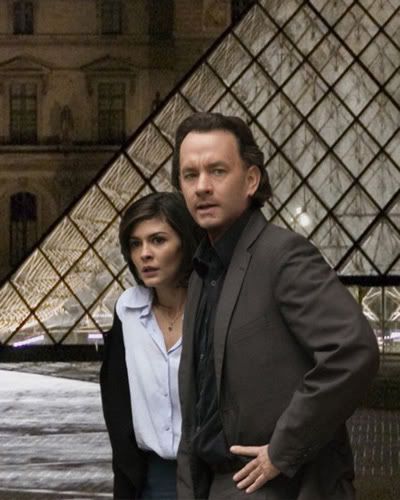
The Da Vinci Code (Ron Howard, 2006)
Two Girls and a Sailor (Richard Thorpe, 1944)
I enjoyed the dancing, but I tired of playing guess who with the romantic plot. Choc a bloc full of talented performers, the film ended up somewhat less than the sum of its parts.
Monday, August 11, 2008
Screening Log.
I never keep this damn things up, but that ain’t gonna stop me starting again. No sirree. Alright, films I saw this weekend.
High School Musical 2 (Kenny Ortega, 2007)
Hilarious, but for all the wrong reasons. Terrible acting, predictable plot, contrived characters… it was neither a step up nor a step down from its predecessor. Actually, one thing it did lack was catchy songs. HSM had “We’re All in This Together” which I’ll never forget because we sang it because we sang it in our Sixth Form Revue, as well as “Getcha Head in the Game” and “Stick to the Status Quo”. Only “Bet on it” from HSM2 will linger in my memory, and that was for Zac Efron’s dodgy dancing as much as anything. One thing that really brought the lolls, however, was how that girl was always conveniently around to play the piano whenever Troy and Gabriela needed it. Ffs.
Never Been Kissed (Raja Gosnell, 1999)
Oh, ♥. It may be because I’m feeling amorous because of the season, or me feeling soppy because I believe I’m in love, or pure nostalgia for my secondary school (cringey days and all), but practically everything about this film was endearing to me.
Firstly, you’ve got Drew Barrymore at her loveliest, as newspaper copyright editor Josie. In order to make it as a reporter, she needs to go undercover in a high school. She, like most of us, had a pretty torrid time at high school, and after some initial failures in trying to be cool, her brother (played by David Arquette) helps her make it with the cool crowd.
There’s a great supporting cast (including the ever-lovable John C. Reilly), some hilarious moments (the bananas…lol) a cute soundtrack, but what I loved most about this film was the chemistry between Barrymore and her teacher Michael Vartan.
The ending, though broaching morally dubious territory, considering he thought she was a student the whole time, was still lovely, and I was so happy for Josie.

Ballad of a Soldier (Grigori Chukhrai, 1959)
Continuing with my “watching a film ‘cos it’s Russian”, I went for this minor masterpiece. Ballad of a Soldier points out how single minded and silly it would be to beef on the Russians and the beauty that an individual is capable of. Like Turtles Can Fly, Ballad of a Soldier captures the detrimental effect of war toward the country and the individual. It’s about one soldier, who possesses all the attributes that a good person should have, and is granted 6 days to go on leave: 2 to get there, 2 to spend with his mother (wherein he plans to fix her roof) and two days to return. However, in his journey, he comes across a range of people that need help, and in helping them, delay his arrival. He also develops a romance in the film, but we’re not even treated to a kiss… :( We’re told from the off that he doesn’t survive the war, but that didn’t stop me crying my eyes out at the end. Completely moving and heart-breakingly beautiful, this is highly recommended.
Monday, November 26, 2007
Sunday, November 25, 2007
Friday, November 09, 2007

Tuesday, August 07, 2007
Subscribe to:
Posts (Atom)