Friday, April 18, 2008

How effectively do “Porphyria’s Lover,” “My Last Duchess” and “The Bishop Orders his Tomb at Saint Praxed’s Church” convey character?

Dramatic monologues vary in length and tone, but each has something that distinguishes itself as a dramatic monologue is by having a fictional narrator, a fictional setting and a turning point, and written for a reader. The characters betray themselves unintentionally through their actions and the things they say, and very often the writers have a purpose for writing the monologue. Robert Browning was one of these, the poet thought to have perfected the dramatic monologue form. The three that I will be looking at are “Porphyria’s Lover,” “My Last Duchess” and “The Bishop Orders his Tomb at Saint Praxed’s Church.”

Photobucket

The narrators are fictional characters, but their motives for narrating the monologues are very different. The Duke of “My Last Duchess” is negotiating for a new duchess, and speaking to someone, presumably a loyal devotee to the new lady’s family. The eponymous “Last Duchess” is a painting on the wall that the Duke chooses who to show to, and often it is difficult to see which the Duke is proud of more – the painting, or the duchess, “I call that piece a wonder now.” This is one of the ways that Browning conveys the Duke’s sense of ownership and materialism, another line being, “Notice Neptune, though,” which shows his love for artificial beauty, usually in the forms of paintings, and now the duchess is just another painting to add to the collection, “Fra Pandolf by design.”

The fictional setting of “Saint Praxed’s” is the bishop on his deathbed, speaking to three monks, revealed to be his sons. This is in itself a way of revealing the bishop’s unchristian nature. He is speaking orders for the layout of his tomb, and it is again unchristian to be so preoccupied with material things. He should be giving advice to these monks, but is instead only speaking to them to give instructions on constructing a magnificent monument to his existence, “Well, go! I bless ye,” only thanking them when he knows the job will be done.
“Porphyria’s Lover,” is the retelling of events that happen on a night between the Lover and Porphyria, seen from his point of view, and despite some attempt to empathise with her, “No pain felt she,” it is a one-sided account of a love story. Because it does not have an implied listener and the Lover is reveals himself by speaking his thoughts allowed, it resembles a soliloquy. Here, the reader takes the part of the silent listener.

Each dramatic monologue has some clear cut themes and some appear in more than one. “My Last Duchess” and “Porphyria’s Lover” both deal with themes of possessiveness and patriarchy. The narrators feel they have acted correctly in killing their partners, and from the line, “And yet God has not said a word!” it is the woman is in the wrong. This shows the chauvinistic edge of distrust of women in the men, and that they have corrected the women for wronging them, “Or that in you disgusts me,” and that the Duke sees sin in everything that the duchess does, and none of his own. The Duke does not ever reveal anything about his wife’s personality, which suggests he never made the effort to try and understand her. He sees her as an object rather than a person. The two poems are also themed around murder in love. In “My Last Duchess” the act of murder is not revealed until the end, “As if alive” which increases impact.
“My Last Duchess” and “Saint Praxed’s” concern materialism. In “Saint Praxed’s,” a large amount of what the bishop says, on his deathbed, is to do with material things, such as, “some lump, ah God, of lapis lazuli,” and “Did I say basalt for my slab, sons?” and the Duke likes to show off his objects as well, “Will’t please you sit and look at her?” The Duke feels he is above everyone that his last Duchess smiled at, “My gift of nine-hundred-year olds name was anybody’s gift,” and essentially, that he is above her, “I choose never to stoop.” The Duke is materialistic in his love for all things elaborate, “Notice Neptune, though, taming a sea-horse, thought a rarity, Which Claus of Innsbruck cast in bronze for me!”
Obsession also features. The bishop is obsessed with having the best tomb, and has been planning on it for a long while, and had “fought with tooth and nail” to save the burial spot for it. He is also obsessed with the lapis lazuli for his grave, and he mentions it three times. The Lover in “Porphyria’s Lover” is obsessed with Porphyria, and fixates on her hair, “And all her yellow hair,” in the end, killing her with it at he turning point of the monologue, “And strangled her.”

In “Porphyria’s Lover,” the Lover frequently repeats the word “mine,” and this contributes to the patriarchal theme of men owning their women and that he loves the idea of having her. But, from “she rose, and from her form,” to “And give herself to me forever,” the Lover stays in passive voice, “When no voice replied.” This makes it sound as if Porphyria is doing all the work, “She put her arm about my waist” and she is the sinner. The lover also uses the weather to act as a metaphor for the Lover’s emotions of anger and betrayal in the piece, “sullen wind” and “it tore elm tops down for spite.” But she is also the one who can rid his feelings, “shut the cold out and the storm.”
The Duke speaks more conversationally throughout, and when revealing his crime, “Then all smiles stopped together,” he almost treats the line as a joke. He does not take the murder seriously, and obviously feels no remorse towards it, “Herself be lessoned with,” seeing hers as a child that needs correcting. Whilst he speaks to the silent listener, the Duke’s arrogant personality is conveyed through his cold formality, and his unfulfilled desire for his wife to be just as aloof, “too easily impressed”. When the implied listener finally reacts by rising to leave, “Will’t please you rise?” the Duke does not realise that they are leaving due to fear and disgust. He also switches topic easily, from talking about how he gave orders to kill his wife to the meeting with the next proposed wife, showing he has no reservations about disposing of the next one if he needs to.
The bishop is a character who wants his legacy to live on after he has died, and he realises he is losing time. In his monologue, he uses many “ands:”
“And then how I shall lie through centuries,
And hear the blessed mutter of the mass,
And see God made and eaten all day long…”
This builds a hurried atmosphere, and we understand how the bishop feels. When he begins to reminisce, “Your tall pale mother with her talking eyes,” religion is far down on the list, “Saint Praxed at his sermon the mount.”

Browning presents each of the three narrators as sinful, corrupt characters, and this is apparent in what they say and the things in do. One of the biggest similarities between poems is that both the Duke and the Lover, have committed murder, and the bishop is clearly not celibate, which is what he should be. “So fair she was!” shows he once had lusted after a woman. The Duke was not even the one who murdered his Duchess, as he felt too superior for that. Instead he “gave commands.” He speaks of the how she angered him, “She thanked men, good! but thanked …” and it is revealed that all she did was act pleased at simple gifts, and for him to get angry at this, shows his lack of self-control.
The men killed for different reasons. The Duke did so because he grew jealous of the simple action of the Duchess smiling in times of gratitude, “Somehow – I know not how – as if she ranked…” This type of behaviour would usually be overlooked, but not with the Duke, who is very possessive of his things. His actions seem more shocking when he reveals the Duchess’ young age, “the white mule.”
Although it is not certain why the Lover murdered Porphyria, it seems most likely because he couldn’t have her, being in a lower social status, “From pride, and vainer ties dissever”. After she has died, he pretends she is living, “I propped her head up as before,” and perhaps in this he finds Porphyria’s presence most reassuring, and that he loves her so much that he would still want her after death. However, he is slightly afraid to touch her at first – he compares opening her eye to “shut bud that holds a bee” - he still finds her beautiful, but is afraid of her “sting,” because she is the wrong.
The Duke in “My Last Duchess” is reassured by manmade items of art such as paintings, or his title. He feels threatened by things he cannot control, such as nature or the Duchess’ smile, “she had a heart – how shall I say? Too soon made glad,” and will dispose of them.
The way in which the bishop speaks changes says something about his disposition - he begins with a quotation, “Vanity saith the preacher, vanity!” then moves on to reminiscing, and towards the middle begins to plead with the monks for the sake of his tomb, “My sons, ye would not be my death?” The bishop clearly has much to say, and knows that there is not enough time to say it all, so will not waste any of it being religious. Some of his lines are shocking because of the way he sexualises objects that are seen as holy: “Blue as a vein o'er the Madonna's breast ...,” and his pagan attitude becomes apparent through, “and one Pan/ready to twitch the Nymph’s last garment off,” and similar lines. He obviously does not have a true bishop’s best interests at heart, and wishes to be remembered for his tomb rather than his achievements.

Most of “Porphyria’s Lover” is written in the poetry form of ABABB, which creates a less tense, more spirited atmosphere. Rhymes are used effectively in the lines, “In one long yellow string I wound/Three times her little throat around,” making the subject appear almost as a joke. “My Last Duchess” is in rhyming couplets, which conveys the Duke’s education and desire to perform rather than tell. The poem has enjambments, and when the ends of sentences do not come, this shows that the sentences have to be altered in order to rhyme, and that the Duke is a performer, out to impress. He also asks rhetorical questions and has sudden pauses, which increases the dramatic impact of his monologue.
Unlike the other two, “Saint Praxed’s” features iambic pentameter but blank verse - no rhyme patterns; instead it has interrupted sentences, which builds to his sense of dementia and confusion. By speaking without flowery dialogue, Browning uses the bishop’s lack of sophistication to convey how the bishop is running out of time. This makes it more like a natural speech, and at the moments where the bishop is at his most confused, the poem resembles a soliloquy.

All three men in the monologues are also greedy in their own ways – the Lover, for Porphyria’s love: “And give herself to me forever,” the bishop, for a tomb better than Gandolf’s: “I fought/With tooth and nail to save my niche” and the Duke, for his duchess, the painters, and his material objects: “Which Claus of Innsbruck cast in bronze for me!” Browning had opinions on the male-dominated society of Victorian times, and, whilst he does not always write his messages clearly in the poems, explicitly, or implied, he manages to convey the character of his narrators well. Each character has a secret which they reveal in the monologues, and they are dark, disturbing secrets which reveal dark, disturbed characters, but I feel these poems have just reached the surface; there is much more about these characters to learn.

Monday, April 07, 2008

18. Finding Nemo (Andrew Stanton, 2003)


Pixar may have walked away with the Oscar (rather undeservedly, I felt) again this year for and gotten countless superlative praises for their work on Ratatouille, but I far, far prefer Monster’s Inc, Toy Story, The Incredibles and A Bug’s Life. And I love Finding Nemo even more than them.

I watch a lot of films and TV programmes with my little brother Tom, and Finding Nemo is our favourite to watch together. It's a movie that we both love for the same reasons, and never gets old. The plot – weak-finned Nemo is the only remaining family of neurotic clownfish Marlin following an accident that kills his mum and all his other brothers and sisters. One day, sick of his dad’s constant fretting, Nemo goes against his dad’s instructions, and gets caught by a passing diver in the process. Marlin must then gather his wits in order to get his son back, and in the adventure, both father and son discover the beauty and grandeur of the Great Barrier Reef, as well as finding out just how important family is to them.

Finding Nemo is feast for the eyes, ears and soul alike. The detail and intricacy at which the underwater fishes are created are nothing short of breathtaking. Each frame glows with beauty. The score, from Thomas Newman, is my favourite of all time. His orchestration, whether it be soft strings (Nemo egg), Pizzicati (First Day) or Shawshank Redemption-ness (Wow) fits the movie perfectly. And every character in the film is memorable and adorable in their own little way, whether it be the vegetarian sharks, plucky little Marlin or, best of all, the forgetful but well-intentioned Dory, possibly one of the cutest film characters of all time. The script is so, so good, it never gets over schmaltzy like some Disney films have in the past, yet it still captivates the audience to deliver a message that can be appreciated universally. Andrew Stanton should have won Original Screenplay at the Oscars over Sofia Coppola. All this cumulates in a very special piece of work that had me weeping with laughter from one minute (the Psycho homage), and wiping away a bittersweet tear of another (Nemo telling his dad he loved him.)

I like me a bit of cartoons, whether it be Studio Ghibli Produkshunz, 40s Disney or The Simpsons. And Finding Nemo, for me, is as good as it gets in animated film. This film is sweet, moving, entertaining and really, really funny. 2003 was a great year for films and Finding Nemo will always have a special place in my heart.


Saturday, March 22, 2008

19. All About Eve (Joseph L. Mankiewicz, 1950)

omgz i wrote something?!!


All About Eve came out in 1950, the same year as Sunset Boulevard, Billy Wilder’s subversive portayal of Hollywood and its actors. Mankiewicz was equally scathing in his look at the world of Broadway stage, portraying the mythical ruthlessness and petulance of stage actors. Both were big hits, and All About Eve was nominated for a record fourteen Oscars, winning six, including Best Picture, Best Director, and Best Writing.

It’s the best film about theatre that I've seen, also happening to say more about the film industry too. Sunset Boulevard might be the film about stars that dwell in the glory days of the past and live in self-delusion, but All About Eve demonstrates how they allowed their egos to get like that.

Like Sunset Boulevard, All About Eve tells its story in the form of a flashback. It all kicks off with the presentation of a prestigious stage-acting award to the eponymous Eve Harrington, accompanied by the commentary of theatre critic Addison DeWitt (George Sanders). He introduces us to the players in the world of Broadway before we go 9 months back in history before Eve was a star.

The film then charts the story Eve and how she has wormed her way into the acting clan. She does so by getting into a circle of theatre friends around an aging (and insecure about it) actress Margo Channing, whom she attempts to be a protégé of, using her a persona of friendliness and self-deprecation to mask a sinister plan of getting to the top.

All About Eve is an absolute treat in terms of acting. The role of the older actress, Margo Channing, was considered for a range of in-form actresses, from Gertrude Lawrence (wanted script changes that the director did not), Susan Hayward (too young), Claudette Colbert (pulled out back injury), Marlene Dietrich (Mankiewicz didn't love her), and Ingrid Bergman (would not leave Italy) before Bette Davis was finally chosen.

It’s the role of her lifetime, playing a character that ran only too true – a brilliant actress, but one who felt her time was running out. Bette Davis knew she was handed a dream role when she was cast as the resolute diva caught up in the throes of mid-life crisis both on- and off-stage, and she’s amazing her in performance. She’s selfish and tough yet at the same time, vulnerable and insecure.

Getting suspicious about her increasingly distrustful follower Eve, Margo lets her friends know that she doesn’t trust her, though they, taken to Eve’s put-on niceness, disagree, mistaking her fear for jealousy and harshness. Not willing to resolve the problem in a dignified way, Margo goes on a rampage and has a go at anyone who comes near her.

Bette Davis was born to play Margo Channing and, in my opinion, is even better than Swanson in Sunset Blvd. She can be a catty cow or a coy pussycat, and Davis loves every scene she gets to tear into. At the same time, however, she evokes real sympathy for Margo. The film may be titled All About Eve, but Margo is and always will be the real star of the movie.

Her supporting cast are to die for. Celeste Holm is excellent as Margo's sensible best friend, who at first is on Eve's side but eventually sees how conniving she can be and how ruthless she is in climbing to the top. When she took on the narration, I just got the feeling that things would turn out alright for Margo. She's the closest character to any of the audience throughout the movie, as, she is pretty much a spectator herself.

Gary Merrill and Hugh Marlowe are a joy in their respective roles as Margo’s boyfriend and playwright. George Sanders plays his trademark role as the cad with such cynicism and unfriendliness that it’s no wonder he bagged the Oscar. As the diabolical theatre critic, he has some of the best lines of the movie.

Thelma Ritter again proves why she is the best supporting player in the biz - as coarse but loyal Birdie Coonan, a member of Margo's "drone". Anne Baxter is pretty good as the sneaky Eve, though obviously my opinion of her performance is tainted by the fact that I despise her character (realistic as it was). There’s even space for a Marylin Monroe cameo, in which she steals the show in the ditzy-blonde trope that she would carry for the rest of her acting life.

All About Eve's screenplay is another one of its assets. Written by director Joseph L. Mankiewicz from the Mary Orr play "The Wisdom of Eve," it features strong characters and great dialogue that is witty, bitching and biting. Despite its running time, at nearly 2 and a half hours, it never drags on. Each of the characters are so perfectly drawn, you could imagine them doing things just like that in the 50s.

Femininity, aging, betrayal, manipulation and ambition are just a few of the themes touched upon in All About Eve. It's funny, but it's also a lot cleverer than it looks. It's got melodrama, yet somehow never goes over the top. All About Eve takes the age-old story of a young performer buttering up an old one, with the intention of usurping them, but makes it into something new, something utterly brilliant. Not to be missed.

10/10

Monday, February 18, 2008

A Look ahead to Best Supporting Actress.

It’s half term and my computer at home keeps sporadically disallowing me from connecting to the Internet, so I don’t know how many of these I’ll be able to do this week. I will try my best though, I think I'll be fine.

Anyway.

The nominees:
- Cate Blanchett, I’m Not There.
- Ruby Dee, American Gangster
- Saoirse Ronan, Atonement
- Amy Ryan, Gone Baby Gone
- Tilda Swinton, Michael Clayton

How I did: 60%. I predicted Catherine Keener (buzz and other nominations swayed me) and Kelly Macdonald (blind faith.)

I haven’t seen Amy Ryan in Gone Baby Gone, so I can only give comments on 4 of the performances.

01. Saoirse Ronan, Atonement
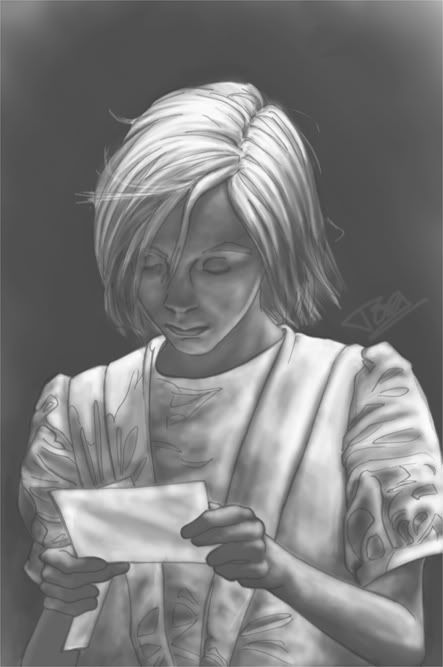
Although I’ve whored and whored this performance many a time, it never gets old to talk about one of my favourite performances of the year, so let us recap: Saoirse RonaThe Beauty and the Skinny.n plays Briony Tallis, a self-proclaimed “writer” with a massive imagination. When she was younger, she had developed a crush on her family’s gardener, Robbie, which she believed to be love. Several years later, at 13, she witnesses Robbie and her sister Cecilia loitering around at the fountain, and this, along with a note that Robbie writes, sets off her imagination in the worst way.

Saoirse is… transcendent. There are few performances from young actresses that have really amazed me (Wei Minzhi in Not one Less, Ivana Baquero in Pan’s Labyrinth and Ana Torrent in The Spirit of the Beehive being some of the select few) but Ronan’s is one of them. From the very start of the film, where she runs excitedly to mummy to show off her new script, to the way she tries to direct Lola and her two brothers into acting, to the confused way she tells on Robbie, she’s got Briony down to a t - impulsive, a know-it-all, nosy, but essentially, just a child. Saoirse Ronan captures Briony’s flaws and mannerisms perfectly (her reaction at reading the c-word was hilarious), and, when I saw the more pathetic version of her later in the film, (Romola Garai in the “I am very very sorry…” scene kind of echoed Ronan when she thanked McAvoy for saving her life), I appreciated her performance even more. In Garai and Ronan we have a character who is still “just a kid”, who made a huge mistake, and, though Ronan’s selfish teenager didn’t know it, they would have to pay for it big-time.

She’s just wonderful, basically. I am both hugely jealous and in awe of 2007’s star in the making. With Emma Watson giving us so much eyebrow acrobatics and histrionics, Saoirse Ronan's subtle, haunting portrayal of Briony Tallis is exactly what cinema needs. A

^^ you knew I was just looking for an excuse to show my friend Hannah's picture again.

02. Cate Blanchett, I’m Not There.
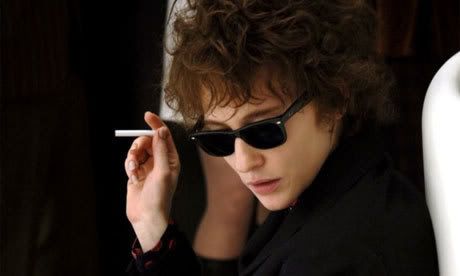
Before I saw this movie I was pretty sniffy toward Miss Blanchett for three reasons – 1) that she’d gotten nominated for her non-supporting overacting masterclass in Notes of a Scandal last year, 2) that she got nominated this year in Lead Actress for nothing but a rehash of a performance she did better a few years back and 3) that she was gonna be taking the Oscar off Saoirse. But, watching I’m Not There., I have to grudgingly concede that this performance is more than just the whole “woman playing man” gimmick; Cate is actually pretty good. She represents the artistic Bob Dylan, and, perversely, is probably the best out of all the “Bob Dylans” at well, playing Bob Dylan (though to be fair he was kinda androgynous during that era). Aside from all the obvious ticks and mannerisms, I think she portrayed Dylan’s emotions perfectly – he was twitchy and sarcastic, yet she still conveys a layer of vulnerability. So, who woulda thunk it? An actress I’ve been hating on all Oscar season, bungs up and impresses me with their craft! B+/A-.
03. Tilda Swinton, Michael Clayton
Although I still can’t see her as anything other than the White Witch off Narnia, Tilda Swinton plays a woman who tries to act like one of the big boys in the legal world, has sold her soul to the corporation, but actually can’t cope. Although I wasn’t bowled over by this performance, I still found Swinton, as ever, compelling to watch. B-

04. Ruby Dee, American Gangster
I’d hate to accuse Oscar of nominating someone out of pity or something… but that’s what it must be, because there was nothing memorable or special about Dee’s performance! With the plethora of talented supporting actresses this year, you bung this in?!?!?!?!?! I’m sorry, I know it must piss you all off by now, this phrase that I keep using, but, really: “Are you havin’ a laff?” E

So.
Who will win: Cate Blanchett.
Who deserves to win: Saoirse Ronan
Who deserved to get nominated:

Three performances, actually:
Charlotte Gainsbourg in I’m Not There
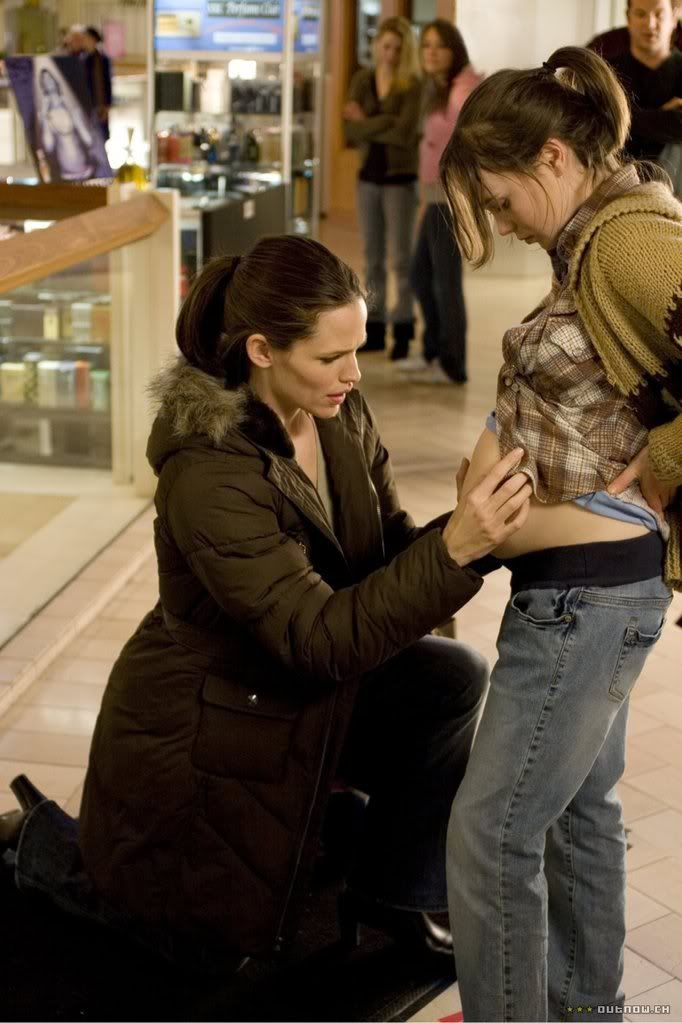
Jennifer Garner in Juno
&
Kelly Macdonald in No Country for Old Men

Also, a note about Romola Garai in Atonement, ‘cos I’ve been thinking about this for a while: -

I think I may have underrated her performance on original viewing. She was terrific in the scene with the French soldier, but in my original review I said that her delivery of the “I am very very sorry” line was “a bit wooden.” Well, thinking about it, I think she was meant to be!! It was meant to sound rehearsed, I think, like she’d planned how she was going to say it for the past 5 years… and then on the big occasion, she bottles it. There really was a lot more depth to that performance than I’d originally noted.

So, thinking about it, I think it’s been a wonderful year for Supporting Actresses.

Wednesday, February 13, 2008

A Look Ahead to Best Cinematography.

The nominees are:
The Assassination of Jesse James by the Coward Robert Ford, Roger Deakins
Atonement, Seamus McGarvey
The Diving Bell and the Butterfly, Janusz Kaminski
No Country for Old Men, Roger Deakins
There Will Be Blood, Robert Elswit

How I did: 100%. My only 100%! Yay.

Having watched three of these films last week, the cinematography is still fresh in my mind.

01. The Assassination of Jesse James
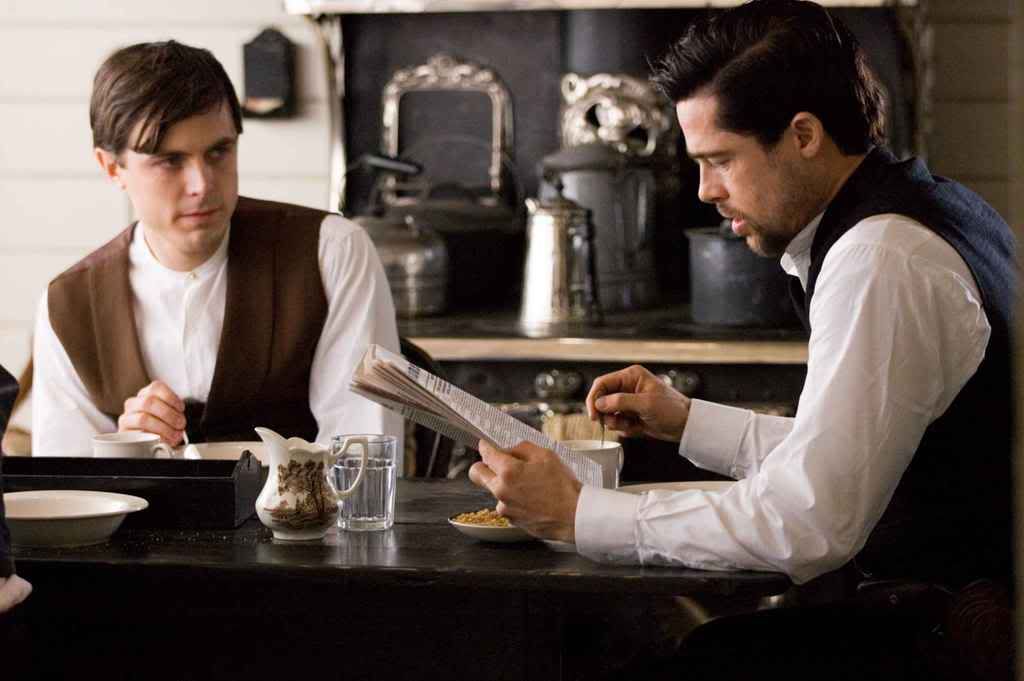
It’s double nominations for Shawshank Redemptioner Roger Deakins this year, and they have never been this deserved. Much of The Assassination of Jesse James is set outside, in beautiful, full landscapes with willowy wheat fields and Deakins absolutely goes to town with his camera, whether it be through changes in focus, rich colours, dazzling use of light sources, careful manipulations of time, or fade-outs. In some parts of the film, Deakins even blurrs the edges of the frame to make it resemble like an old photograph. And the train robbery scene is shot masterfully. Some of the key themes of the film are conveyed through the camerawork, one of the key examples being of Jesse James himself, being viewed through the “lens”, as a poetic myth, some kind of legend that he could never live up to. Brilliant art, and it made the film ever more poignant. A*.

02. Atonement
Atonement, with its pretty costumes and stunning sets is an absolute visual feast, but the cinematography is arguably one of the best technical aspects of the film. Capturing the mood of a wealthy 1930s household, cinematographer Seamus McGarvey’s first task was to convey the sweltering heat, which he did, through resourceful use of Christian Dior stockings over the lenses. Panning shots of Briony walking around the house as well as wide shots of the two sisters lying in the grass are amongst my favourites; they’re simple but beautiful. McGarvey manages to capture the beauty of Atonement in the grittier war scenes which included scenes of a bomber in flight reflected on the surface of an irrigation ditch. And of course, there’s that Dunkirk scene, which despite only taking two takes, probably took several months to choreograph. A.

= 03. No Country for Old Men
Another Roger Deakins work, and another film of a Western motif. Set in the sun-dried landscapes of 80’s, his cinematography perfectly illuminates the indifferent backdrop, portraying the Texas as a moral wasteland. The Coens are renowned for using cinematography to contribute to the mood and tension of their films, and Deakins does this here. The Devon-born Roger Deakins had been nominated 5 times before this year (for Fargo, The Shawshank Redemption, The Man Who Wasn’t There, Kundun and O Brother Where Art Thou?), but never won. If he doesn’t win this year for either Jesse James or this, there will be an assassination of and no country for the old men who voted… or something. (Basically, he needs an Oscar.) A-

= 03. The Diving Bell and the Butterfly
The filming of DB&B is beautiful through its dreamlike uses of colour which fitted in seamlessly with the music, contributing to the uplifting and inspirational feel of the film. Cinematographer Janusz Kaminski (a regular Steven Spielberg collaborator) took home the grand technical prize at Cannes for his innovative approach to the visual style of the film, which features shots from the POV of Bauby, through one eye, so we can experience what its like to have his physical cripplement. In doing so, the movie screen is rife with life and beauty, despite the seemingly depressing subject matter, illustrating the film’s key point – that you don’t need a healthy body to live life to its full. A-

= 03. There Will Be Blood
Although there wasn’t anything hugely flashy in There Will Be Blood, I really liked many of the symbolic images and shots. One I really liked though was the long tracking shot as he carries the injured H.W. to the building and we see him run away from the burning derrick. Tis all very intense. A-

In short, all five films were very deserved nominees. They were all stunning.

Who should win: The Assassination of Jesse James by the Coward Robert Ford
Who will win: No Country for Old Men
Who deserved to get nominated: no-one else aside from these 5. :D

Wednesday, January 30, 2008

A Look Ahead to Best Visual Effects

Again, continuing with my "analysis" (read: subjective comments) about each of the Oscar-nominated categories, and again, due to my not having seen a whole lot of 'em, I'm restricted in which categories I can analyse.

Here are the nominees:
- The Golden Compass- Michael L. Fink; Bill Westenhofer; Ben Morris; Trevor Wood
- Pirates of the Caribbean: At World's End - John Knoll; Hal T. Hickel; Charlie Gibson; John Frazier
- Transformers - Scott Farrar; Scott Benza; Russell Earl; John Frazier

How I did: 0% (again, forgot to predict it.)

01. Transformers
The visual effects in Transformers were really, really, amazing. The robot fights scenes took my breath away. Furthermore, the transformations from car-to-robot are amazing, without a hint of invisible wires or anything like that. If I didn’t know better, I would have actually believed it could happen. 99% of it was all done on computer with individual CGI artists working on individual transformations based on robots created from the doors, fenders, wings, headlights, and engine parts of familiar vehicles. Phew. The effects are big, bombastic, and required an underrated amount of input from the visual effects designers. Terrific VFX all around, that almost atoned for Megan Fox’s acting skills. A.


02. Pirates of the Caribbean III
After overusage of that crappy Kraken in the second film, POTC III returns to not making such a spectacle of its visual effects (in POTC II I almost felt like Verbinski was shouting “Ta da!” when he presented us with the Kraken for the first time), and it fits in with the cinematography better. I particularly liked the usage of blue screen in the final battle. B+.

03. The Golden Compass
The daemons in The Golden Compass were done really well, especially Mrs. Coulter’s malicious monkey, which filled me with dread. The daemons changing their form was also a delight to watch, though as the film went it became old news. The different worlds are intricately created, from an Arctic landscape to a large picturesque town. Sadly, though, I wasn’t that convinced by the bears, which felt a touch… pixelized. B.

Who will win: Transformers
Who should win: Transformers
Who deserved to get nominated: Harry Potter