Showing posts with label 1950. Show all posts

Monday, March 01, 2010

I didn't mean to break it, b-b-b-break it babe.

Photobucket

Funny People (Judd Apatow, 2009)
Adam Sandler plays a jaded comedy star who, on discovering he may die of leukaemia, takes a step back and tries to sort his life out, with the help of eager-to-please Seth Rogen. This film dragged far too much for me, not gonna lie, and a lot of the jokes weren’t even funny. Rogen was charming in his own way, but Sandler, who seems to have three modes, two of which I love – serious actor Sandler and loveable comedy gold Sandler, instead spent most of the movie in the third mode – irritating goon Sandler who laughs at his own unfunny jokes. The subplot with ex-girlfriend Leslie Mann and her husband Eric Bana made me lol, quite a bit, but on the whole, 150 minutes running time was about 140 too many. Not that funny.

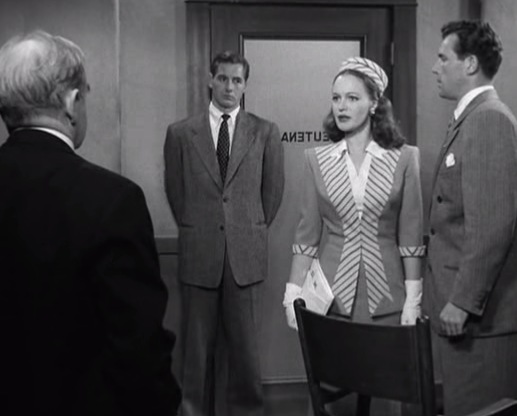
The Naked City (Jules Dassin, 1948)
Absolutely wonderful film noir set in New York, both a joy in terms of plotting and tension as well as technical elements- editing and cinematography (particularly the dark, ominous shadows) stunned. New York is caught in both its glory and its fugliness, just how I like it. The Naked City set the tone for many other (and inferior) modern day thrillers, such as The Black Dahlia. As per most crime movies, there's a murder, there's an investigation and there's a case of did-he-didn't he, but it never gets old. If I had any criticisms with this film, I suppose it would be that it resembles plenty other noirs, I’ve seen before, but the film manages to have its own plot and the semi-documentary style gives it an extra edge.

Up (Pete Docter, 2009)
Well, you had my initial reaction and full review here, but needless to say, I loved it. Beautiful, beautiful movie, so witty and cute and featuring that transcendent 4-minute clip at the start which stayed with me longer than any other 2009 film scene, and most other films scenes, come to think of it. "Tonal modulation" is a phrase I use frequently, but that four-minute vignette had it in spades, highlighting the sweet moments and the sour ones of Carl's life. I'm informed that my initial supposition that the bit I'd interpreted Ellie to have been told she was barren was actually being told she had miscarried, and that Disney dared to touch upon this, in their poignant way, completely blew me away. The bright colours, clash of happy and sad, and ultimate portrayal of love in this film is too beautiful.

Photobucket

In a Lonely Place (Nicholas Ray, 1950)
Nicholas Ray does dark dramas with impending sense of foreboding better than anyone, and this is no different. The chemistry between Gloria Grahame (who deserved more starring roles) and Bogie is incredible, the man himself giving one of his finest performances, a wonderful example of how love can make a man vulnerable. The "did he/didn't he" element lacks a little punch as so many poor imitations have been churned out, but with zingers of lines like “I didn’t say I was a gentleman, I said I was tired”
and “I always go home with the man who brought me”, In a Lonely Place is far ahead of the crap they churn out today. Classic noir.

44 Inch Chest (Malcolm Venville, 2009)
Basically in this movie, Ray Winstone’s wife Joanne Whalley leaves him for another man, completely bruising him. His mates kidnap the bastard that done it leave him in a room alone with Winstone, whilst they wait impatiently outside, wanting him to hurry up and kill him so they can go down to the boozer. The language in this film is coarse for coarse’s sake, with John Hurt in particular doing a none too impressive impression of Ben Kingsley in Sexy Beast, with his wild abuse of the c-word. Winstone is, by his own standards, not up to much in this movie (though his woefully underwritten character has a lot to do with that), but Tom Wilkinson, as the hardman with a heart who still lives at home with his mother, Stephen Dillane as the curt accomplice and Ian McShane, playing terrifically against type as a coy homosexual, make terrifically great fun, almost making this movie worth watching.

À ma soeur! (Catherine Breillat, 2001)
Um, ew. I watched this with my best friends Luke and Anna and we were just so sickened throughout. Catherine Brellait needs locking up or something, paedo. I can’t think of any redeeming qualities in this movie whatsoever. The sister in the movie was a particularly nasty piece of work, and the scene in which she gets taken up the chuff by some pervert whilst her little sister watches is beyond grim. This isn’t cinema, this is child exploitation. That said, at least the fat girl in question is a looker.

Saturday, March 22, 2008

19. All About Eve (Joseph L. Mankiewicz, 1950)

omgz i wrote something?!!


All About Eve came out in 1950, the same year as Sunset Boulevard, Billy Wilder’s subversive portayal of Hollywood and its actors. Mankiewicz was equally scathing in his look at the world of Broadway stage, portraying the mythical ruthlessness and petulance of stage actors. Both were big hits, and All About Eve was nominated for a record fourteen Oscars, winning six, including Best Picture, Best Director, and Best Writing.

It’s the best film about theatre that I've seen, also happening to say more about the film industry too. Sunset Boulevard might be the film about stars that dwell in the glory days of the past and live in self-delusion, but All About Eve demonstrates how they allowed their egos to get like that.

Like Sunset Boulevard, All About Eve tells its story in the form of a flashback. It all kicks off with the presentation of a prestigious stage-acting award to the eponymous Eve Harrington, accompanied by the commentary of theatre critic Addison DeWitt (George Sanders). He introduces us to the players in the world of Broadway before we go 9 months back in history before Eve was a star.

The film then charts the story Eve and how she has wormed her way into the acting clan. She does so by getting into a circle of theatre friends around an aging (and insecure about it) actress Margo Channing, whom she attempts to be a protégé of, using her a persona of friendliness and self-deprecation to mask a sinister plan of getting to the top.

All About Eve is an absolute treat in terms of acting. The role of the older actress, Margo Channing, was considered for a range of in-form actresses, from Gertrude Lawrence (wanted script changes that the director did not), Susan Hayward (too young), Claudette Colbert (pulled out back injury), Marlene Dietrich (Mankiewicz didn't love her), and Ingrid Bergman (would not leave Italy) before Bette Davis was finally chosen.

It’s the role of her lifetime, playing a character that ran only too true – a brilliant actress, but one who felt her time was running out. Bette Davis knew she was handed a dream role when she was cast as the resolute diva caught up in the throes of mid-life crisis both on- and off-stage, and she’s amazing her in performance. She’s selfish and tough yet at the same time, vulnerable and insecure.

Getting suspicious about her increasingly distrustful follower Eve, Margo lets her friends know that she doesn’t trust her, though they, taken to Eve’s put-on niceness, disagree, mistaking her fear for jealousy and harshness. Not willing to resolve the problem in a dignified way, Margo goes on a rampage and has a go at anyone who comes near her.

Bette Davis was born to play Margo Channing and, in my opinion, is even better than Swanson in Sunset Blvd. She can be a catty cow or a coy pussycat, and Davis loves every scene she gets to tear into. At the same time, however, she evokes real sympathy for Margo. The film may be titled All About Eve, but Margo is and always will be the real star of the movie.

Her supporting cast are to die for. Celeste Holm is excellent as Margo's sensible best friend, who at first is on Eve's side but eventually sees how conniving she can be and how ruthless she is in climbing to the top. When she took on the narration, I just got the feeling that things would turn out alright for Margo. She's the closest character to any of the audience throughout the movie, as, she is pretty much a spectator herself.

Gary Merrill and Hugh Marlowe are a joy in their respective roles as Margo’s boyfriend and playwright. George Sanders plays his trademark role as the cad with such cynicism and unfriendliness that it’s no wonder he bagged the Oscar. As the diabolical theatre critic, he has some of the best lines of the movie.

Thelma Ritter again proves why she is the best supporting player in the biz - as coarse but loyal Birdie Coonan, a member of Margo's "drone". Anne Baxter is pretty good as the sneaky Eve, though obviously my opinion of her performance is tainted by the fact that I despise her character (realistic as it was). There’s even space for a Marylin Monroe cameo, in which she steals the show in the ditzy-blonde trope that she would carry for the rest of her acting life.

All About Eve's screenplay is another one of its assets. Written by director Joseph L. Mankiewicz from the Mary Orr play "The Wisdom of Eve," it features strong characters and great dialogue that is witty, bitching and biting. Despite its running time, at nearly 2 and a half hours, it never drags on. Each of the characters are so perfectly drawn, you could imagine them doing things just like that in the 50s.

Femininity, aging, betrayal, manipulation and ambition are just a few of the themes touched upon in All About Eve. It's funny, but it's also a lot cleverer than it looks. It's got melodrama, yet somehow never goes over the top. All About Eve takes the age-old story of a young performer buttering up an old one, with the intention of usurping them, but makes it into something new, something utterly brilliant. Not to be missed.

10/10