Showing posts with label Steve Carell. Show all posts

Sunday, January 31, 2016

Film review: THE BIG SHORT (Adam McKay, 2015)

The financial crisis of 2007-2008 was quite the talking point. People became bankrupt; many lost their jobs and their homes. The haphazard behaviour of bankers cost many people’s livelihoods and the developed world has never fully recovered. Adam McKay, famed for directing entertaining comedies such as Anchorman and The Other Guys, steps into the realms of the big boys with the multi Oscar-nominated The Big Short, an adaptation of The Big Short: Inside the Doomsday Machine by financial journalist Michael Lewis.

My favourite film critic Mark Kermode has a trope he often enlists in film reviews, known as ‘Meg Ryan as an airplane pilot’ (an allusion to Courage Under Fire), whenever he comes across a piece of casting in a film that nobody would buy in real life because the actor is too glamorous or mis-suited to the role. Well, going by that benchmark, there are three Meg Ryan as airplane pilots in The Big Short, with mis-casting so shockingly woeful, these proverbial helicopters would easily crash into each other.

Firstly, Ryan Gosling as a smarmy banker, complete with brunette hair-dye and poor treatment of his Yes-man of an assistant, does not ring true in the least. In films such as Crazy, Stupid, Love and The Notebook, dishy Gosling was in his element playing the dreamy heart-throb. Even in grittier, violent movies such as Drive or Only God Forgives, Gosling is able to transcend his good looks and lends credibility to the role of guys who will travel through the road to hell, laced with good intentions, trying to do what they believe is right. But in The Big Short, as the know-it-all smug Deutsche Bank employee Jared Vennett who spots a loophole in the fragile housing market that he can capitalise on to his gains, he does not convince, and no amount of dark hair or sharp suits will make him a credible banker.

Then we’ve got Christian Bale. Somehow, miraculously recipient of an Academy Award nomination for his portrayal of Michael Burry (although Jennifer Lawrence is on four Oscar nominations now, so, there’s no accounting for taste), a former doctor-come-number cruncher who runs his own asset management company, Bale reaches his intense peaks of American Psycho and The Fighter, but nowhere near the same level of credibility. As his eyes dart around at you (one of his eyes is a glass eye, although I never worked out which) in an attempt to convey Burry’s inability to relate to other people, I couldn’t help but feel faintly embarrassed. The heavy metal music and frenetic drumming that his character has a penchant for are all components in the novel, but by retaining them all in The Big Short for Bale, they do nothing other than illustrate how mis-suited he is to the role. As he is photographed lying on the ground, notes strewn across the floor, I never buy the frame as anything other than an over-cherographed scene of MOVIE STAR Christian Bale, surrounded by some finance notes.

Brad Pitt completes the Holy Trinity of awkward casing. He, like Gosling, has to overcome the hurdle of having to transcend his good looks, and his role in The Big Short is as misanthropic eco-aware Ben Rickett, who, having worked there previously, despises everything Wall Street stands for, but begrudgingly uses his reputation to get a seat at the table for The Brownfield Trust, a small investment firm run by yuppies played by Finn Wittrock and John Magaro. These two lads who a
re not particularly likeable in their roles but at least one of the film’s few believable elements, in their earnest, callow enthusiasm, and their interactions with each other as they stumble upon the mess of sub-prime lending are some of the slightly more nuanced elements of The Big Short's shambles of a screenplay. In one scene, Pitt's character lectures Wittrock and Magaro for being excited that their bets against the housing market are coming in, because whilst it's good news for them, it's awful news for many others. This is certainly true, but having handsome Brad Pitt playing morose with nothing but an unconvincing wig deliver it definitely dampens the strength of the message significantly.

Of the A-list poster-billed cast, only Steve Carell escapes with any pride in tact. His character is angry and has a very personal score to settle with the finance world, having a brother who worked there who suicided years previously. Carrell balances the pathos that this loss causes his character, along with amusing comedy of his raging tirades and general poor social etiquette, so that when his character is disgusted by the amoral people in finance and the little caution they throw to the wind when dealing with other people’s lives, we, too, share his disgust. The crew who work for him, which includes Rafe Spall, are also a semi-honourable bunch, amidst all the other wankers, and the camaraderie and fraternity between them, and the way they look out for Carell’s character, was one of the few elements of The Big Short I enjoyed.

Many critics have commended The Big Short’s irreverent take on the subject and off-the-wall execution. Admittedly, there are some effective scenes; the use of Gorillaz’s Feel Good Inc was nostalgic heaven, and the use of pop culture references to depict the passing of time certainly sits quite well. But mostly, the machine-gun, rat-tat-tat, not staying with any scene for too long, breaking the fourth wall and making Family Guy-style cutaways film ultimately gave me a headache.

I love Margot Robbie and Selena Gomez as much as the next person. But to enlist them to dumb down the subprime mortgage crisis to me, when I hold an Economics degree from the University of Bath, was the wrong side of off-kilter, and downright patronising. Margot Robbie, covered in bubbles, tells us that whenever we hear the word ‘sub-prime loan’, we should think ‘shit’. Well, in that vein, whenever someone mentions The Big Short, you should think, The Big Sh

5/10

Saturday, February 19, 2011

My 10 Favourite Films of 2010.

I can’t tell a lie, I wasn’t exactly blown away by the majority of 2010 releases. Much of this was my own fault – I didn’t frequent my little arthouse digs quite as much last year (hence the highly commercial nature of the majority of my top 10) and whilst there are usually two or three obscure little treats in my top list, due to the fact that I barely watched any art films this year, the top 10 is the most blockbuster it’s been for a while. And what I did see, on the whole, I wasn’t impressed with. Should I have time I may do a least favourite 10, but until then, the goodies.

10. StreetDance 3D [full review here]
I have big, unapologetic love for my dance movies (Step Up 2 made the same position on my top list of 2008 two years ago). StreetDance 3D is very similar to the Step Up movies; it centres around dance and disaffected youth and looks at how dance gives them a raison d'etre, and like with the original Step Up with Channing Tatum, it fuses hip hop and street dancing with the more refined skills involved in ballet. 

As so much of the film revolves around the dancing spectacles, the acting, plot and dialogue aren’t the greatest, but they more than suffice, plus there’s the novelty of seeing Charlotte Rampling cast as a ballet teacher; even in autopilot, she’s nothing less than a queen. 

Set in inner-city London, the city is shot in a way that Woody Allen captured London in Match Point- practically on a pedestal, and the cameos from Britain’s Got Talent acts such as Diversity and Flawless, the acting debut from the wonderful cheeky chappy George Sampson, the trendy soundtrack and the modern day Romeo and Juliet parallel all somehow fit together slickly. So whilst it’s a simple enough film in terms of character and plot, the dancing is anything but, and StreetDance 3D is one of the few films wherein watching it in 3D genuinely does heighten the viewing pleasure. Definitely worth singing and dancing about.

09. Somewhere [full review here]
As I may ram down the readers’ of this blog’s throats (yep, all three of you), I was not a fan of Lost in Translation. Quite why I hate it so much is a topic for another day, but, the point is, on viewing the trailer of Sofia Coppola’s film about boredom, isolation and family, I got a distinctly Lost in Translation vibe from it and expected to dislike it as well. 

Which just goes to show that you shouldn’t judge a film by its trailer, because, whilst there were still discernible echoes of Lost in Translation in Somewhere, Somewhere washed with me a lot better. 

There’s a very likeable sort of gentle chemistry between on-screen father daughter pairing Stephen Dorff and Elle Fanning and various scenes which Coppola may have put in out of pure indulgence (such as the ice-skating sequence) actually add to its charm, and Coppola’s credentials as a music video director work to her advantage here, especially in the memorable and beautiful scene where Dorff and Fanning sunbathe to the pool to the melancholy lyrics of “I’ll try anything once.” 

Paint-by-numbers Coppola filmmaking, perhaps, but as a study of the things in life that matter, I connected with it, and it also serves as a delightful modern-day counterpart to Paper Moon, one of my favourite films.

08. Date Night
Scoff all you like, but I thought this film was bloody genius. 

At the centre you have a comedy King and Queen, Steve Carrell and Tina Fey, as a suburban husband-wife combo who get through life perfectly fine, albeit noticing that their marriage is slipping up on what Thierry Henry would dub the “va-va-voom.” 

On one of their date nights, they decide to venture into New York City, and in order to get seats at a pretentious restaurant, take on the identities of “the Tripplehorns”, which sets off a hilarious comedy of errors. 

With cameos from Leighton Meester, Mila Kunis, Mark Walhberg, Taraji P. Henson, Ray Liotta as well as two of this year’s Oscar nominees (for other films, obviously) Mark Ruffalo and James Franco, this is very much a Hollywood star back-pat sesh, but the smugness isn’t totally smeared in our faces as much as other films, such as Ocean’s 11.

Steve Carrell gets to use his comic timing to perfection (“he turned the gun sideways!” had me chuckling loudly) and Tina Fey delivers more of the deadpan, observation-comedy, but together, they make a wonderful comedy duo, and Date Night a very enjoyable film.

07. Made in Dagenham [drunken review here]
A delightfully charming true-life tale of how a group of women in the Ford plant in Dagenham campaigned for pay equality for women, Sally Hawkins steals the show and it’s a disgrace that such a sweet film was completely forgotten about come awards season. 

Like Starter for 10, Made in Dagenham is probably more likely to be fully appreciated by Brits, but there’s definitely a universal appeal in the theme of not giving up against the odds, even when practically everyone is telling you to sit down and shut up. 

Rosamund Pike gets to subvert her ditzy image and play against type as a stay-at-home mother who’s actually a lot smarter than her husband but has to pretend she isn’t, Jamie Winstone is the epitome of Essex in her brash bolshiness and up-and-comer Andrea Riseborough provides merriment too. 

Forget The King’s Speech, this was by far my favourite British film about overcoming adversity of the year.

06. Easy A
When we look back at the somewhat blah cinematic year that was 2010, one thing that I will definitely remember about it is it being the year that Emma Stone truly established herself on the scene. 

She’s always been nothing short of delightful in the past, even in truly dire films such as The House Bunny, but getting a film to herself and being expected to carry it is a big ask, yet Emma fulfils her job – and then some. As Olive Predergast, the maligned protagonist of the film who is wrongly dubbed a whore, slut and floozy by all of her fellow schoolmates, Emma Stone keeps the tale always on the right side of jovial, even when events take a turn for the problematic.

She’s obviously helped by some terrific zingers and one-liners, as well as a supporting cast that features Amanda Bynes hamming it up as a Christian Bible-basher, Thomas Haden Church as the chilled English teacher, Lisa Kudrow as the school councillor (and his wife) who cheats on him and gossip girl’s Penn Badgley as the love interest, but the fact of the matter is that there are just too few actresses in Hollywood that are as naturally likeable as Emma Stone, and her sexy, swaggerous red-hair, basque and Ray-ban combination will long be copied, never bettered. 

It doesn’t need to be said but I’ll say it; that girl will go far.

05. The Fighter
The Fighter opens to the tune of The Heavy’s “How do You Like Me Now” as Mark Wahlberg and Christian Bale, cast half-brothers from the same mother Micky Ward and Dicky Eklund, strut down their neighbourhood, mini-heroes for their status as boxers (Eklund had a good run before he descended into crack addiction, and Micky has a few fights lined up). 

Coming from a family with seven sisters ruled under the iron fist of their loving but sometimes ill-advised materfamilia Alice Ward (Melissa Leo), Micky has always taken the advice of his family members, even when it’s ended up backfiring. When he starts dating local barmaid Charlene (Amy Adams), however, she opens his eyes to the fact that he needs to train to start sticking up for himself and his own best interests. Micky wants to win fights but he also wants to appease his family, thus the key premise of The Fighter

The acting is uniformly excellent but Christian Bale really stands out in his twitchy performance as the drug-addict who still rides on his former glory, oblivious (or simply refusing to accept) that he’s become a joke; the scene in jail wherein he watches the documentary about himself is heartbreaking. Despite the fairly grim plot-line, the film still managed to be funny and lively throughout; I in particularly enjoyed the shy sweetness of Micky and Charlene's tentative romance. 

There’s something about the whole against all odds type film that just appeals to me massively, and the flawed characters and themes such as loyalty and fraternity elevate The Fighter from standard boxer-movie fare and give it an extra one-two punch. 

Like Micky at the uplifting finale, this film is a winner.

04. Shutter Island
Completely forgotten about in awards season due to its release date in the first half of 2010, Shutter Island stands as my choice for the most underrated film of 2010. Adapted from Dennis Lehane’s book, Shutter Island is rife with mystery and feelings of foreboding throughout, and even having read the book beforehand, I was still thinking about it long after the credits had rolled. 

Atmospheric, tense and scary as hell, there’s more than a small dose of The Cabinet of Dr Caligeri in it, Martin Scorsese does some of his best directing in this perfectly sculpted and ingeniously shot (the bright lighting only goes to add doubt about what’s real and imagined) about Leonardo DiCaprio pretty much losing his mind. Inception who? There’s only room for one film about what’s real and what’s not with Leo DiCaprio wherein he has a crazy wife, bitches, and for me, that film’s Shutter Island!

03. True Grit
Whether it be Kill Bill, The Lion King, Hamlet or Inglourious Basterds, I do like a bit of the ol' revenge film genre. 

That said, the Western genre is probably my least favourite. If anyone could make me like the latter genre, though, it would be the Coens, by fusing it with the former. True Grit centres around 14-year-old Mattie Ross, who wants to avenge the death of her father by tracking down Tom Cheney, the man who killed him. 

She enlists the help of the unreliable but tough Rooster Cogburn, and soon the Texas Ranger LaBeouf wriggles his way into the mission, for he too has unfinished business with Cheney. On their journey they encounter various travails which truly test the level of grit they hold. 

True Grit is very much a film that embodies the whole The Climb mentality; the journey is almost more important than the destination, and no one captures this better than the heroine Mattie, played by Hailee Steinfeld. It’s hard to believe that this is Hailee’s first film role, because she is a revelation, her character is smart, resourceful and caring, and annoyingly stubborn. 

There is also a lovable normality to her heroine status; her attempts to fire a gun throughout the film always end in fail, and there’s also the novelty of seeing someone in such neat plaits talking about their plans for murder. Her performance, Shawshank Redemption-er Roger Deakin’s stunning cinematography and the film closing on Iris Dement’s gorgeous rendition of the hymn “Leaning on the Everlasting Arms” give True Grit an immense sense of beauty.

02. The Social Network
I had my doubts about whether a film about Facebook would justify its two-hour running time, but the story behind did actually make for compelling viewing. As soon as Mark Zuckerberg (his annoyingness captured perfectly by Jesse Eisenberg) goes home after a bust-date and logs onto livejournal to whine about it, I knew this was my mind of film (I do exactly the same, haha). 

The sequences of Zuckerberg coming to piece Facebook together with his uncannily good HTML skills were exhilarating to watch, but there were also small joys in watching the social misfires of him and his best friend Eduardo Saverin (I still maintain that the way Garfield shimmies up to Zuckerberg in the Harvard Jewish Mixer alone should have been enough to bag Garfield a Supporting Actor nomination, but whatever). 

Saverin, played by the delectable Andrew Garfield, functions as his right-hand man and put up the funding for his Facebook idea, yet, later on, got shot out from Facebook, both financially and as a founder. It is this kind of lack of scruples and mercantilism that make Mark Zuckerberg a difficult character to warm to, but thanks to Eisenberg’s performance and the sharp script from Aaron Sorkin (it makes sense that he is so adept at writing political dramas because there is a huge deal of politiquing in The Social Network), there is at least a context to his narcissism, if not a justification. 

Going from intensely funny (“I'm 6'5", 220, and there's two of me”) to very serious in the matter of moments, what The Social Network ultimately illustrates is that no-one rises to the top without a cost, and, by the closing shot of the film – Zuckerberg pathetically refreshing Facebook repeatedly in the hope that the girl he created Facebook to spite/impress will accept his friend request – whether or not all that money truly made our nerdy protagonist happy is still open to debate.

01. Toy Story 3
As a study of letting the things we once loved so much we couldn't imagine them not in our lives, nothing works better than Toy Story 3Toy Story 3 marks the end to a  franchise that I grew up to; Toy Story I was the first film I saw in cinemas in England, true story.

It also completes a highly impressive personal hat-trick for me of their’s: WALL-E was my #1 film of 2008, Up was my #1 film of 2009 and now Toy Story 3 is my favourite film of 2010. 

And rightly so, because I highly doubt anyone other than Pixar could have me shed as many tears over toys as I did in the closing scenes of Toy Story 3. Featuring flawless visuals (the details to which the children’s playroom was rendered with showed weeks and weeks of work and attention to detail - that Totoro doll! Priceless) a voice cast featuring Tim Allen, Tom Hanks, John Cusack, Wallace Shawn and the inspired casting of Michael Keaton as Ken (haha!) as well as the introduction of a vaguely sinister purple teddy bear and a creepy looking giant baby, Toy Story 3 was not at a lack of intrigue, danger and suspense as well as the standard comedy bought by Buzz, Mr Potato Hed and T-Rex. 

Andy might have gone off to college and grown up, but Toy Story 3 illustrates that there is always a part of us, deep down, who holds onto the things that are most precious from our childhood. By the end of the film, my eyes were practically red from the crying, but those were happy tears. 

A bittersweet goodbye to a wonderful trilogy of films.

Wednesday, January 12, 2011

Language. Sex. Violence. Other?

I don’t think I need to tell you about my weird little obsessive compulsive obsession with film ratings and what film gets classified what. For example, I found it dead interesting that Paul Thomas Anderson’s There Will Be Blood originally got a 12A in the UK, then the distributors themselves actually asked for the rating of the film to be lifted to a 15 (for that scene where Daniel Day-Lewis attacks Paul Dano). I really loved that they did this; I watched the film when it was a 15, and although I doubt many under-12s would fancy watching a film like that with their parents, the memory of watching films like King Kong and The Dark Knight with a bunch of boisterous chavs in the audience, almost ruining said films for me, is almost too much. So I respect that the distributors of There Will Be Blood went against the grain in appealing film ratings (usually, as in the case of films like Chicago and The Da Vinci Code, the distributors ask for the film to be down-rated (usually from an 15 to a 12), to broaden the audience and hence revenue.) It’s very refreshing to see in one case, that the distributors cared more about getting the right people to watch their film, not caring a jot about how much/little their film made.

Photobucket

I’m writing this entry mainly about two 2010 films, both produced by the Weinstein Corporation, both tipped for Oscar nominations. The first, The King’s Speech, is one of the front-runners. Starring Colin Firth, Geoffrey Rush and Helena Bonham Carter, it tells the story of King George VI of the House of Windsor and how, through the guidance of his maverick speech therapist, he manages to overcome his stammer. I’m yet to see the film, but I just know I’ll adore it; I welled up at the trailers alone and it just seems to be the kind of inspirational, funny British movie that sits very well with the House of Bung. This film drew particular attention for its MPAA and BBFC ratings, both of which were appealed by the Weinsteins; in the former case they were unsuccessful and the film stayed an R, in the latter they succeeded and the film went down from a 15 to a 12. This film was a curious case, because the reason it originally got the 15-rating was due to, ironically enough, 15 uses of the f-word. Now, BBFC are usually quite rigid in their treatment of the f-word; say it once or twice in a film that’s already in 12A territory, fine (for example, The Tourist, The Social Network), say it thrice or more when the film is already cutting the fine line between a 12A and a 15, and it could well be the f-bomb that broke the camel’s back (many feel that Slumdog Millionaire, though vaguely disturbing at points, was chiefly rated a 15 due to the four or five uses of the f-word, in Hindi and in English.) Thus, by just looking at statistics, by all intents and purposes, The King’s Speech ought to be rated 15, fair and square. However, the case for appeal in this situation is that all 15 uses of the f-word came in one word, and, as indicated by the film warning that the BBFC have on the film poster, the word is not used aggressively (Made in Dagenham, which probably contains around 15 uses of the f-word, merits its 15 because many of those usages were angrily said), not directed sexually, but rather, in the context of speech therapy. It’s certainly a bit different. By keeping it a 15, they would have deprived quite a substantial audience from watching the film, and, unlike There Will Be Blood, The King’s Speech strikes me as the sort of film that a wide range of ages would want to watch. Bearing in the mind that the rest of the film is apparently harmless, I think the BBFC got this one right. A 12A seems its correct rating, and the MPAA should follow suit and down-rate it to a PG-13.

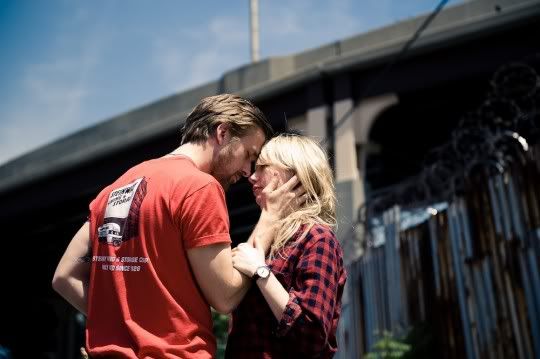
The other film is as contentious over the rating, but this time it is not about a few curse words. Blue Valentine, starring Ryan Gosling and Michelle Williams, charts the dysfunctional and ultimately shattering relationship between their characters Dean and Cindy. It's all very "love will tear us apart, again", and the film intercuts the decline of their marriage with earlier scenes of bliss together, and, unsurprisingly, sex is an integral part of the film. It is sex that is the cause for contention here; the film originally got an NC-17, which baffled director Derek Cianfrance, Ryan Gosling and the Weinsteins themselves. Apparently it is one emotionally charged oral sex scene (man-on-woman) that got the NC-17 rating, and Ryan Gosling was quoted to have questioned the decision, comparing Blue Valentine’s NC-17 to Black Swan’s R-rating, when both films had licky-licky. This situation of a film getting bumped up from an R to an NC-17 due to a scene of male-on-female head has happened before, in 2003, with The Cooler. It interests me greatly that in both these films, they both got a 15 rating, not even the highest rating in the UK, no questions asked, though comments were made in the BBFC profile of Blue Valentine that the sex scenes pushed the upper boundaries of a 15. Blue Valentine was finally given the R-rating that distributors wanted, and rightly so, I say; a little oral sex never hurt anyone.

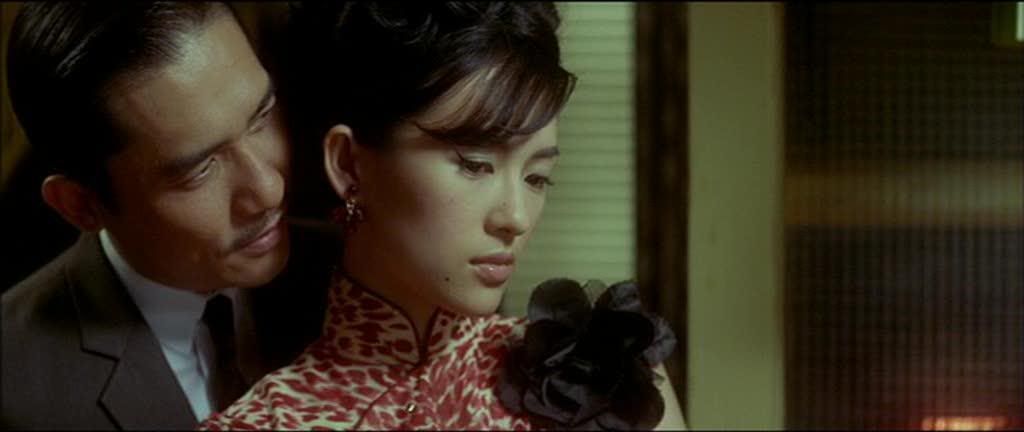
The BBFC rating films which were originally given the NC-17 in the US like the aforementioned Blue Valentine, The Cooler and Monster’s Ball a mere 15 raises an interesting point; we’re Brits, we’re supposed to be prudes and slap a ban on sex and sex on film. Yet it’s interesting, because quite evidently, sex scenes (provided they’re between consenting legals) are not that big a deal over here. A smattering of films crossed the line between PG-13 and R in the US due to their supposed sexual content, such as last year’s Never Let Me Go (Andrew Garfield, unf), and from earlier years, Marie Antoinette, Match Point, Three Times and 2046. Yet each and every one of these films got a mere 12A in the UK, meaning that as long as the kids were with their parents or an older brother/sister, a five-year-old could watch Scarlett Johansson do kinky stuff to Johnathan Rhys-Meyers, or watch Tony Leung embark on his voyage of sexual discovery, etc. Here is where my opinion differs with that of the BBFC; I think that each and every one of those films (bar perhaps Marie-Antoinette, which could do with being a 12A I guess), really pushed the 12A boundaries, and the BBFC would have done better to err on the side of caution and bung them a 15-rating. With the BBFC, violence and horror is generally more of an issue in films; films like The Sixth Sense and Season of the Witch got passed a 15 for their scenes of horror. Said films only got a PG-13 in the US. The bigger issue here is with violence, rather than sex.

One thing that I am in agreement with the BBFC with though, is whilst they have a fairly lenient treatment of sex, they are nonetheless not afraid to make overly-crude films a 15. From this and last year alone, Dinner for Schmucks, Date Night and Couple’s Retreat, three films evidently made for the PG-13 audience (and indeed, that is the rating they got in America), got a 15 rather than a 12A over here. Although I am yet to see the latter, I’ve seen both Steve Carrell outings, Dinner for Schmucks and Date Night, and think that a 15 is the right call. In the former, there is just far too much discussion of the clitoris and in the latter, jokes about nipple clamps and orgies are scattered about smuttily. I think parents ought to be very grateful that the BBFC has sacrificed those film’s commercial appeal in favour of avoiding a conversation with their eight year old kid that goes something like “mummy, what’s anal sex?” (James Franco and Mila Kunis’ characters have an argument about the matter in Date Night, latter wants it, the formers doesn’t. LOLZ).

All in all though, I really love reading the BBFC warnings for each individual film that is released in the UK. It interests me a lot that The Lovely Bones’ trailer had a higher rating (15) than the film itself (12A). This makes me chuckle because I would say that was indicative of the quality, too. It also interests me to know that both The Da Vinci Code and it’s pre/sequel Angels and Demons had to have certain scenes bunged out to achieve the 12A rating that it wanted. Also, reading the BBFC descriptions give me a fair warning to have my wits about with certain films, such as The Girl with the Dragon Tattoo. Furthermore, by checking out the bbfc website and reading their write-ups, it also gives me an idea of what films I never want to see, and The Serbian Film, which sounds absolutely revolting, is one that I wouldn't watch with a ten-foot-bargepole. On the whole, I do think that the BBFC does a good job, although their consistency has to be questioned now and then. Whilst I’m not particularly fussed by their decision to rate The Dark Knight a 12A (it was very dark, but it got a PG-13 and so big is the Batman franchise, that I sort of knew they would; they got massive backlash for it but I imagine that had they rated it a 15, the backlash would have been even greater due to the quantity of kids who wanted to but couldn't view the film), but their stance on the c-word confuses me somewhat. It used to be that just one or two aggressive uses of it could automatically make a film an 18 instead of a 15. Yet, Chloe Moretz, playing an 11-year-old, says it in Kick-Ass, AND there’s already a tonne of graphic violence in that film, yet it only got a 15. The BBFC definitely “Dark Knight”-ed things there; ie forewent perhaps the true deserved rating of the film in favour of pleasing the masses. But then, I’m having Double Standards now, because if the c-word were to automatically make a film an 18, then Atonement should be one, and I think that film is very definitely a 15.

So at the end of the day, whilst there is an element of science to classifying films in the UK, personal judgement comes into it too. Sitting there with a tickbox of the amount of times certain words, lewd acts occur, etc, are important, but equally important is just using your head, and thinking “would I want my kid to see this?” My little brother picks up far worse language than is displayed in The King’s Speech at a Spurs game, so I would have no qualms taking him to see that with me. Answering nosy questions about where the clitoris (as Steve Carrell does in Dinner for Schmucks) is though? Probably not. And also, it is worth bearing in mind that different things trigger “danger” for different people. One homophobic idiot sent the BBFC a letter of complaint about Mamma Mia! being rated a PG because it showed two men kissing. Now that, ladies and gentlemen, is dumb.

Sunday, October 03, 2010

Weekly Screening Log (27th September – 3rd October)

Right, I know I always do these and then end up stopping but I will try my damndest to stick to it this time round! (Famous last words).

Loser (Amy Heckerling, 2000)

Jason Biggs stars as a dorky college student on a scholarship, who is friendly, warm-hearted and nice, and thus, completely out of place amidst his boozy, hedonistic dorm mates. He falls for the equally lovely Mena Suvari, someone who is struggling to pay her way through college as well as having an affair with Greg Kinear’s college lecturer.