Showing posts with label sad. Show all posts

Tuesday, May 22, 2018

TV review: 13 REASONS WHY season 2 (Netflix)

This blog contains spoilers for season 2 of 13 Reasons Why.


Since its release last March, 13 Reasons Why, the Netflix adaptation of Jay Asher’s novel, chronicling why High School student Hannah Baker took her own life, was met with controversy. Many people felt the show glamorised suicide, not least in the way Hannah made 13 cassette recordings with a reason and person named on each tape, to be listened to by the people who contributed to her decision to commit suicide. In season 1, the characters named on the tape, unsurprisingly, were wracked with guilt and recriminations over who was ‘most’ culpable, flew between the accused.


Friday, April 06, 2018

My Favourite Films of 2017 [5 to 1]

Part one here!

05. The Florida Project

The less affluent underbelly of Disneyland Florida’s sunny surroundings is depicted with affection and humanity by Sean Baker, who follows 6-year-old Moonee through her adventures at the bright lilac motel where she lives with her mother.

Tuesday, October 18, 2016

Film review: I, DANIEL BLAKE (Ken Loach, 2016)


Geordie Daniel Blake (Dave Johns), a lifelong carpenter who's recently suffered a stroke, is signed off work by his doctors and physios. He's a determined chap, who's unafraid of graft and unfazed when his neighbour tells him that many before him have given up due to the countless hoops they have to jump through to get Job Seekers' Allowance. But Dan soon finds that the behemoth bureaucracy facing him as he tries to sign onto JSA proves to be a more arduous task than any physical challenge he's ever been given.

He meets Katie (Hayley Squires), a single mother of two who has been relocated from London as Newcastle is the only area that can house her family in a fracas at the Job Centre. The two form a bond and Daniel's easygoing personality wins the affection of Katie's two young children. Katie tentatively tells Dan of her plans to get a part-time job and pursue an Open University degree. For the briefest of moments, the film hints at deliverance.

But sadly life isn't like that. Katie forgoes dinner in order to feed her kids and has to resort to less than ideal methods just so she can buy necessities like deodorant. Meanwhile, the Job Center continue to make Daniel jump through unfeasible hoops in order to procure his allowance. He tries to tackle every task, such as learning to use the computer, in a workmanlike fashion, but his efforts are slammed for not being good enough.

Wry laughs pepper the film. Dan's straight-talking bluntness and his endearing attempts to tackle technology are amusing, but even these funny scenes are underscored with sadness. After days of trying to sign up to JSA on the computer to no avail, his friend prints out a form the Job Centre could have easily handed to him. Ken Loach's point about the nebulous directions of those In Charge could not be clearer. 

I, Daniel Blake is a tremendously affecting, and illustrates the power of narrative cinema, when effectively handled. After all, reading an account of how some families live below the breadline in the newspaper may evoke an 'ah' from the reader, or in some cases, aversion at being preached at. But watching Daniel and Katie's daily struggles is harrowing; the sight of Katie eating baked beans from the tin out of sheer hunger in the film's most devastating scene, set at a food bank, says more than any amount of column inches could.

I, Daniel Blake illustrates what real problems are and makes the audience grateful for their lot. Dave Johns, Hayley Squires and the rest of the (unheard of) cast all give authentic, natural performances, and the dialogue between characters feel organic. You come to really feel for the central characters: Daniel just wants to be treated with respect, something the Job Centre who regard him as currency, don't afford him, and Katie, who's stoic parent would endure anything to provide for her kids. The level of pathos she incurs as she tries to fulfil this is almost unbearable.

There are a few minor missteps-- Daniel's neighbours' attempts to flog imitation trainers was an amusing sidenote, but added nothing to the film other than giving it some temporal grounding (a character refers to Charlie Adam's goal from the halfway line against Chelsea, setting the year in 2015. Stupid Courtois) The hagiography of the entire working class and depiction of everyone in management as pedantic fools obsessed with keeping Daniel trapped in the Kafka-esque web of 'The Decision Maker' was anything but subtle. Life isn't quite as black and white as that. I also felt the film ended a little abruptly, although this must have been a conscious decision on Loach's part to deprive the audience of closure, which would have been dishonest.

To its credit, the film avoids the temptation to sensationalise poverty, spoon-feeding the audience sanctimonious platitudes that might turn them off such a film and have them rolling their eyes at the contrivances on screen. Plenty of films have been guilty of going overboard in depicting the descent to hell to the point that it felt like the director was taking sadistic relish from piling on the misery. Darren Aronofsky's Requiem for a Dream immediately comes to mind.

But Ken Loach's unfussy, raw directorial approach lets the unflinching gaze of real hardship the characters are put through do the talking. A sobering, heartbreaking watch, but a topical one.

 8.5/10

--

Check out the rest of my reviews here!

Sunday, September 04, 2016

Film review: AU REVOIR LES ENFANTS (Louis Malle, 1987)

This post is in conjunction with Pop Culture Reverie's Back to School blogathon. Head on over there to check out other fabulous posts about movies set in schools!

---


Au revoir les enfants, a semi-autobiographical film by Louis Malle, tells the story of the tentative friendship that forms between Julien Quentin (Gaspard Manesse) and Jean Bonnet (Raphael Fejtö), a new, enigmatic boy who joins the Catholic boarding school at which Julien stays. 

Julien suspects that Jean is harbouring a secret of some kind, and as the plot transpires, it turns out that Jean is Jewish, and he and two others are given covert asylum from the Nazis by Père Jean, the kind headmaster of the school. The time period being the Second World War, when France is occupied by Nazis, Jean’s secret hangs over their friendship, and the film.

Malle’s movie dextrously examines the nature of French guilt with regards to their collusion with the Germans during the War, recognising that for many, it was an act of survival. Despite the fact that German soldiers all the inhabitants of the town, a resentment and dislike of the Nazi regime is definitely brewing.  In one scene, a Jewish diner at a restaurant is threatened with ejection by the Nazi soldiers, but it is the Nazi soldiers who are chased out of the restaurant by other diners, sick of their fascism and anti-Semitism.

Having witnessed some the events depicted film firsthand, Malle understands the conflicting duality of the French people in terms of doing what is right, and what won’t get them into trouble. To quote Edmund Burke, 'The only thing necessary for the triumph of evil is for good men to do nothing' and Malle captures this essence in the faces and actions of French citizens in the film who want to protect the Jews, yet at the same time, view self-preservation as the most important item, and thus, did not stand up to the Nazis.

The film follows Julien and Jean as their bond strengthens amidst this historical backdrop. Jean, a smart, quiet lad who’s adept at mathematics and the piano, helps Julien improve his playing. Another scene in the film that lingers with me is when the two boys duet together; it’s a joy to see the smiles on their faces as they do so, and the way something as simple as music can bring people together and provide momentary displacement for life-threatening concerns on Jean's part, is profound and affecting.


Despite the grim historical setting, Au revoir les enfants doesn’t allow itself to get bogged down and even affords the audience some moments of levity, such as back-and-forth-banter between the boarding school boys about things like bed-wetting, naughty literature and masturbation, as well as the inclusion of Julien’s older brother, another boarder at the school, who should be looking out for his younger brother but instead getting distracted by his constant pursuit of skirt. By including moments of comedy amongst the drama, Malle makes the experience more frank and captures the innocence of youth.

The chemistry between Manesse and Fejtö, two untrained young actors, is organic and lovely. The transitioning of their relationship: from the start, where Julien envies Jean’s academic prowess and thus feels slight hostility towards him, towards their friendship slowly blooming and Jean letting him in on his secret, every step feels real. You’re rooting for these two boys to stay friends and for Jean to stay safe, even if, historical evidence points to the opposite occurring. 

The last scene in the film, where the movie’s title is spoken, is heart-wrenchingly sad, more so because it is directed in such a matter-of-fact, unfussy style. World War II did happen, and atrocities were committed against the Jews. By not sensationalising events and honing in on how it affected one impressionable young boy, we view the story through Julien’s prism, and it is no less harrowing. The look in Julien’s eyes in the last shot still lingers with me; he says nothing, but a picture says a thousand words.

French cinema captures the essence of adolescence in a manner that really speaks to me. Blue is the Warmest Colour was one of the most honest depictions of sexual awakening and the rollercoaster of experiencing your first love, and Les 400 coups, my fourth favourite film, excellently depicted what it's like to feel misunderstood.

Au revoir les enfants is another fine addition to this list. Through subtly made and lovingly-crafted scenes, it is one of the most powerful films about friendship between kids I've seen, and an unforgettable reminder that even in the darkest of times, something beautiful can be formed.

9/10

Friday, August 26, 2016

Four recent releases that got a PG-13 in the States but a 15 here.

I was in Birmingham for a conference this week and saw two films there alone, thus making v.g. use of my Odeon Limitless card!

Having seen those two films (The Shallows, Lights Out), I’ve now seen four movies (those two and Nerve and Suicide Squad), all released fairly recently, that got rated a PG-13 by the MPAA and, rather than get the rating that is roughly equivalent over here, the 12A (which about 90% of US PG-13s get), they were slapped with the older sister rating, the 15.

I thought I’d be super-nerdy and discuss my thoughts on the BBFC’s decision to rate them 15, rather than the actual quality of films themselves.

Lights Out: 15 for strong supernatural threat, bloody images.
My verdict: 15.
Far from being one of the scariest 15s I’ve seen, but there were a lot of jump moments, some funny, but some very intense which would have been just a bit too terrifying for a 12A. The main antagonist was also too creepy in appearance for 12 year olds and under to stomach.

Nerve: 15 for risky imitable behaviour.
My verdict: 15.
The film portrays teenagers being egged on to do increasingly more daring and ill-advised things for money, and that fact that some of these really dangerous acts don’t have negative consequences (eg, lying on a train track as a train crosses, or driving a motorcycle at perilously high speeds without sight [Dave Franco in motorcycle gear tho. Swoon]) could potentially send out the wrong message to impressionable pre-teens, which the 12A rating would have allowed them watch. Thus, agreed with the BBFC on this one.

The Shallows: 15 for sustained threat, bloody injury detail
My verdict: 12A.
To paraphrase a defender’s protestations after his clumsy foul has led to conceding a penalty, ‘Never a 15!!!’ This survival movie, about a young Medical school dropout (Blake Lively, surprisingly decent) and her battle with an aggressive shark, felt more vaguely unsettling, rather than relentlessly frightening. There were some moments where her vs the shark felt a bit touch-and-go, but the focus on the resourcefulness of Lively’s character gave me faith that she wasn’t going to go down without a fight; I didn’t feel the threat really was ‘sustained’.

Also, the injury detail, whilst grisly, was no worse than what Matt Damon had to address in The Martian, a 12A.

Suicide Squad: 15 for sustained threat, moderate violence
My verdict: undecided.
Don’t get me wrong, I’m very happy it got a 15, because it meant I got to enjoy Suicide Squad in relative peace (the cinema was full when I saw it because I watched it the day it was released to maximise the number of hits I’d get for my review for it. I’m cool like that).

But in terms of precedent, the 12A-rated 10 Cloverfield Lane made me a lot more nervous than this film did, and I also thought the tone of Christopher Nolan’s Dark Knight was bleaker than Suicide Squad. Plus the BBFC rating for that 12A title featured ‘strong violence’, so if strong violence is allowed in a 12A (The Kite Runner, another 12A, has strong violence), then moderate violence shouldn’t be really flagged as a 15 category-defining issue, no? #pedanticChinawoman

On the other hand, I do think the scenes between Joker and Harley were a little disturbing, particularly when she voluntarily jumps into a vat of acid to pledge her love to him; the juxtaposition of Kehlani’s seductive vocals on ‘Gangster’ with the disquieting visuals perfectly capturing Harley's brainwashed mental state (Margot Robbie in glasses tho. Swoon). I guess Jared Leto’s Joker’s unhinged grin when he was torturing people contributed to the 15 certificate and may go someway to explaining why The Dark Knight wasn’t a 15 – Heath Ledger’s Joker committed acts of violence and murder, but those acts were more functional rather than Leto’s, who definitely had an element of relish to his acts.

So yeah, sitting on the fence on this one.

In conclusion, I fervently agree with the BBFC on two of their 15s, strongly disagree with one, and don’t know about the final one.


I previously mentioned 10 Cloverfield Lane; I’d like to highlight again that that was far too scary for a 12A (even if it did get a PG-13 in the States, but a lot of our 15-rated horrors are also PG-13, showing that the two certificates don’t directly align in the category of threat). Here is a film that definitely could have done with being one certificate higher; if any movie merits the ‘sustained threat’ rubric, it was 10 Cloverfield Lane, which filled me with dread from beginning to end.

Yet the BBFC, bafflingly, claimed the threat in 10 Cloverfield Lane was purely ‘moderate’. They also assigned ‘moderate threat’ to the 12A rating to Star Wars: The Force Awakens, somewhat laughably. Those two films were not at all comparable in the fear stakes.

The IFCO, the Irish film board, rated that a 15, as well as Suicide Squad, Lights Out and Nerve 15s, and The Shallows a 12A. Looks like me and the IFCO are in closer alignment when it comes to these five films!

Friday, August 19, 2016

Film review: DAVID BRENT: LIFE ON THE ROAD (Ricky Gervais, 2016)

15 years on from the BBC's mockumentary covering Britain's thirstiest boss, Brent is Back. Except, rather than back in the domain of being a Regional Manager, he's now a sales rep for Lavichem, a toiletries distributor. His heart, however, doesn't lie with tampons; he wishes to make it as a rockstar. So, impetuously and not at all financially judiciously, he cleans out his pensions fund to pay four musicians, an aspiring rapper Dom (Doc Brown, aka Ben Bailey Smith aka Zadie Smith's brother) and a sound engineer to go on tour with him as the band 'Foregone Conclusion'. A three week tour around Berkshire, to be precise.


As a big fan of the TV show, I was expecting cringe and situational comedy aplenty in David Brent: Life on the Road, and to that end, the film certainly delivers. Probably a little too much so. Brent's self-funded tour is, not surprisingly, a complete crash and burn. The four musicians can play their instruments and the sound engineer (played by Tom Basden) has experience aplenty, but no amount of aural wizardry could come close to atoning for the sheer egotism of the band's frontman.

Brent's delusions of grandeur, thinking he's singing about matters of substance (from racism, to disabled people, to the plight of the Native Americans) is toe-curdingly embarrassing. The cringe factor is compounded by his complete lack of self-awareness, and the earnest look on Brent's face as he delivers lyrics like 'they fly like an eagle, sit like a pelican' about the Native Americans. As audience numbers dwindle and Brent's sense of isolation kicks in, he actually has to pay his bandmates just to have a pint with him. It's mortifying, and where there should be laughs, we're just feeling unease.

But there's now a glossiness to David Brent: Life on the Road that betrays the films' TV roots. The film looks like a film, what with overhead tracking shots and excellent sound design (which must have been down to Gervais wanting the best possible platform to exhibit his pipes). But in having good production value, the intimate air that the TV show has been lost. And, even more of an issue, because the film uproots Brent to a new company with a new group of colleagues, you're not able to engage with them in the film's 90 or so minute running time.

For example, David Brent's only friend at Lavichem, Nigel (played by Phoneshop's Tom Bennett), admits that nobody really gets him, and hence why he and Brent gravitate towards each other. His social clumsiness make him a sitting duck for the rest of the office. It's not nice watching him get bullied, particularly as he definitely isn't an ill-meaning person, and I feel more character development on his part would have made the movie a more satisfying viewing experience.

The fact that Nigel doesn't get to come into his own and is relegated to the role of a sideshow is because this film, quite clearly, revolves around Ricky Gervais David Brent. Gervais writes, directs, stars, and, much like his cinematic counterpart, he can't stand it when the spotlight isn't on him. The fact that Gervais' most authentic acting in David Brent: Life on the Road was the scene in which  Brent jealously watches Dom, the rapper he 'befriends' (mainly as a get out of jail-free card for his un-PC jokes) rapping to the adulation of a crowd, speaks volumes.

Still, credit to the supporting players who are still able to make an impact despite their paltry screen time. Ben Bailey Smith captures the viewers emotions perfectly in terms of his reaction shots to each of Brent's misguided quips, and his rapping style is understated but incisive; the perfect foil to Brent's bloated singing style. Tom Bennett genuinely moved me as Nigel. His character has a bit of Mackenzie Crook's Gareth's zaniness, a bit of Martin Freeman's Tim's quiet compassion, as well as injecting a third element, of the overgrown schoolboy who sadly never outgrew getting picked on. And finally, Tom Basden, as Foregone Conclusion's Sound Engineer, is a dignified presence throughout the film, his low tolerance for Brent's crap gradually softening as his watches him go through degradation upon degradation. 

These three British talents are good factors that contribute to the quality of David Brent: Life on the Road. But what stops the film from achieving greatness is the sheer, unrelenting narcissism of Gervais. This was never really a film that needed to be made; The Office's co-creator, Stephen Merchant's absence on this film speaks volumes. Like Finding Dory, the superfluous sequel that should never have been made, this film is overkill.

The Office Christmas special was the perfect time to end it, because it balanced tying up story loose ends with long-suffering characters getting some well-earnt redemption. I really cared about Tim and Dawn. By the end, I'd even cared about Gareth. But I didn't care about David Brent a fraction as much as Ricky Gervais wanted me to, and tries to get you to, working overtime, in this film.

Because his affection for a character he created is not mirrored by the audience, after a while, the novelty of watching Gervais play himself wears thin.

There's a sequence in the film where David Brent pays for a photoshoot, where he goes through all the masturbatory notions of gazing into the camera in all manner of provocative poses. Brent really fancies himself a lead singer in a band.

Despite all the humiliation, the awkward silences and the tiny crowds throughout the film, it's quite clear that so does Gervais.

6/10

Friday, July 22, 2016

Film review: WHEN MARNIE WAS THERE (Hiromasa Yonebayashi, 2014)

Remember when I complained about how due to the restricted choice of films screened at Cineworld cinemas, despite watching 42 films on the Unlimited card last year, I saw a meagre 2 foreign films? Well, I’ve already seen half that number of foreign movies on my Odeon Limitless card, at Panton Street Odeon, where I saw When Marnie Was There.

--

Ever since she was young, 12-year-old Anna Sasaki has been an outsider. She doesn’t fit in with the children in her year at school, feels disconnected from her foster parents and her social awkwardness is compounded by a deleterious breathing problem, which rears its head when she feels upset or stressed.

Deciding the key to Anna’s breathing attacks, and hence, her timidity, is clean air, her foster mother Yoriko (whom Anna refers to as ‘Auntie’) sends her to spend the summer with Yoriko’s relatives, in a coastal town. A few days after arrival, Anna spots a blonde girl in the window of a seemingly deserted mansion across the shore. The enigmatic girl introduces herself as Marnie, and a bond is immediately formed between the two girls.


Based on British author Joan G. Robinson’s novel of the same title, writers Masashi Andō, Keiko Niwa and Hiromasa Yonebayashi altered the location in the original story from Norfolk to the Japanese town Hokkaido. Graciously, nothing has been lost in translation. The story is simple, but told cleanly and elegantly, and the themes of bereavement and isolation, tackled with immense sensitivity.

As she embarks on her personal journey, audience members will recognise elements of themselves in the protagonist Anna, who is crippled with self-doubt, feeling she had never been loved due to her parents and grandparents having died when she was a baby. But behind those fragile Anime eyes, still waters run deep. She’s surprisingly intense for her age. The question of whether or not Marnie truly exists, or is just a figment of Anna’s imagination is soon broached. But you get so lost in the budding friendship between the two girls that it is only of secondary importance.

From the outside, Marnie seems to have an enviable life, living in a huge house with extravagant parties thrown by her parents. But inwardly, the two girls are just as alone and unhappy as each other. It is because of this similarity that Anna lets down her walls around Marnie, and we come to learn why it is that she feels so badly about herself. It is sad that a 12-year-old could feel so bad about themselves, but this just makes her blossoming friendship with Marnie ever the more rewarding. Throughout When Marnie Was There, the two characters embrace quite a few times, and it is refreshing that a film can capture the innocence behind such a sweet act.


As with all Studio Ghibli films, the film is exquisitely rendered. One shot, which taps into audience’s doubt of whether Marnie is real or of Anna is Fight Clubing us, is cleverly done without being so over-stylistic as to detract from the story. Unlike recent Disney and Pixar movies, which, for better or for worse, always feature a message, When Marnie Was There concerns itself with straightforward, unpretentious storytelling. The film is entirely about Anna, Marnie and their connection, and if anything about their relationship spoke to me, it was in an organic way, rather than feeling corny or heavy-handed. And finally, although it is by all intents and purposes a harmless U-rated film, it is not just the title that evokes memories of Hitchcock: there is a distinctly suspenseful undertone running throughout.

When Marnie Was There doesn’t reach the imaginative, pulse-racing highs of Spirited Away or the heart-shattering pathos of Grave of the Fireflies, but it is a delightful experience all the same, one which doesn't allow itself to get bogged down in the sadness to celebrate some of the richnesses of life: friendship, family and the power of memories. The hand-drawn animation is beautiful; I lost count of the number of beautiful visuals in it. At the film’s big reveal, I sobbed with abandon. Crying can be cathartic sometimes!


When Marnie Was There is said to be Studio Ghibli’s final film, although whether this is true proves to be seen. I sincerely hope that’s not the case: no-one tells delivers moving story like Studio Ghibli.

8/10

Wednesday, April 13, 2011

Fernandon't Scorres.

Chelsea signed Fernando Torres for a club record of £50 million from Liverpool on 31st January with the weight of the world on his skinny shoulders. By the time Chelsea signed him, the title race was realistically only between Manchester United and Arsenal, but for the price that Abramovich shelled out for him as well as his preceding reputation, it was only natural that Chelsea fans – and all football fans, for that matter – expected at least some goals from him, if not immediately, then at least imminently. However, if (500) Days of Summer taught Miss Bung anything, then it’s that the expectation and the reality are very rarely the same. And what happened in that film -- Joseph G-L expecting to find a loving Zooey Deschanel in his arms when he really found her kissing another man, is not a bad analogy for Fernando Torres' failed love affair with Chelseabung. Carlo Ancelotti, for his part, tried everything he could to get Torres to score. He played Torres with Kalou. He played Torres with Drogba. He played Torres with Anelka. He played Torres with Drogba and Anelka. But, for all the want in the world, Fernando Torres still hasn't hit the net. Chelsea fans are impatient, Carlo Ancelotti is worried, Roman Abramovich just smiles that silent steely smile that is impossible to read but can so easy signal difficulty. And still, Fernando Torres has scored the same amount of goals for Chelsea as David Cameron, Olalla Torres (his wife), even the frogs in my garden. On the back of a soul-shattering defeat to Manchester United last night that knocks Chelsea out of the CL and effectively ends our awful season, I thought I’d take a look at Torres’ contributions in the games since he's joined Chelsea. After all, didn’t Miley Cyrus say, it’s all about the climb? Giggity.

Chelsea vs Liverpool, 6th February (Chelsea lose 1-0)
The football gods would just so have it that the first game Torres was available to play for Chelsea was that against his old club, of whom he’d gone from beloved son to reviled Judas. Football fans all over the world were rubbing their hands together at the anticipation of Torres scoring against the club that nurtured him into one of the world’s superstars, if only to see how he would celebrate after he scored. They needn’t have worried; Torres was off-form, as were most of the Chelsea team and a Liverpool side with a point to prove could easily have scored more than the one they did; a shot from Meireles. Following their spirited 4-2 win in the mid-week against Sunderland (which Torres was ineligible to play in) in which Nicolas Anelka had been deployed more as a midfielder than his natural forward role and absolutely thrived, giving one of his finest performances in a Chelsea shirt, Carlo Ancelotti attempted a three-man attack with Anelka, Torres and Didier Drogba upfront, but it was an experiment that failed miserably. The sad truth is that, had Ancelotti played just Anelka and Drogba in a straightforward 4-4-2, Chelsea had the quality to defeat Liverpool that day. But, with Roman Abramovich in the audience watching his new buy, that simply wasn’t an option for the Italian. Poor tactics, a miserable Chelsea performance and a good Liverpool team meant that Chelsea suffered their second home loss this season. Hardly the meeting against his old club that Torres would have dreamed of.

Fulham vs Chelsea, 14th February (scoreless draw)
There was little romance for Torres in this Valentine’s Day West London derby, in which a solid Fulham defence and some errant finishing from the Spaniard meant Torres was yet to be in a winning game for Chelsea. Ancelotti benched Drogba, so it was Torres and Anelka upfront for Chelsea, but the two exhibited little cohesion playing alongside each other, Anelka spending the majority of the game in his standard sulk-face. In fact, the player that truly shone for Chelsea in this game was the other expensive January acquisition, David Luiz, who, despite it being his debut premier league start, played like a veteran of the premier league. He was here, he was there, he was defending, attacking, creating chances; in other words, all the things Torres wasn’t do. Chelsea were unlucky, and should probably have had a penalty when Hangeland felled Malouda, but in the last minute, Man of the Match David Luiz’s lapse led to Chelsea conceding a penalty. The American Clint Dempsey’s penalty was poor and Petr Cech’s save was brilliant, meaning that whilst Chelsea should have won, they were lucky not to lose. "Are you Torres in disguise?" the Fulham fans jeered at Drogba in the second half when he misplaced a hit. Quite.

Copenhagen vs Chelsea, 22nd February (Chelsea win 2-0)
In between this Champions League knockout stages game, Chelsea’s luck went from bad to worse when they got knocked out of the FA Cup to Everton on penalties (a game Torres was ineligible to play in due to being Cup-tied) thanks to two very questionable penalties from Nicolas Anelka and Ashley Cole. The Frenchman, again employed alongside Torres upfront with Drogba yet again sat on the bench chewing bubble gum and looking glum, atoned himself somewhat in this game, in which two classy finishes from him secured two priceless away goals for Chelsea, temporarily easing the pressure on under-fire gaffer Ancelotti. Before the game, Chelsea captain John Terry issued a rallying cry to his team, urging them to “Man Up”, and his words seemed to have worked; Chelsea looked more assured and together, albeit playing against “lesser” opposition. Torres had the occasional moment of brilliance but was once again frustrated by the Copenhagen defence and his own inability to finish in a Chelsea shirt.

Chelsea vs Manchester United, 1st March (Chelsea win 2-1)
The team against my most despised oppositions in the whole wide world; needless to say, I was wasted. Yet again, it was Nicolas Anelka and Fernando Torres starting for Chelsea, but there were so many other back stories surrounding this fixture that the Spaniard’s goal drought actually took the sideshow for the first time in a month. For one, Ashley Cole had recently wounded a Chelsea work experience student with a rifle, whilst Manchester United’s Wayne Rooney should have suspended for the game following his elbow on Wigan’s James McCarthy. However, he was allowed to play, and it was he who opened the scoring (grr) in the first half, meaning that, at half-time, not only were Chelsea’s title ambitions out the window, but their chances of securing a CL slot for next season was looking precarious. But in the second half, they showed Manchester United what they were made of. Chelsea new boy David Luiz, who as in the game against Fulham, played a belter, equalised shortly after half-time with a finish that any striker would be proud of, before Smalling tripped up Zhirkov in the penalty area in the 78th minute to allow Frank Lampard to make like Jamie Redknapp tells his son to do in the latest Wii advert - and smash a penalty down the middle, leading to a precious, precious Chelsea win that had me so delirious that on just two pints, I was ALL OVER THE PLACE.

If truth be told, luck was on Chelsea’s side that Tuesday; David Luiz was lucky not to be sent off and Zhirkov’s fall, whilst a legitimate penalty, could just have easily been shrugged off (and in another game, possibly would have been.) However, Carlo Ancelotti, and Chelsea fans weren’t complaining. Torres played well and looked more comfortable with Anelka than he had done in previous games, and funnily enough, it was the fourth time that a game in which he’d played against Nemanja Vidic had resulted in a red card for the Serbian; Vidic being sent off for two bookable offences. Drogba came on for Anelka with half an hour left and the Ivorian saw out the rest of the game in majestic style; the way he took one for the team, when he himself is every bit the superstar that Torres is, was brilliant to see. Chelseabung got lucky in that game, but I wouldn't get too happy, the two upcoming fixtures against Man Utd meant that the luck debt was fully repaid.
Blackpool vs Chelsea, 7th March (Chelsea win 3-1)

Following that morale-boosting win over Utd, Ancelotti pushed the boat out and paired Torres with Drogba (there’s your FIFA dream team) against Blackpool, who, despite fighting the relegation battle, were far from pushovers at home, having scored in every home game this season. However, it was a defender who opened the scoring for Chelsea, John Terry heading powerfully from a Frank Lampard corner in the first half to separate the two sides. In the second half, Drogba picked up a minor knock, but Anelka, his planned replacement, didn’t look at all happy to be coming on, so Ancelotti bunged Kalou on instead, and serendipity would have it that that substitution really swung the game in Chelsea’s favour. Having spent a few minutes on the pitch, Torres sculpted a pass to Kalou to which the Ivorian was felled, giving Chelsea a penalty, to which Lampard dispatched with signature coolness. Kalou and Lampard then combined coolly to score Chelsea’s third, before Blackpool themselves collected a consolation goal. Salomon Kalou, the somewhat “forgotten” player of Chelsea’s four attackers in the wake of Torres’ arrival, gave an excellent account of himself in his performance, and Torres looked more content playing alongside him in a 4-4-1-1 formation that asked lots of questions of Blackpool’s defence.

Chelsea vs Copenhagen, 16th March (scoreless draw)
It was time for Torres to experience starting on the bench, though Ancelotti reasoned that he was resting him for game against Man City that weekend. This meant that the tried-and-tested strikeforce of Didier Drogba and Nicolas Anelka was employed, and although the game saw no goals, it did allow the former to show what a world class player he was. Some of his interplay was absolutely delicious, and had it not been for some lacklustre finishing from Yuri Zhirkov, this Drogba->Cole->Zhirkov could have resulted in one of the best team goals in recent history. Torres came on for a brief while in the second half and the two goal cushion from the first leg allowed for some indulgence on Chelsea’s part; Lampard could have scored towards the end but chose to tee it off to Torres in the hope that the Spaniard would get his first Chelsea goal. It didn’t work, but the thought was there; despite what naysayers may like to think, Torres’ teammates are just as eager/desperate for him to hit the net as he is.

Chelsea vs Manchester City, 20th March (Chelsea win 2-0)
Alas, the CL-slot six-pointer, as well as the clash of the nouvelle-riche vs the newer-nouvelle-riche. Manchester City came with one game plan: 0-0, and thanks to some staunch defending from Vincent Kompany (one of the underrated performers this season) and the City defence, that they almost got. However, the curly-haired, twinkle-toed, goal-scoring defender David Luiz had other ideas, and when he won a free-kick in the 78th minute which Drogba dispatched, he was there to pounce and bung it in the net. In stoppage time, his compatriot Ramires shimmied past two City defenders to slot in Chelsea’s second against Joe Hart, meaning the West London side gleefully leapfrogged City in the league table. Eyebrows were raised when it was noted that both Anelka and Drogba were benched and it was actually Kalou who started alongside Torres, but the Ivorian more than justified his start, and following the strength of their performances together against Blackpool, I’d say the move was bold, but, considering Chelsea won, it paid off. As usual, Torres' contribution to the match was limited, but he did at least wear a cute blue headband that was the exact same shade as his Chelsea strip. Blair Waldorf, eat your heart out!

Stoke vs Chelsea, 2nd April (1-1 draw)
Following an international break, in which Torres disappointed for Spain against the Czech Republic (but at least partook is a display of some sweet Chelsea fraternity at the end when he and Cech had a moment), Ancelotti started with Anelka and Drogba, perhaps with the view of resting Torres for the midweek showdown against Manchester United, and sat next to the perpetually-sweet face of Salomon Kalou on the Chelsea bench, Torres didn't look too chuffed about it. And Chelsea could only salvage a 1-all draw from what was actually a surprisingly even game, Drogba scoring the equaliser for the visiters; both sides had chances aplenty. Torres and Kalou came on for Drogba and Anelka in the second half, but, surprise surprise, the Spaniard didn't score. Again.

Chelsea vs Manchester United, 6th April (Chelsea lose 1-0)
In what was the most important game of Chelsea's season, luck was most certainly not on their side and they slumped to a morale-crushing 1-0 home loss thanks to Wayne Rooney's  goal in the first half. Carlo Ancelotti tried to play 4-4-2 with both the ~FIFA superstars~ Drogba and Torres upfront, but it failed as it did against Blackpool, and unlike against Blackpool, the rest of Chelsea were unable to pick up the slack. Much as it pained me to say it, Rio Ferdinand, coming back from huge spell of injury, had Torres' number, and Drogba, though his feet did all they could, his face told the story of a deeply discontent man. Ramires should have won a penalty and Evra should have been sent off, but this is Chelsea in the CL, when has "should" ever had a damn thing to do with anything?! To be fair, Torres did have one shot that did look to be going in if it weren't for Edwin van der Saar's brilliance, but, that he was booked for diving towards the end of the night summed up a deeply frustrating game for Chelsea on the platform of the CL, the thing they want more than anything else.

Chelsea vs Wigan, 9th April (Chelsea win 1-0)
A very unconvincing win for the home side, against a team who, in their previous two fixtures, they'd aggregated a mass scoreline of 14-0. In the end, Malouda scored the winner in a goalline kefuffle, in which Torres, ironically, did actually play a part - by impeding the Wigan goalkeeper. On the same day, Chelsea's loanee forwards Borini smacked one in for Swansea City, and Danny Sturridge scored two majestic goals for Bolton, bringing his tally since transfering to Bolton up to six. What Torres would give to just one of those six goals. Chelsea loan out one of their strikers who is scoring for fun and spend millions on a player who couldn't hit the proverbial cow's arse with the proverbial banjo? Now that, Alanis...

Manchester United vs Chelsea, 12th April (Chelsea lose 2-1)
But I speak on behalf of all Chelsea fans when I say that we would have gladly put our what-ifs on hold if Torres repaid the faith that Ancelotti showed in him, repaid the millions that Roman spent on him and repaid the hours of us fighting his corner when his former blatantly didn't deserve it, with a brace against Manchester United. But it wasn't to be. And to be honest, I  think that as soon as Chelsea fans knew that it wasn't to be, although that didn't stop us from hoping, praying, wanting. But what you can want something as much as you want, it doesn't actually get you it. Torres was so poor in the first half (The Guardian rated his performance a 4/10, only 2 points more than what they gave Crouchie for his performance against Real Madrid -- and he got sent off) that Ancelotti had no choice but to withdraw him for Drogba, who, in the second half, played his heart out. Even when Chelsea were down to 10 men, and chasing a 2-0 deficit, he ran and ran, sought loss causes, and neveve up. Drogba was aptly repaid by a brilliant goal, though in the end, it counted for nothing more than pride as Park Ji Sung scored another practically seconds later. It does raise a pertinent point, though. Carlo Ancelotti, last night, could have seeked to do one of two things, get to the final four of the CL, or appease Roman Abramovich by playing the footballer he spent so much on. In the end, Ancelotti got neither. The woe that befell Chelsea fans after this match is too great to even begin writing about, but I have to admit that this year, with the teams that we put out, we just didn't look good enough. I feel bad for players like Michael Essien, Frank Lampard and Petr Cech, who are amazing. But mostly, I feel for Didier Drogba. He, arguably, out of the entire Chelsea squad, has had his nose put out of joint most by Fernando Torres' arrival. Yet even on his form, which isn't the greatest, he is playing Torres off the pitch. Didier Drogba is a superstar, one of the best forwards in the world, but with 27-year-old Torres being paraded in front of his 33-year-old self, he can't help but wonder where he fits in at Chelsea. But I do so hope he stays, because he is an amazing footballer and an even more amazing man. We may have lost but I'm delighted Didi scored. He, more than anyone, deserved his moment last night.

So all this leaves Chelsea in somewhat of a quagmire (can you tell I've been on a Family Guy binge recently? Can ya?!). They have a £50million, perpetually injured striker who couldn't score in a brothel. They have zero chance of any silverwear this season, and the only thing left to fight for his for third and fourth slot, which is between them, Spurs and Manchester City. The malaise that I, and I imagine all Chelsea fans are currently in is immeasurable, and Carlo Ancelotti best sleep with one eye open if Roman's wrath is anything to be believed. It would be churlish -- and downright unfair -- to lay blame all of Chelsea's problems with Torres (we screwed up our title challenge long before he came along and he was ineligble to play in the FA Cup matches which we screwed up), but at the same time it would be blind to suggest he played no part in the massively dissappointing two games against Manchester United, which were, to be honest, the ones that mattered the most by far. Nicolas Anelka is a gem and has come out and said he "doesn't mind" not starting that much, knowing that as he's over 30 and at a club with four forwards, he needs to be realistic. However, Drogba and Salomon Kalou are clearly thinking over their options. Kalou is 25, an adorable sweetheart and a terrific little utility player for Chelsea, but when he was at Feyenoord with Dirk Kuyt, the two were tearing defences up, and Kalou must secretly pine for the days when he started almost every game, as opposed to for Chelsea, where if he's lucky, he'll get 10 minutes, and if he's very very lucky, he'll get a start, despite the fact that his goals-to-shots ratio has been far better than Torres'. The Fernando Torres jokes come in thick and fast ("Did you hear about my Torres night out?! I spent loads of money, had loads of shots but in the end didn't even score!" is a popular one, as is the website, http://hastorresscoredforchelsea.com/, which I don't believe will need updating until 2014) and I meet them sometimes with a bittersweet chuckle, sometimes with an ingrained need to defend by team -- and thus Torres. I know Roman Abramovich is a billionaire and can do whatever the hell he wants, but next time, I'd really appreciate it if he approached such a big-sum spending with a little more prudence. Torres and Drogba may score feckloads on FIFA, but, sry2say, Roman, life isn't a game of FIFA. Oh how I wish it was, but nah. At the end of the day, I'll support any player in a Chelsea shirt, even massive flops like Mateja Kezman, but this Torres escapade is all getting a little disappointing.  If I had to do the same again, well, er, I most certainly wouldn't do the same, my friend, Fernando.

Tuesday, November 09, 2010

Kanye’s Beautiful Dark Twisted Fantasy is by turns dark, twisted and very, very beautiful.

I know, I know, I’ve not been blogging much recently, and I hold my hands up to being a lazy git. However, my life has been somewhat of a lol recently, so I’ve been trying to figure that out first. In doing so, I realised that my personal don Kanye West’s new album has been leaked, so, what better way to return to the blogging world than a song-by-song review of it??

Photobucket

The introduction to the album, “Dark Fantasy”, unsettled me from the off, what with the vocals being spoken by what sounds like an odd imitation of a British accent. Then there’s some gospel-like singing, before 1 minute 19 seconds: THERE HE IS. He shows off his expansive range of high school Spanish: “How you say broke in Spanish? Me no hablo”, and the chorus of “Oh, oh, oh” is masterfully orchestrated. But the focal point of the song is the man himself and his rapping, and oh, what masterful rapping. Kanye West is in the building, ladies and gentlemen.

The second song of the album, “Gorgeous”, with Kid Cudi and Raekwon features some stunning electric guitar and malaise aplenty in Kid Cudi’s bits: “I can feel it slowly drifting away from me.” Kanye’s rapping sounds like it’s down through a foghorn or toilet pan (possibly both), but looking past that silly sound effect, it takes nothing away from the insight to his rappings, “I treat cash the way the government treats AIDs”. Kanye West has been accused of loving the sound of his own voice too much (the Taylor Swift affair has been touched upon ad nauseum), but it’s my opinion that when his words are this poetic, it’s a good thing that he projects his thoughts so loudly. The classy song is topped off with a sweet Raekwon refrain. There are a lot of excellent songs on this album, but amongst them, Gorgeous stood out for me.

Photobucket

“Power”, featuring Dwele is a terrific fusion of rap and rock with a healthy dosage of hollering in the background to provide the song’s beats. The raps take a crescendo (a thin layer, then louder, then louder), before finally standing off, and it’s clear that Mr. West has some anger management issues arising from his public ostricization of the Taylor Swift affair (“they can kiss my ass… more specifically they can kiss my asshole”, he swaggers), and Kanye West talking about others being egotistical always has ironic novelty value, but this is brilliant stuff – full of intelligent play on words that you’ll have to crane your ears to hear lest you miss them, bold, brassy, and completely Kanye.

When I didn’t see a Rihanna name credit on the song “All of the Lights”, I must say I was surprised, because she stands out more than her male counterpart in her feisty vocal work in the song - but it’s a terrific complement to Kanye’s rapping. The beat in the song is unashamedly big and bombastic (and as such, hugely catchy), and Rihanna isn’t the only celebrity to feature on it – The Dream, Kid Cudi and John Legend all pop up to say their lines, as well as Elton John on piano. Texturally, it’s one of Kanye’s richest songs, and lyrically, it’s untouchable.

Photobucket

The list of talent included in “Monster” itself is somewhat of a monster – Jay Z, Rick Ross, Nicki Minaj and Bon Iver, and it’s good to see that the whole VMA affair hasn’t impaired Mr West’s ability to chat words at breakneck speeds. I mean, I think of myself as quite a fast talker, but there’s no way I could keep up with Kanye at the speed he raps here. Jay-Z, not happy to be outplayed, picks up the pace and raps as quickly, whilst adding his own quirky asides. Up-and-rising bright young thing Nicki Minaj refuses to be outdone by the fellas, and she, too raps in a manner that is both fast, frenetic and totally furious, indicating she’s one to keep an eye out for (she also epitomizes cool in her appearance in Rihanna’s song Raining Men). It’s not unfair to suggest that there’s a fair bit of anger plaguing on Kanye West’s heart following The Taylor Swift incident, because the fact that he wrote a whole songs about it is rather telling. Furthermore, he tells us for the umpteenth time in his album to tell us to kiss a certain part of anatomy, but the swagger is strong with this one.

“Life sometimes can be ridiculous” we are told in “So Appalled”, another song that is heavy on the stars –Jay Z again, along with Pusha T, Prynce Cy Hi, The RZA and Swizz Beatz. Not totally sure what’s being discussed in this song; it just seems to be a slow-burning meditation on whatever’s in the weird and wonderful world of Kanye West’s mind. Each of the men in the song have their own agendas, people who irk them, and they can voice their frustrations to an extent in this song. “What would you rather be, underpaid or overrated?” Jay-Z demands of us. Judging by this song, Kanye West is neither.

“Devil in a New Dress” tells the story of a beautiful but deadly woman (think: Goldigger, but amplified: “I know I’m preaching to the congregation/We love Jesus/But you done learned a lot of Satan”). The pace is noticeably less frenetic than the majority of songs on the album, but there’s a good deal of dry wit as well as signature Kanye back-patting in the track, as well as a healthy dose of soulful instrumentals. The whole song feels like a throwback to old-school, College Dropout Kanye, and the trip down memory lane pays off – it’s a strong track.

“Runaway”, which clocks in at almost 9 minutes, takes its time getting started – 40 seconds of single piano keys, and another 20 seconds of further intro before we hear any actual singing/rapping. Pusha T, who Kanye clearly enjoys collaborating with (they were in Take One for the Team, one of the most entertaining yet also casually misogynistic songs I’ve heard together), and indeed, there is swagger aplenty in Pusha-T’s rapping (“Invisibly set, the Rolex is faceless / I'm just young, rich, but you’re tasteless). The singing finishes in time for three-and-a-half minutes of instrumentals, capping off an accomplished, bizarre but very memorable song.

“Hell of a Life” starts out brashly – “I think I just fell in love with a porn star”. One of the few songs in which Kanye fronts totally by himself, he sings the chorus and raps during the verses, thus exhibiting his wide range of talents. “Have you lost your mind / tell me what you thinkin’ when you crossed the line”. The instrumental ding-a-linging of the electric piano keys sounds like it wouldn’t be out of place in a Microsoft Pinball game and the bass (and random cacophony of sounds throughout) suggests to me that Kanye himself, may have lost his mind when creating this one. But that just compounds to the song’s genius.

When I saw that Kanye had collaborated with John Legend again, I wondered if the result would be their jovial ode to infidelity, “Number One”. But “Blame Game”, whilst touching upon similar themes, is of a different musical pedigree completely. Over seven minutes long, it, like the rest of the album, isn’t afraid to do whatever the hell it wants, but essentially, it’s an elegiac love song that reflects on where a relationship went wrong. John Legend exhibits his wonderful vocals to the backdrop of lingering minor piano keys, and Kanye’s rapping tells a long, meandering, but very sad story. The result is a haunting, beautiful little number that shows Kanye West can do sensitive and emotional with the best of them.

One could be mistaken for thinking it was a woman’s voice at the start of “Lost in the World”; the intro, with the sparse lack of instruments and vocal harmonisations alone, is something that Imogen Heap mastered ages again. Sampling Bon Iver’s “Woods”, it captures the multi-faceted nature of love “You’re my devil, you’re my angel / you’re my heaven, you’re my hell”, and texturally, it’s very thick – playing with autotune, random rhythm and beats, Kanye references plenty of other R&B songs (including Rihanna’s Please don’t stop the Music). At one point it all gets a bit TOO much, and as such, I would rank it as one of my least favourites on the album, but it’s still decent stuff.

The album closes with the arty outro “Who Will Survive in America”, a 90-odd second long soliloquy which touches upon freedom, soul, fraternity, and all the usual themes prevalent in Kanye’s ponderings.
All in all, AMAZE stuff. Absolutely wonderful. 10/10.

Tuesday, February 23, 2010

Film review: UP (Pete Docter, 2009)

My 11-year-old brother Tom has a lol of a MSN profile, wherein he lists his favourite films as the likes of The Pink Panther II and Fantastic Mr Fox. However, a film choice he has there that I actually approve of is Up, the animation of 2009 that until today, I’d not actually seen. But you know what they say, good things come to those who wait. I’d waited long enough for Up, and it sure as hell was good enough.


Wednesday, February 25, 2009

Coming Down the Mountain, among other things.

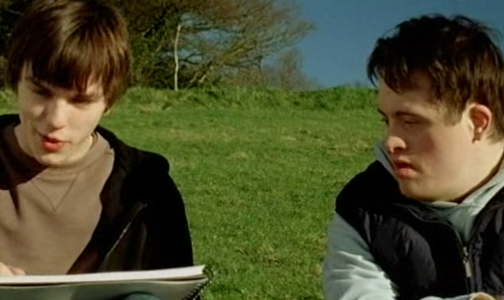
Nicolas Hoult makes a far cry from his bumbling sidekick in About a Boy and cocky protagonist in Skins here, as the angst-ridden teenage who is always having to play second fiddle in his parents' affections due to his brother Ben, who suffers from Down's Syndrome. 

When he is uprooted from his North London home and recently procured girlfriend to live in Derbyshire, Ben's resentment and hatred towards his brother grow and grow, before he decides to take Ben onto a camping trip to "teach him a lesson", but learning more about himself in doing so.

Well-acted, gripping, efficiently paced and sharply written, Coming Down the Mountain proved to be a very satisfying watch, with Hoult giving a heart-wrenching performance but in particular Tommy Jessop shining as his disabled brother. Mark Haddon, who wrote the beautiful The Curious Incident of the Dog at Night Time, has done a good job with the script here, though the "descending into self-harm" vignette made me roll my eyes a little; very, very cliche. Apart from that, strong work all round.

Other TV I've been watching is this show that I've had recommended to me, Gilmore Girls. I saw the pilot, and I can't say I'm that impressed. Its brand of quick-fire dialogue and witty repartee amused me at first but then I just thought it weird and not at all realistic. I'm a big fan of Alexis Bledel so I may continue watching, but it's going to have to do more than just make comments about society to grab my attention.

Photobucket

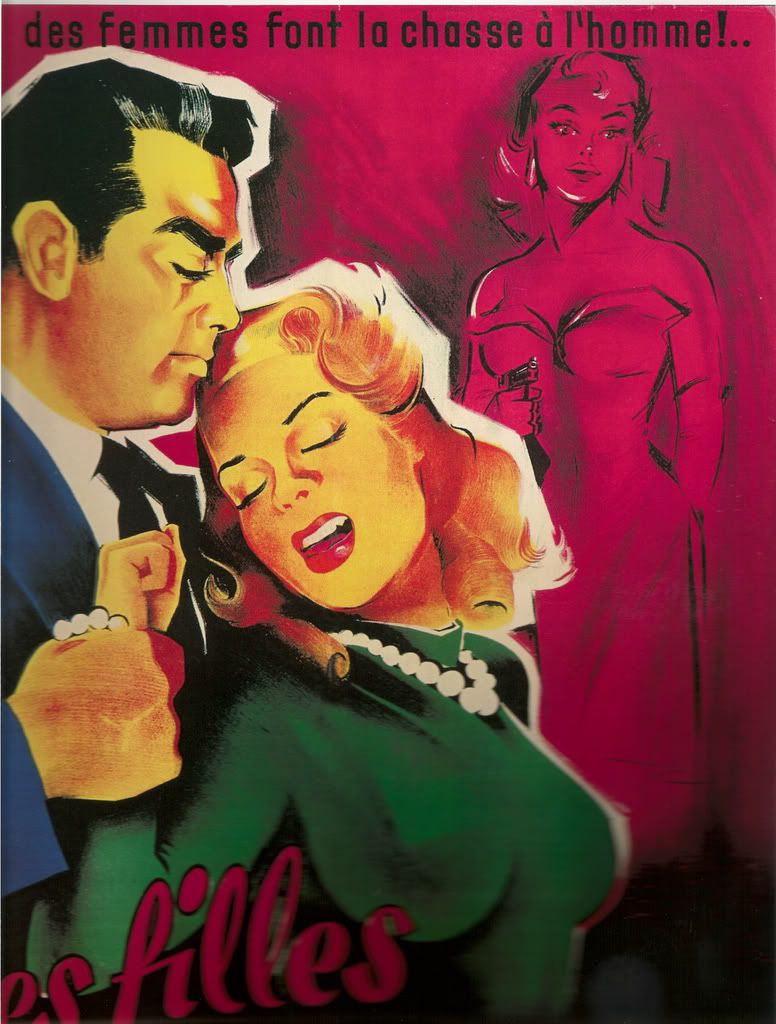
Lastly, is this the most awesome vintage poster you've seen? I think it's definitely up there.

Monday, October 22, 2007

49. The Road Home (Zhang Yimou, 1999).

A truly beautiful movie.

Speaking of reasons to be proud to be Chinese, just watch this. Have you ever seen someone so talented?

P.S. - I still want my readers' Facebooks!