Showing posts with label blogathon. Show all posts

Friday, April 28, 2017

Great Villains Blogathon: Richard Attenborough in BRIGHTON ROCK (1947).

This is my contribution to the Great Villains Blogathon hosted by Silver Screenings, shadowsandsatin and Speakeasy. I have decided to cover Richard Attenborough as Pinkie Brown in John Boulting’s atmospheric Brighton Rock (1947).


Saturday, December 17, 2016

What a Character: Ben Mendelsohn

This post is my contribution to the What a Character! blogathon as organised by ONCE UPON A SCREEN, Paula of PAULA’S CINEMA CLUB and yours truly, Kellee of OUTSPOKEN & FRECKLED which celebrates supporting performers in film. I have gone with a contemporary actor who has stolen the show in almost everything I've seen him in, Mr Ben Mendelsohn (aka the baddie from Rogue One).


I first noticed the actor before having watched him in anything, and it was seeing his name on the Starred Up poster (a film, lamentably, I still haven't seen, although it's high up on my to-see list for the trifecta of reasons that it's from the director of Hell or High Water, and it stars Ben and Skin's Jack O'Connell, easily the best actor to emerge from that show).

The reason Ben Mendelsohn's name struck with me is because there is a composer of the same name (albeit with two 's's, Mendelssohn), who composed the famous Wedding March from A Midsummer Night's Dream. It's funny how the mind makes irrelevant cognitive connections like that, but with a memorable surname like that, I was curious to watch his acting performances.

He had a short-but-memorable appearance in The Dark Knight Rises in a suitably shouty, sweaty cameo, but the film that gave him an outlet to truly show his acting range was in The Place Beyond the Pines, a three-act story which follows the intersecting fates of a bank robber Luke (Ryan Gosling) and the cop, Avery, who pursues him (Bradley Cooper).

In The Place Beyond the Pines Mendelsohn plays Luke's only friend and co-conspirator who helps him commit the bank robberies (a nice counterpart to the role he played in The Dark Knight Rises). The two men, both outcasts, share a tentative, wordless bond, and the chemistry between Gosling and Mendelsohn is excellent, deftly portraying how the latter can pre-empt the former's actions before he's even done them. In the final act, when we see Mendelsohn's character again, and in his inarticulate way, he shows how much he cared for Luke, hinting that there may well be honour among thieves.

Ryan Gosling enjoyed working with Ben Mendelsohn so much on The Place Beyond the Pines that he cast him in his directorial debut, the critically panned misfire Lost River. Almost everything about that film sucked, bar Saoirse Ronan (who is amazing in everything), and Ben Mendelsohn, as a smarmy bank manager Dave who will do anything to get his way with struggling single mother Billy (Christina Hendricks).


Throughout the film, Dave repeatedly tries it on with Billy, only for his brusque courtship to be knocked back every time. However, as one of the patrons of a local burlesque studio, and her financially precarious situation, Billy has little choice but to play right into his hands by first working there, and then agreeing to partake in an after-hours 'shell game' for more money. In this bizarre ritual, a woman is locked in a transparent case and the payer can do what ever they want... to the shell. In theory, the woman should be safe as the shell is looked, but that doesn't render the whole experience any less terrifying.

Naturally, Dave seizes his opportunity, and such has been his unsettling demeanour that you have no idea what form of depravity he will unleash onto the shell. As a matter of fact, he dances in front of it!


The lousiness of Ben Mendelsohn's dancing in this scene, accentuated by the neon backdrop and the electro-score playing in the background, that the whole sequence is incredibly discombobulating. The way he looks at Billy whilst doing so, too, tells you that this is his idea of asserting his raw masculinity, a kind of recompense towards the woman who has had the temerity to turn him down.


As a very amusing stray piece of trivia, Ryan Gosling revealed that the music Mendelsohn had during this scene was 'Bad Bitches' by Kendrick Lamar, which would explain a threatening line of dialogue he barks at Hendrick's character whilst dancing at her. At the time I thought it was his character being crude, but now I see he was just quoting the song.


Ben Mendelsohn has plied his trade as an actor playing villains, of which Director Orson Krennic in Rogue One: A Star Wars Story, an appropriately evil performance, will add to his litany of baddies. One such villainous turn from him that I particularly liked was as Payne in Slow West, a character who teases with an (almost ingratiatingly) amiable veneer, but deep down, you wouldn't trust them as far as you would throw them. Mendelsohn uses his whole face when acting (a quick sly look sideways, a twitch of the lips, a twist of the jaw) to convey thorny characters who occasionally let their masks slip.

Ben Mendelsohn didn't rise to prominence until relatively late in life (he's 47 now), but he has such a characteristic look about him, that once you see the Aussie in one role, you won't forget him. His acting style is distinctive but never distractingly mannered. As I've always said, I tend to identify more with villainous characters in movies, so it was only natural that I would gravitate towards Mendelsohn, who's ability to mould sinister antagonists in films is prenaturally good.

I'm delighted at how well things have gone for him (he is a massive Star Wars fanboy so getting to play the main antagonist in the film must have been a special moment) and eagerly await whatever film roles he takes next.

Wednesday, November 30, 2016

Film review: HOUSEBOAT (Melville Shavelson, 1958)

This review is my entry to Phyllis Loves Classic Movies’s fabulous Cary Grant blogathon, where every entry is a celebration of the man’s varied and illustrious CV. Head on over there to read about all the films he’s been in!

-- 

Tom Winston (Grant), a recently widowed father of three young kids, and Cinzia Zaccardi (Sophia Loren), the aristocratic daughter of an Italian count who plays childminder to the kids, find unlikely love (and a whole lot of miscommunication) in Melville Shavelson’s gentle 50s comedy.

Wednesday, September 28, 2016

Dual roles blogathon: Paul Dano in THERE WILL BE BLOOD (2007)


Slight spoilers for TWBB ahead, so, I would recommend you don’t read this piece if you haven’t seen the movie!

--

Paul Thomas Anderson's modern masterpiece, There Will Be Blood, is a fascinating tale of Daniel Plainview (Daniel Day-Lewis)'s journey as an oil tycoon, and the strategic moves he make during his ascent to the top. His rise to power is both facilitated and impeded by two characters, both played by Paul Dano: twins Paul and Eli Sunday.

The decision to cast Dano as both the Sunday brothers (and ergo, making them twins) wasn't originally in director P.T. Anderson's plans. Kel O'Neill was initially pencilled in to play the mild-mannered brother Paul. But the actor was too intimidated by the director, and pulled out at the last minute, causing some creative problem-solving in the form of casting Dano as both the characters, and making them twins.

Dano's role as Paul Sunday consists of a brief appearance, but is crucial to the plot. At the start of the film, he seeks out Plainview to alert him about a lucrative area to drill for oil in. Dano plays Paul Sunday with a meek, child-like quality. It helps that Paul Dano has one of those ageless faces. He is 32 but could pass for a teenager, a helpful trait to have in the ageist world of Hollywood casting, but one Dano capitalises on only to embark on projects that fulfil him, rather than chase the next money train, which he could easily do.

(Incidentally, for the movie nerds out there, Dano playing a character called Paul in this film means that both Daniel Day-Lewis and Dano play characters with the same Christian names as themselves). #Symmetry

With Paul Sunday's tip, Daniel Plainview makes his way to Little Boston, California to scout out this piece of land. It requires buying acres from the Sunday family, where Eli Sunday, an ambitious preacher, drives a hard bargain for his father's land. He wants whatever Daniel’s offering, and $5,000 for Eli's church. 

Plainview takes an instant dislike to Eli Sunday and his sanctimonious ways, finding the way Eli constantly badgers him about his debt to the church infuriating. Eli's compelling sermons also draw workers away from working on Plainview's ranch and towards his church.

But the thing about Eli that Daniel Plainview loathes the most is that he can read Eli like a magazine, and he sees himself in him. Both men are con artists, who will do and say whatever the audience wants to hear to get what they want. They just go about it in different ways. Plainview sees Eli as a low-rent version of himself, and Eli knows that. Eli isn’t buying what Plainview is selling, and vice versa.

There Will Be Blood undoubtedly belongs to Daniel Day-Lewis, who won a well-deserved Best Actor Oscar for his mesmeric, unforgettable performance. It truly is a spectacular, charismatic piece of acting, and what impressed me most about it is that DDL, like other actors who I admire (Saoirse Ronan, Rooney Mara), does 95% of his emoting with his pupils.

But it his scenes with Dano which linger the memory the most, the way the men interact and play off each other, being spurred on by their mutual dislike, makes the power struggle between them in There Will Be Blood so gripping. The fact that the Dano was pretty much ignored come Awards Season 2008, with only BAFTA acknowledging his excellence in TWBB with a nomination, makes me sad.


The baptism scene, where Eli makes a spectacle of exorcising the past from Daniel, humiliating him, shouting at and even slapping at Plainview to exorcise the bad spirits from him. It's a hypnotic and darkly comic scene, and I definitely noticed a rise in Dano's character's spirits, like he was mirroring the mannerisms of the man he was preaching at. The way he goads Plainview about his Achilles Heel - his son - illustrated that, in that scene at least, Eli had the control over him, and he was going to make the most of it.

Because Dano plays both the Sunday brothers, some film-goers have wondered if they were supposed to be the same character pretending to be two people, particularly as you never see both of them on screen at the same time. But I read Paul and Eli Sunday as unambiguously, two different people. Eli's rant at his father about his 'stupid son Paul', as well as the final scene, where Daniel lauds over Eli how he paid Paul off and how is brother is a winner, and he, a loser, pretty much put that to bed.

Nonetheless, having the same actor play two different roles does have an inherent element of confusion and trickery. The kind of odd cinematic game you wouldn’t put past Paul Thomas Anderson, who’s offbeat Punch-Drunk Love teased out a fine serious turn from Adam Sandler, of all people. If anyone can turn the tables and pull the rug from underneath you, it’s P.T. Anderson.

I've got a lot of time for Paul Dano, who constantly surprises me with his off-kilter acting choices. I squeed with delight when I spotted him playing the fictional embodiment of the Tolstoy in the BBC’s War and Peace this year (my brother was watching).

The fact that he's not a conventional Hollywood heartthrob yet has still done very well for himself in a predominantly superficial industry is a testament to his talent (incidentally, this is precisely the reason why I idolise Jonah Hill, even if the two men’s acting styles are quite different), and I like how Dano pursues film roles for the art, rather than the money. I also dig that he doesn’t thirst for awards like some (tho, seriously. Just because he doesn't strive for recognition doesn't excuse him being passed over by the Award bodies for his work in this movie).

There Will Be Blood ranks as one of his finest performances, and certainly the best film he's appeared in. Of Dano’s upcoming projects, I'm most psyched for his writing & directorial debut, where he will direct his Prisoners co-star Jake Gyllenhaal in a tale of a relationship falling apart. I will be first in the queue to see it at the cinemas.

Godspeed, Mr. Dano. Cinema needs more auteurs like you.

--

This post is my entry in Christina Wehner's blogathon about Dual Roles in movies. Head on over to read other fabulous articles from bloggers on actors who have played more than one role in a film!


Sunday, September 04, 2016

Film review: AU REVOIR LES ENFANTS (Louis Malle, 1987)

This post is in conjunction with Pop Culture Reverie's Back to School blogathon. Head on over there to check out other fabulous posts about movies set in schools!

---


Au revoir les enfants, a semi-autobiographical film by Louis Malle, tells the story of the tentative friendship that forms between Julien Quentin (Gaspard Manesse) and Jean Bonnet (Raphael Fejtö), a new, enigmatic boy who joins the Catholic boarding school at which Julien stays. 

Julien suspects that Jean is harbouring a secret of some kind, and as the plot transpires, it turns out that Jean is Jewish, and he and two others are given covert asylum from the Nazis by Père Jean, the kind headmaster of the school. The time period being the Second World War, when France is occupied by Nazis, Jean’s secret hangs over their friendship, and the film.

Malle’s movie dextrously examines the nature of French guilt with regards to their collusion with the Germans during the War, recognising that for many, it was an act of survival. Despite the fact that German soldiers all the inhabitants of the town, a resentment and dislike of the Nazi regime is definitely brewing.  In one scene, a Jewish diner at a restaurant is threatened with ejection by the Nazi soldiers, but it is the Nazi soldiers who are chased out of the restaurant by other diners, sick of their fascism and anti-Semitism.

Having witnessed some the events depicted film firsthand, Malle understands the conflicting duality of the French people in terms of doing what is right, and what won’t get them into trouble. To quote Edmund Burke, 'The only thing necessary for the triumph of evil is for good men to do nothing' and Malle captures this essence in the faces and actions of French citizens in the film who want to protect the Jews, yet at the same time, view self-preservation as the most important item, and thus, did not stand up to the Nazis.

The film follows Julien and Jean as their bond strengthens amidst this historical backdrop. Jean, a smart, quiet lad who’s adept at mathematics and the piano, helps Julien improve his playing. Another scene in the film that lingers with me is when the two boys duet together; it’s a joy to see the smiles on their faces as they do so, and the way something as simple as music can bring people together and provide momentary displacement for life-threatening concerns on Jean's part, is profound and affecting.


Despite the grim historical setting, Au revoir les enfants doesn’t allow itself to get bogged down and even affords the audience some moments of levity, such as back-and-forth-banter between the boarding school boys about things like bed-wetting, naughty literature and masturbation, as well as the inclusion of Julien’s older brother, another boarder at the school, who should be looking out for his younger brother but instead getting distracted by his constant pursuit of skirt. By including moments of comedy amongst the drama, Malle makes the experience more frank and captures the innocence of youth.

The chemistry between Manesse and Fejtö, two untrained young actors, is organic and lovely. The transitioning of their relationship: from the start, where Julien envies Jean’s academic prowess and thus feels slight hostility towards him, towards their friendship slowly blooming and Jean letting him in on his secret, every step feels real. You’re rooting for these two boys to stay friends and for Jean to stay safe, even if, historical evidence points to the opposite occurring. 

The last scene in the film, where the movie’s title is spoken, is heart-wrenchingly sad, more so because it is directed in such a matter-of-fact, unfussy style. World War II did happen, and atrocities were committed against the Jews. By not sensationalising events and honing in on how it affected one impressionable young boy, we view the story through Julien’s prism, and it is no less harrowing. The look in Julien’s eyes in the last shot still lingers with me; he says nothing, but a picture says a thousand words.

French cinema captures the essence of adolescence in a manner that really speaks to me. Blue is the Warmest Colour was one of the most honest depictions of sexual awakening and the rollercoaster of experiencing your first love, and Les 400 coups, my fourth favourite film, excellently depicted what it's like to feel misunderstood.

Au revoir les enfants is another fine addition to this list. Through subtly made and lovingly-crafted scenes, it is one of the most powerful films about friendship between kids I've seen, and an unforgettable reminder that even in the darkest of times, something beautiful can be formed.

9/10

Friday, August 12, 2016

Film review: SORRY, WRONG NUMBER (Anatole Litvak, 1948)


This post is as part of Midnite Drive-In’s Film-noir blogathon. Movie bloggers all over the internet are coming together to discuss a wide range of film noirs, both well-known and less established, so do head on over to that fabulous blogathon and enrich your film knowledge!

-- 

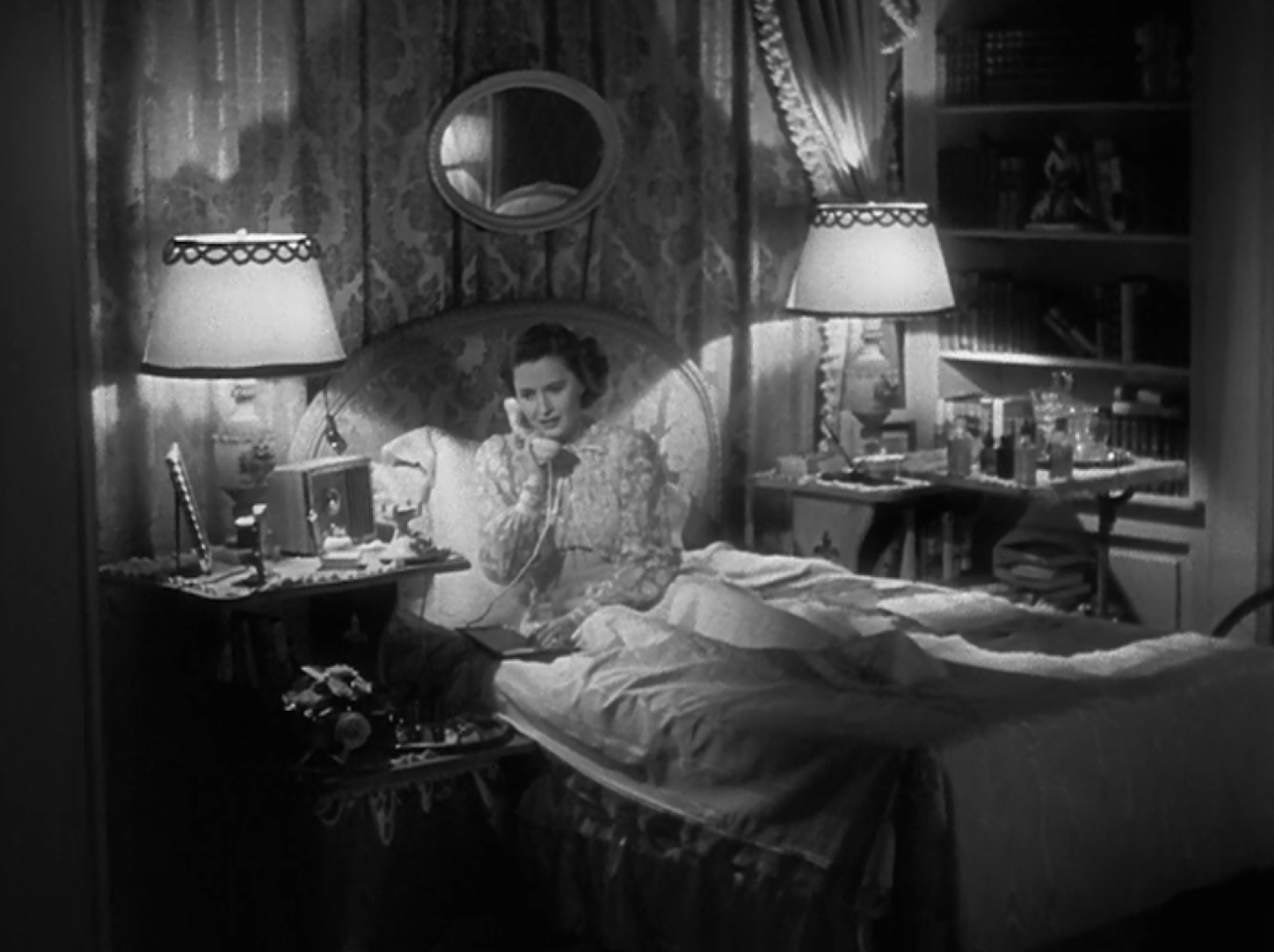
Leona Stevenson is the rich only daughter of a pharmaceutical magnate. She is also invalid, and in NYC from Chicago to consult with a doctor about her health issues. At the start of the fil m, it is apparent that her husband is avoiding her, screening her calls. His absence is even more gaping by the empty chair he leaves, which Leona addresses plaintively. In a stroke of (mis)fortune, she overhears two men’s plots to murder a woman at 11:15pm, with the time meticulously chosen so that the sound of the crime will be masked by a passing train. 

She reports it to the police and then her father, but both efforts fall on deaf ears. As she becomes increasingly agitated alone in the Manhattan apartment, she tries to locate her errant husband, only to inadvertently piece together the context of the phone call she overheard, which she involves her more than she’d care for.

One of Barbara Stanwyck’s four Oscar nominations for Best Actress, Sorry Wrong Number came out four years after her iconic turn as conniving seductress in Double Indemnity. Both are film noirs with a heavy sense of foreboding, but playing a bedridden character, her physical repertoire is limited here. Whilst she slinked around (who can forget that anklet and the way she shimmies down the stairs to show it off?) in Double Indemnity, she spends the majority of Sorry, Wrong Number fretting in bed. It’s a difficult role that only someone with the screen presence and acting guile Stanwyck is blessed with could pull off.

Graciously for her, she does get to stand up at some point in the film: a good proportion of the 
story is told via flashback. We discover how she and her husband (Burt Lancaster) met: he was actually at a dance with a girl called Sally Hunt, who plays an integral part in helping Leona piece together the clues. Leona, never having been deprived anything she wanted in her life, boldly makes a play for Henry. He’s initially put off by her entitled attitude, but, nonetheless, his head is turned by her wealth. Stanwyck conveys her character’s bratty attitude wonderfully: in one scene, she regards her husband with a contemptuous glance in that signature way Barbara Stanwyck looks people up and down. You mirror Lancaster's character's feeling of belittlement when it occurs.

Lucille Fletcher penned the script for Sorry, Wrong Number, which was originally a radio play by her. The translation is effective: few sets are required in Sorry, Wrong Number, and the art decoration of Leona’s grand but stuffy bedroom is conveyed excellently: she has expensive trinkets and bottles, but her loneliness is clear. The moral that money can’t buy happiness is an age-old one in cinema, but this message is conflated with another: money being the root of all evil, which motivates some shady actions by certain characters. Thus, the script, ahead of its time in this sense, touches on an almost Kafkian problem: the more Leona feels her husband pulling away, the more she tries to throw money in the problem, which in turn, makes him increasingly more detached towards her.

The cinematography dextrously plays with light and shade, true to the genre, to create ambiance and dread throughout the film. Also, in the vein of film noirs, there are few truly "good" characters (I would argue only Sally, Leona's former classmate who's love she stole in such a cavalier manner, is), and plenty of murky ones. Even our protagonist, who finds herself in increasing danger, is somewhat hard to take and completely root for, her arriviste persona accentuated by her plush wardrobe, multitude of expensive rings, and Stanwyck's virtuoso performance as a woman who refuses to see what's going on right under her nose, causing the audience to fear the moment the House of Cards will crumble.


The employment of flashbacks and the film being played in real time give Sorry, Wrong Number a real sense of urgency, and the protagonist being confined to their room gives them a powerless sense that makes this film a worthy predecessor to the more polished Rear Window. The beating heart of the film is Barbara Stanwyck; I can’t believe she never won a proper Oscar during her lifetime especially when frauds like Jennifer Lawrence and Natalie Portman have them! As mentioned, Leona is not likeable at all, treating other characters in the film as below her and talking down to everyone. Yet Stanwyck is able to inject sympathy into even an upstart like this! By the end of the picture, she has you rooting for Leona, warts and all.

The Academy gave her an honorary award in 1982, whilst she was still alive, though, for “For superlative creativity and unique contribution to the art of screen acting”, and that is exactly what she has, in spades, here. Without her, Sorry, Wrong Number would have been a fairly exciting film. With her, it’s a complete and utter thriller.

Thursday, August 11, 2016

Film review: TOPAZ (Alfred Hitchcock, 1969)

This post is a contribution to Coffee, Classics and Craziness’ Alfred Hitchcock blogathon.

When deliberating over what film to write about as part of this blogathon, I decided, rather than to wax lyrical about one of my favourites of his (Rebecca, Rear Window, Dial M for Murder and Rope are all in my person top 100 canon), that I would review a title of his that I am more lukewarm about: Topaz.


--

An espionage drama that involves alliances and backstabbings between the Americans, French, Russian and Cuban, Topaz is one of Alfred Hitchcock’s most leisurely works. To describe the plot in full would be to spoil it (and it’s not like me to casually spoil movies now, is it?), but, very loosely, it revolves around a Soviet officer who has recently defected to the USA, revealing that Russia plans on placing nuclear weapons in Cuba. Because an American storming into Cuba to uncover this would be too suspicious, a French intelligence man (André Devereaux) is enlisted to play spy on their behalf. A spider’s web of lies, double-crossing and collateral damage in the form of innocents getting hurt ensues.

Topaz doesn’t star any of the big A-list names who had previously worked with Alfred Hitchcock (Grant, Stewart, Kelly, Bergman, Fontaine, etc), but instead, pairs him with Frederick Stafford, playing the central character, a French intelligence officer situated in the States, and previous collaborator John Forsythe (from The Trouble with Harry and I Saw the Whole Thing), as Michael Nordstrom, a character doesn’t actually appear much in the film apart from to ask Devereaux to carry out such a favour.


Neither actor have a huge amount of charisma in this film, and it’s a shame, because Stafford’s flawed hero (he commits acts that require a lot of valour in the film for the greater good, but also has a mistress in Cuba, thus, breaking his wife’s heart) deserved an actor of more gravitas to flesh him out. Forsythe is similarly forgettable. In the hands of two more compelling leads, Topaz would have undoubtedly been more exciting; the closing line alone had the potential to rank up there with Some Like it Hot’s ‘well, nobody’s perfect’ in terms of wry things said as a film ends. As such, it barely registers. Thus, it is to Hitchcock to do the heavy lifting in terms of manufacturing excitement.

The supporting performances in Topaz are far more commendable. As Cuban revolutionary Rico Para, Canadian actor John Vernon is thoroughly terrifying. Vernon, who trained at RADA and has played roles as disparate as a mayor (Dirty Harry) and the leader of a group of strikers (The High Chaparral”), demonstrates his remarkable versatility here, commanding your attention in every scene he’s in. His piercing blue eyes just make his repellent victim the more magnetic, and he is talented enough to convey a man racked with self-doubt about his convictions, and overcompensates for it with an outwardly self-assured demeanour. Such a character arc is employed abundantly in cinema, from Meryl Streep in Doubt to Aubrey Plaza to Mike and Dave Need Wedding Dates, but John Vernon in Topaz is one of the most effective portrayals of such a character, the more remarkable given his limited screen time.

Karin Dor, as Devereaux’s Cuban lover, is just as magnetic, for different reasons: she’s drop dead gorgeous, with large doe eyes and ample lips, her beauty enhanced by the abundant wardrobe her character sports. Indeed, her purple ball gown frames her character in one of the most memorable shots of the film. Furthermore, Dor’s steamy kiss with her otherwise seemingly pulseless on-screen lover Stafford would rival even that languid smooch between Grace Kelly and Jimmy Stewart in Rear Window for title of ‘most memorable snog in a Hitchcock movie’.


In addition to the two bland leads, the other element holding Topaz back from being a Hitchcock classic is the weird structure. The Cuba act (featuring the two aforementioned supporting players) is dense in action and extremely thrilling, as pulse-racingly tense as the airport scene in Argo. However, the scene in Argo was well-placed at the end, when the film was reaching a crescendo. In Topaz, there are two more acts that follow the Cuba segment, and everything that follows is somewhat of an anti-climax. Thus, the brilliant middle act feels somewhat disjointed from the mediocre scenes that underwhelming scenes that preceded and followed it. It’s ironic, then, that most of the film was shot on location, bar the Cuba scenes, which were filmed in L.A. They’re so stirring that the disconnect in location did not register with me. 

As with the last title I reviewed, Suicide Squad, one of Topaz’s biggest burdens is the large roster of characters, each of which it tries valiantly to dedicate adequate attention to. Naturally, some fall a little short. But there are some memorable, stark scenes, symptomatic of the talent of the man behind the camera. Topaz is surprisingly disturbing for a PG-rated 1960s film, where characters are tortured, and, whilst that isn’t shown, the aftermath is suitably affecting.

Despite the faded colours of the cinematography which give Topaz something of a TV movie feel, and the lack of star power of his two leading men, Topaz is still a compelling enough watch, because The Master of Suspense is pulling the strings. There are some nice bouts of dramatic irony, moulded around one character knowing something that the other doesn’t, and the no-big-deal, almost accidental way the truth is eventually revealed. In the manner only Hitchcock can, he uses these confusions, lapses in knowledge and strategic placing of facts in snippets of dialogue (often overheard) to puppet the audience’s emotional response to scenes.

Although the pacing is ponderous and the film doesn’t grab the audience in the arresting manner the likes of Vertigo and Psycho do, there’s still plenty to commend about Topaz. Above all, it shows a director who, even when not entirely comfortable with the material and the crew he’s working with, can craft something engaging out of it. And that’s why Hitchcock is a G.

Monday, February 14, 2011

Film review: FEAR IN THE NIGHT (Maxwell Shane, 1947)

Right now, the Film Noir Blog-a-thon is occuring, hosted by the very brilliant The Self-Styled Siren and Marilyn Ferdinand. The blogathon is occuring as part of a fundraiser to raise money for The Film Noir Foundation, a very worthy cause which helps to restore classic films. Click here to donate.

When looking for a film to review for the blogathon, I couldn't decide between reviewing or re-reviewing some of my all-time favourite noirs (Sunset Blvd., Mildred Pierce, Laura, Double Indemnity to name but a few), or to watch something new. In the end I opted for the latter -- because why not watch a new film in the hope of discovering a new gem? -- and I picked the somewhat obscure 1947 Maxwell Shane picture, Fear in the Night.


Vince Grayson (DeForest Kelley) dreams that he kills a man and when he wakes up he finds he has bruise marks around his neck from the guy trying to strangle him in self-defence. Seriously spooked out, he tries to hand himself into the police by telling his brother-in-law, Cliff, a cop, only to be told (quite fairly) that he cannot be arrested for a crime that he committed in his sleep, "you're dreaming. You've had those things before". 

Monday, January 17, 2011

Film review: THE PARADINE CASE (Alfred Hitchcock, 1947)


You’ve seen Mrs Paradine. What does she look like?” asks Gregory Peck’s on-screen wife Gay Keane (played by Ann Todd). To which Peck’s Tony Keane, the defence lawyer trying to prove the innocence of said Mrs Paradine, a woman on trial for poisoning her elderly blind husband to death, answers “Strangely attractive.” 

Sunday, January 09, 2011

Supporting Actress 2010: Mila Kunis in Black Swan.


This be my entry for Stinky Lulu's Class of 2010 Supporting Actress blogathon. Get over there for more Supporting Actress Greatness!

Photobucket

Now, I'mma let you in on a little secret. When I was writing my entry for Supporting Actress, Class of 2008, my brain was telling me to pick Penelope Cruz in Vicky Cristina Barcelona, but my heart was urging me to pick Mila Kunis for Forgetting Sarah Marshall. In the end, I went with my head, though several days later I gave Forgetting Sarah Marshall a re-watch, and I knew that I should have gone with my heart's pick. To semi-atone for my movie-related mistake, I compiled my list of all-round favourite performances from that year, and bunged Miss Kunis at a high position in the list. But I didn't lose too much sleep over the matter, because I knew that, such was her talent and loveliness, that Mila Kunis was sure to come back in future years with a performance of equal, if not higher, calibre. And right I was, because in 2010, she stepped out and turned heads in Darren Aronofsky's Black Swan. And boy, what a performance.

Photobucket

In Black Swan, Natalie Portman's character, Nina Sayers, is an extremely devoted and hardworking ballet student. The director at the ballet school, Thomas Leroy (Vincent Cassel, never swarmier), wants to put on a production of the famous Black Swan ballet, and for the lead, instead of picking the experienced Beth (Winona Ryder), he decides he wants fresh blood for the role. There is nothing Nina wants more than this lead. And she would be fuilly deserving of it, if it were not for one thing: to depict the swan in Swan Lake, the actress must be able to depict both sides of the swan, the innocent, "white" swan, as well as be able to dance the part of its evil twin, the black swan. Anyone with eyes can see that Nina is perfect for the part of the white swan, but she is too vulnerable, innocent, and takes herself far too seriously to be the black swan. Looking for inspiration in how to "let herself go", Leroy points Nina in the direction of Lily, a recent addition to the ballet troupe. She is not as gifted technically as Nina, nor does she try half as hard, but she has a kind of devil-may-care swagger (if swagger were to translate onto the dance floor) that Nina herself lacks. Soon, Nina forges a kind of twisted "keep your friends close and your enemies even closer" friendship with Lily that helps her embody her character more, whilst simultaneously contributing to her downfall.

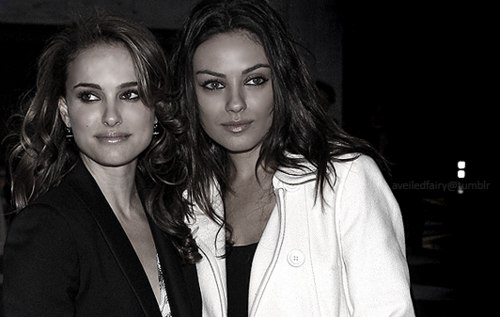
Before having seen the film and just checked out the trailer, I guessed that with the Yin/Yan-ing of Portman as the White Swan and Kunis as the Black one, we, the audience, were supposed to feel an aversion to the character of Lily. Quite the opposite. Instead, we, like Lily, are drawn into this free spirit, wanting to know more about her, whilst not letting on that we're curious. The curious casting of Portman and Kunis, who don't look dissimilar, really brings out the difference in their two personalities; Nina, the obsessive-compulsive who is obsessed with "perfection", and Lily, who is more than happy to live her life and go where the wind blows. Furthermore, what I thought was extremely clever about Kunis' portrayal of Lily is that she presents her character as appearing friendly, a bit morally and sexually loose, but harmless with it, yet Nina feels completely and utterly threatened by her. Whether this discomfort towards Lily is justified, or a product of Nina's detereorating mental condition, well, that forms much of the basis of the film.

The other thing I thought was terrific about Mila's performance is that she is the perfect foil for Natalie Portman. Although the two may look alike, that is where the similarities end. Portman's Nina is practically still a kind insofar as she's very much a mummy's girl, and her pink bedroom is decorated with stuffed animals. Everything must be neat and in its place and in order; she eats half a grapefruit and a tiny egg for breakfast, ties her hair in an impossibly neat bun, and executes all her dance moves with precision. Lily, on the other hand, doesn't dance badly, but it's definitely more of a "flap her arms about" thing rather than the intense study that Nina regards it with. Part of the intensity of Natalie Portman's performance is how starkly it concentrates with Mila Kunis' casualness. The "hot badass" role could so easily escalate into caricature, but thanks to some astute writing and subtle line-delivery (check Mrs. Family Guy out when says "What, did you have some kind of lezzy wet dream about me!?"), Nina is every bit a real person as the director would like.

Photobucket

Then there's the sex scene. Without giving away too much about the film, I'll simply say "not all is at it seems". But the dedication from both actresses to that scene was terrific, I thought. Their love-making felt authentic, heated, and such was the urgency of the scene that you almost wanted Kunis to go down on Portman as much as their characters did. Haha.

Thus, Mila Kunis in Black Swan is my pick for Supporting Actress Class of 2010. A performance that is by turns sexy, funny, dark and enthralling throughout. I could not take my eyes off her. Get it, Mila.

Photobucket

Friday, November 09, 2007

The Spirit of the Beehive & Ana’s Belief.

In participation with the Film & Faith blogathon going on over at Strange Culture, I thought I’d give my thoughts about Victor Erice's beautiful The Spirit of the Beehive, one of my personal favourites.

Crouchie.

The Spirit of the Beehive is a haunting look at childhood in the setting is a small Castilian village in the early 1940s, as echoes of the Spanish Civil War can still be felt throughout the countryside. Following a town-hall showing of James Whale's Frankenstein, Ana starts seeing the world in a completely different light. She cannot get the movie out of her mind, and discusses it constantly with her older, more cynical sis Isabel. As the audience, we wonder if she’s using her imagination to escape the grim realities of life. Beehive is an intriguing look at innocence and what it takes to believe. It then gets rather weird as Isabel makes Ana believe that Frankenstein is a spirit who can come alive if the human belief in him is strong enough, using their religious beliefs to do so. According to her, only those who truly have faith can do this.

In a sense, Beehive could be construed as a film about blind faith. Ana shields here eyes when watching the movie of Frankenstein, and in the classroom she puts the eyes on the wooden body and Isabel tells Ana to close her eyes and if she believes in the monster he will come. Isabel shares none of the whimsical fancy of her sister; whereas Ana tries to escape life's harshnesses, Isabel is obsessed with it. Now, the monster; Frankenstein's monster is used in this film is quite enigmatic in both image and figure. And even if we don't believe the story being told, it's enough that we believe in Ana's belief.

As well as dextriously weaving lines about the mundane quality of life, the Franco era and a young girl's overpowering belief, The Spirit of the Beehive is a technically stunning movie with some individual, unforgettable shots - Ana and her sister walking down a hill. Ana standing transfixed by the railway line as a train comes near. The family sitting at dinner without a word being spoken, and a lingering silence and stillness. Isabel and Ana making faces over soup. And Ana Torrent’s performance, led by her large eyes, wouldn't be out of place in a stain-glassed window. Goddessly.

P.S. - if you liked this, see Pan's! There are definitely echoes of The Spirit of the Beehive in Pan's Labyrinth.

Monday, August 27, 2007

My favourite actors ever.

Don't believe anything I say, or you shall die.

This post is in participation with Piper’s Bizarro blogathon at Lazy Eye Theatre. If you believe any of what I am about to write, then, well, you haven’t been reading this blog often enough. I’m not serious, OK?!?!?

I really admire Sylvester Stallone as an actor. Rocky Balboa was one of the best film characters I’ve ever had the pleasure of having witnessed, and I’m delighted that he continued to make twelve others. Each sequel is as good as the last. Rocky rocks!

So, Hilary Duff. She’s like, so perfect. She can sing, dance, but best of all, her acting! I really don’t know which of her performances I like the most, for she was incredible in Cheaper by the Dozen and A Cinderella Story. But I gotta say, it’s Lizzie McGuire that was her deepest, most profound performance. Her honest, convincing portrayal of everyday girl Lizzie was like, so utterly inspiring! I want to go to Rome and become a singer like she did! Anyway, Hilary totally rocks.

An actress I like even more than “Hil” is the British Goddess that is Emma Watson. Honest to God, I can’t think of a better girl to play Hermione. As Hermione, she’s not at all annoying, and she is obviously so much better than Rupert Grint! People who say she merely acts with her eyebrows don’t know a damn thing about acting, she’s the Lee Strasberg of the 21st century, I tell ya!
… But I would turn down a friendship with Emma, point blank, if it meant I could meet my all-time idol, Scarlett Johansson. Honestly, could you get any more beautiful and talented than that girl? Her face never looks contorted, and her pouting is so beautiful. And her BAFTA win for Lost in Translation was immensely deserved, nobody does sitting around and looking cool than Miss Johansson! Oh, and that shag-in-the-lift episode with Benicio del Toro just shows how utterly classy she is; she’s such a Goddess!


Wow, I'd been in quite a bad mood today, but that really cheered me up! I suggest you lot all participate in this blogathon and make hate love and love hate. Go on!

Saturday, July 07, 2007

The Performance that Changed My Life blogathon.

Could we live a happy life without films? Certainly not. Could we live a full, well-rounded life without films to guide, teach, instruct, show, and live with us? No again.

Films can change our lives for many reasons, whether it be making you emotionally stronger, guiding you through a difficult time in life, or wanting to be like a movie character you've seen on the big screen. Today, we’re going to celebrate the actors and their performances which did so, and why. I have chosen the date July 7th, 2007, simply for the quaint fact that it gives three sevens in a row. However, I will be keeping the topic open all weekend and well into Monday and Tuesday of more people have entries to add. So don't stress if you haven't got an article today exactly, there's plenty of time to start one!

So, I had to think long and hard about which movie performance made the biggest impact on my life. There were many, many performances that changed my life in the short term, for example, to make me want to better myself (eg., Amelie, Erin Brockovich), as well as films that inspired me to seize the day and do something radical (Chariots of Fire and Mr Holland’s Opus come to mind here), but essentially, 99% of movies don’t affect me for much longer than after I’ve finished watching it.

The four performances already mentioned have actually had a huge impact on my life, and those reasons I’ve discussed here and here. However, the performance that had the hugest impact and change on my life was one that I initially didn't think of. It had just affected my life in such an everyday way, that it had become part of my system.

I had convinced myself that it was Marlon Brando in A Streetcar Named Desire that was the performance, for a various reasons, two of them being that they got me obsessed with movies and interested in the art of acting. But then I realised that there was a performance that had already achieved this impact on me, and more, and had done it sooner.

And that performance was Haley Joel Osment in The Sixth Sense. Without a doubt. On my sidebar, a while ago, sat the phrase, “I owe Osment my all”, and it is true, for it was he who really got me interested in movies, and the redeeming powers of communication, and everything that is good about life, really. So ingrained had his influence become into my everyday life, that I almost forgot him. But I didn’t.
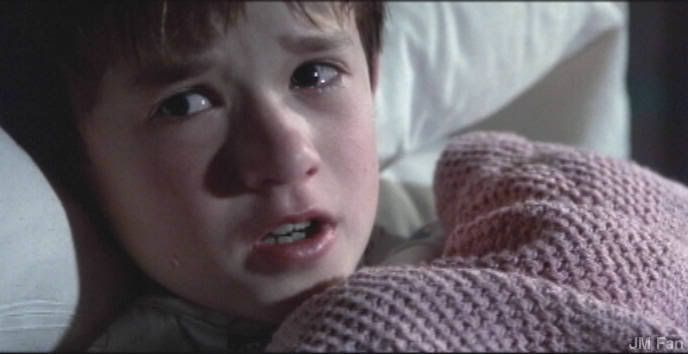
I distinctly remember that year, 2003, when, at the time, I had been a gal who had considered Mr Deeds and Rat Race the pinnacle of good moviemaking. I’d just discovered the joys of IMDb, and had been looking at their top 250. A lot of the films on there didn’t interest me at all. But The Sixth Sense was different. As soon as I’d read the plot summary, I was completely intrigued. Sadly, though, it was classified a 15 and my parents wouldn’t rent it for me. Like an act of fate, however, ITV screened it several weeks later, and I watched it with one of my closest friends.

I had wanted to see the movie for the plot, the action and the ending. All were good. But Haley was a total revelation. Everything I thought I looked for in a movie (cheesy laughs and jokes) changed after my viewing of The Sixth Sense. In Osment’s portrayal of Cole Sear was a troubled boy who uttered that infamous line, “I see dead people.” As soon as the audience receive that first shot of Osment, I knew I was watching a special one. Something his aura just told me. He was incredibly chilling, those beautiful blue eyes speaking volumes. In The Sixth Sense, Osment possessed the ability to communicate through a simple look or gesture, convincing us while never going over the top, so much so that once he said that line, you believe every word. And even better, he projected the vulnerability that came with having his “gift” without ever having to resort to cutesiness or swarm.
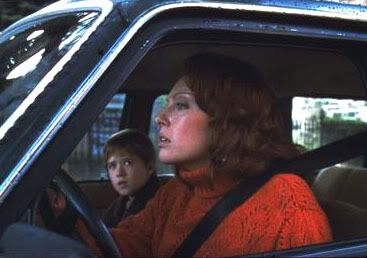
I was disturbed by Osment’s performance. Any child who says, “We were supposed to draw a picture, anything we wanted. I drew a man who got hurt in the neck by another man with a screwdriver” is obviously not normal. In the film, Cole Sear who appears to be having the same problems that Bruce Willis (a psychologist)’s former patient once displayed . Willis wants to help him. And we, as the audience want Willis to help him. But, at the same time, we cannot help feeling nervous. There is obviously something very wrong with Sear. Osment captures the eerie quality perfectly.

Even more impressively, it was Osment’s role that added the extra emotional layer to Shyamalan’s dead people story, and he did so perfectly, carrying the film on his childlike back, his facial expressions, deliveries and mannerisms absolutely spot on. In every scene of his, I felt tense toward the plot, but also completely astounded by his acting.
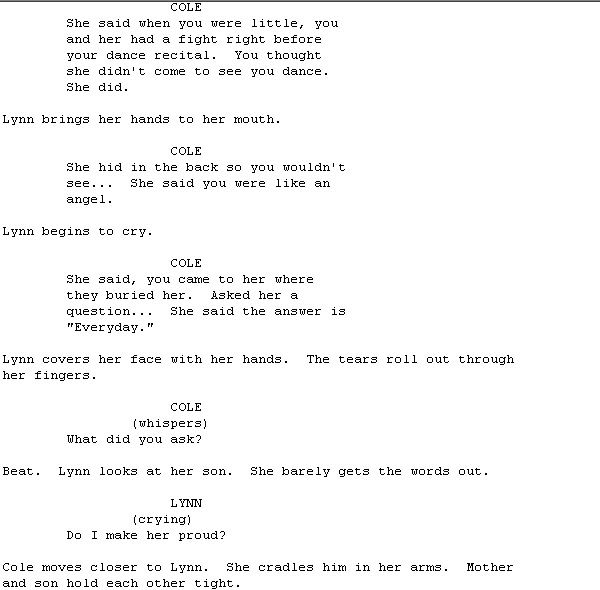
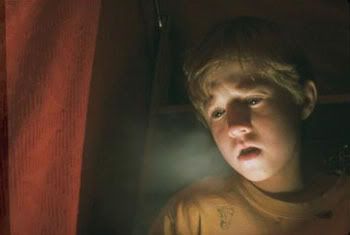
But the scene of his which had the largest impact on me was his final scene with Colette, where he spoke of her deceased mother, and mother and son connect for the first time all movie. Here it is:
Great scene.

The message of reconciliation could not be more clear; The Sixth Sense was so much more than a horror story. This scene was one in a long stream of film scenes to induce tears in me, because it made me appreciate my own parents more, and also be nicer to my friends. From Osment’s performance I took the message that everyone needs to reconcile with their loved ones before it is too late.

Following that, I was absolutely fascinated by Osment and wanted to see all that there was from him. Luckily, the friend I watched it with held a movie marathon for her birthday, where the rented movies were Signs and A.I. And the two movies had very different effects on me, Haley being the backbone for both. Signs was comedy of the highest value; I laughed from start to finish. And Rory Culkin and Abigail Breslin’s performances were two key sources of the hilarity. Their performances simply made me respect Osment more. My harshness in judging other child performances has remained with me for the four years that followed – whilst I’m willing to concede that Ana Torrent in The Spirit of the Beehive, Victoire Thivisol in Ponette Wei Minzhi in Not one Less, Ivana Baquero in Pan’s Labyrinth have all been stellar performances, I have been notoriously harsh with child performances (my friends were completely shocked at the number of profanities I uttered on Oscar nomination day this year when Breslin got a nomination). And all this hostility comes from my sense of high expectation following seeing Osment’s performances. That I’m still using him as a source of comparison four years after seeing his performance really says something.
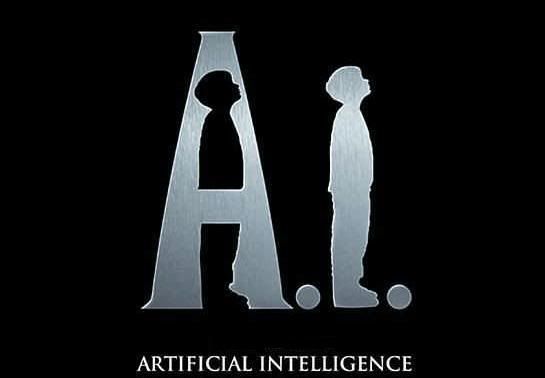
But nothing did this better than A.I., a movie where Haley managed to outdo himself. He was transcendent, one of the best performances I’ve ever seen. I was stunned that someone so young bore so much talent.

And so, the film-watching obsession truly began.

It is also worth nothing the other way Haley’s performance affected me – I learnt the meaning of the world “fangirl.” I’ve been called a Harry Potter fangirl, a Marlon Brando fangirl and a Brokeback Mountain fangirl, but nothing topped my fandom towards Haley. I sent him letters (they were never replied), and, more embarrassingly, wrote two film scripts where the lead roles had been tailored specially for him. The first, Butterfly, was about how three teenagers in California fought crime. Ugh, I cringe just thinking about it. But the second was even worse. Titled The Only Way, it starred me (yes, me), Rupert Grint, and Haley, and revolved around how Rupert and I were both vying for Haley’s affections. It was awful. I showed all my friends and they laughed.

But for some reason, I didn’t mind, and went on to write film scripts and reviews. And some of those have actually come good! Following Haley’s performance, I decided I wanted a job in the movie industry, and, whilst my current education doesn’t quite accommodate that (I’ll probably read Maths at Uni), I still fully plan on making a film someday. And although the film won’t be called The Only Way or Butterfly, Haley Joel Osment will be the first actor who I want casted.

After Haley, I continued to watch films avidly, never expecting to watch another performance that wowed me as much as Osment in The Sixth Sense and A.I. I was wrong, of course, performances by Tim Robbins, Audrey Hepburn, Julianne Moore, James Stewart, Alec Guinness, Jean-Pierre Léaud, Vivien Leigh, Bette Davis, and chiefly, Marlon Brando proved me wrong. But Osment in The Sixth Sense was the first movie-watching experience to wow me.

Another factor that Haley played in my life was my development as a teenage girl. After watching him A.I., I’d developed somewhat of a crush on him (it’s OK, he was 13 in the movie and I was 13 as well!), and my writing letters to him was a huge step for me, as I would never have had the bravery to do that before. Although he never replied, I felt more confident as a result, and was less shy and nervy around boys. It’s hard to explain how an actor can affect your confidence around the opposite sex, but Haley really did. Although my crush on him didn’t last long (although my obsession with him did last, I still adore him), he was probably the first filmstar crush I had, and following my viewing of Signs, I also fancied Joaquin Phoenix. Which led to my viewing of films like Gladiator, again, heightening my appreciation of cinema. (a little shallow, admittedly, but anything that got me watching more movies can only be a good thing, now?)

That performance didn’t just make me more confident around guys. On seeing how a child could hold so much talent, I was less afraid to voice my opinion, speak up in class, and say what I thought of everything. In short, Haley gave me emotional strength.

Recently, Haley has suffered somewhat of a fall from grace. Caught with possession of marijuana and making films like Secondhand Lions and doing voicework for The Jungle Book II is not exactly how actors plan their lives to turn out, I’m sure. But I have such high hopes for Haley. I believe he’s just going through a rough patch, and in a few years time when he’s sorted his issues, he will grace us with an amazing comeback, and win countless Oscars. Anybody who can act as well as they did in The Sixth Sense and A.I. is destined for brilliance, albeit with a few bumps. I have faith in Haley.

Haley in The Sixth Sense opened my eyes to a world of excellence in acting, heartfelt emotions, talented little things and people who were ahead of their time. And I cannot thank him enough for that.

In the meantime, enjoy the brilliant entries that have already been written:

Kendra at Jake Weird on Michael Caine in Sleuth, saying, “Caine’s character reaches unheard quotas of auto-sacrifíced working class hero. You won't be able to forget Inspector Doppler once the film is finished.” This movie, and the remake, have both now shot up to the top of my to-see list!

Catherine from The Mixed Up Files of Catherine pays tribute to screen icon Bette Davis in All About Eve, “I really grappled with the role, struggled to break it down. It was something to get my teeth into. I longed to discuss it. To find the heart of it. I wanted, basically, to know it.”

Campaspe at Self-Styled Siren admits that Ginger Rogers in 42nd Street was the performance that changed her life, “The performance that really did change my life wasn't deep and wasn't even a star turn, though certainly it was meaningful to me.” In list form, she takes us through the lessons Rogers’ Anytime Annie taught her.

Adam from All Things Film is currently having a James Stewart weekend, and the performance that changed his life was Mr. Stewart in It's a Wonderful Life, “The actor gives us a wide range of emotions from when we first see him trying to buy a suitcase, to when we see him with his family & friends at the end of the film.”

Anna at Verging Writer looks at Sally Field in Norma Rae, “Her gutsy, determined performance of a poor white woman who has the audacity to fight for labor rights & to unionize her fellow workers against their powerful, greedy employer was absolutely captivating.”
DL at Cellar Door chooses Samantha Morton in Morvern Callar, revealing “Never before had I seen an actor dive so deeply into a character's soul like that. I was completely mesmerized by everything she did, all the choices she made as a performer.”

Sen at Les montreurs d'images writes about Robert Redford in All the President's Men, and how well he depicts Bob Woodward "Redford gets so into character that he makes the mistakes that that person would have made in that situation. He's become him."

My fellow Crouchie-fan Becci at The Sacred Ramblings of Becci looks at the beautiful Emmy Rossum in The Day After Tomorrow. Becci says, "It takes a special film to make me pay attention," and Emmy did, for she showed many identical qualities to her friend Laura.

Marius at Blog by Cosmo Marius writes of Marco Hofschneider in Europa Europa, "The great thing about Solomon’s story is that he survived; he somehow managed to overcome all that hardship and psychological stress. More importantly, his experience made him stronger", showing how the best of performances can inspire us to be braver and stronger individuals.

Dave over at Victim of the Time picks Jodhi May in The Last of the Mohicans , "Jodhi May's performance changed my life because it made me realize that performances don't always need deep groundwork to function, that someone can swoop in for barely a second and be as affecting as three hours of a performance."

Kayleigh at Shiny Happy Blog chooses Audrey Tautou in Amélie, "everytime I watch this film, or look at my huge Amelie poster in my room, i get a sudden urge to go into the streets and help everybody." I'm in total agreement here.

Vertigo's Psycho from And Your Little Blog, Too picks Shani Wallis in Oliver!, asking "How could this caring, beautiful constant in Oliver’s life, so gloriously alive moments ago, be abruptly removed from his life, and from ours?"

RC at Strange Culture praises Stéphane Audran in Babette's Feast, "I want to be like Babette in a way that I could help people see goodness, beauty, and God through beautiful things." Beautiful.

Adam at DVDPanache chooses Joseph Cotten in The Third Man, "It becomes clear after watching Martins' bumbling journey that there are some mysteries that may not be solved, certainly not by Nice Guys."

Rant1229 from The 400 Obscure Passions of the 8½ Personas goes for Erland Josephson in The Sacrifice, and his personal story as to why and how it affected him "Some may find it ironic that the source was from a movie... not real. But I beseech you. Watch Erland Josephson's performance. Then, tell me his grief was not real."

In what is a very nice surprise, Nathaniel from the hugely successful Film Experience blog chooses Marni Nixon in West Side Story, "She's come to represent to me all the unsung backstage heroes and heroines of film, the thousands of unfamiliar names and faces that help shape these great things we call movies."

Mr. Movie Geek at Movies to Movie Geek No Kamikakushi praises Kate Winslet in Eternal Sunshine of the Spotless Mind, "Clementine has inspired me to live. She may not always be the most agreed upon and she'll definitely yell at you some point a long the way, but she is a confident and strong-willed human being."


Adam Carson Keller from Crumb by Crumb picks Geena Davis in Thelma and Louise, "It was incredibly liberating and empowering for me to see Thelma Dickenson find herself and her strength. I don't think any single performance has moved me more."

Jose at The pathetically normal, pop culture obsessed, life of Jose goes with what have been the partner in crime to mine had I gone with Brando, Vivien Leigh in A Streetcar Named Desire. Writing of Blanche, he says, "but for a moment Blanche Dubois was everything I was and also everything I was scared of becoming."

StinkyLulu goes for Anne Meara in Fame. This is the woman who "Meara's Sherwood prolly taught little Lulu lots more than she ever knocked into Leroy's noggin." Great stuff.

Piper from Lazy Eye Theatre goes with Daniel Day-Lewis in Gangs of New York, saying "for the lingering moments of this performance, Day Lewis makes this monster of a man not seem like a monster at all."

My good friend Luke kicks off his new blog The Musings of a Movie Maestro in the best possible fashion, with a wonderful YouTube (or should that be DailyMotion) tribute to Nicole Kidman in Moulin Rouge! He says, "When I first saw Moulin Rouge!, I was not familiar with Nicole Kidman, nor was I hugely interested in films. She changed this. I fell in love with her, both as a character and an actress". The tribute is fantastic, go watch it!

Lylee from Lylee's Blog pays tribute to Jane Powell in Seven Brides for Seven Brothers, "What’s remarkable about Powell’s performance, and what’s stuck with me through the years, is how she manages to make the character not only perfect but fully, recognizably human."


Cal from Shake Well Before Use proudly accepts his Guardian-readerness, thanks to Henry Fonda in 12 Angry Men, acknowledging that "Popularity only matters when you have respect for the people who like you; and like Henry Fonda, we should all risk being unpopular in order to fight hard for what we believe in." Exactly right.

As Cool as a Fruitstand goes for Scarlett Johansson in Lost in Translation, saying, "I'm not sure any performance really changed my life permanently. I am sure, however, that there is one that sent an almost painful pang of recognition and revelation through me."

Erich Kuersten from acidemic-film goes with Jon Voight in Runaway Train, "Voight’s performance is the sort of thing that can blast a stupefied suburban slacker right out of his chair, and have him moving fearlessly out to get a job, go to school, and or join a band in no time flat. "

Cinefille from For Cinephiles by a Cinefille goes for Katharine Hepburn in The African Queen, "The look of pure joy and enthusiasm that appears on her face makes me wish I had moments like that occur every day in my life."

Bob Turnbull from Eternal Sunshine of the Logical Mind looks at the entire cast of Network, "Seeing all these great actors just throw themselves into their roles to enable the satire and message of the movie was (and still is) an amazing experience." He admits he's pushing the rules a little, but with a post this good, I can easily forgive.

Damian at Windmills of My Mind never had any doubts about picking Liam Neeson in Schindler's List, "my mind went immediately to the one given by that tall, dark and handsome Irish actor Liam Neeson when he portrayed the title character of Oskar Schindler in the film that, as I have said many times, changed my life."

Arden at Cinephilia picks Mark Ruffalo in You Can Count on Me, "The reason I love this role and this performance so much is that it was so convincing and so honest that I truly believe Terry exists. Even just as a trembling real feeling that haunts me." Beauti-ful.

Midento from when i look deep in your eyes selects Ninón Sevilla in Aventurera, "the performance that carries this film was a starting point into what would eventually become my future. And for that, muchisimas gracias, doña Ninón."

Glenn Dunks from Stale Popcorn goes with the 11 and a half minute cameo from Drew Barrymore in Scream, saying "This scene, this performance - as I said - instantly grabbed me. It got me hook, like and sinker. I continued watching this movie with the sort of hyper-scared enthusiasm that I think only younger people can have."

Peter Nellhaus from Coffee Coffee and More Coffee picks Sean Connery in From Russia With Love, "Unlike parental favorites like Gary Cooper or Bette Davis, Connery was one of the first movie stars that as far as we were concerned, did not exist prior to the Bond films."

Kimberly from Cinebeats picks Barbara Shelley in Dracula: Prince of Darkness, "Before I saw Barbara’s turn as Helen I had assumed that no one could upstage the iconic Christopher Lee, but I was wrong. Shelley not only upstages Lee, she literally wipes the set with the entire cast in my opinion."

Chris from Drunken On Celluloid, goes with Robert de Niro in Raging Bull, "Watching Raging Bull gives its viewer the feeling of being within the presence of an auteur."


Curtis from Notes opts for Meg Ryan in In the Cut, "Certainly, this character doesn't sound like me, but I understand her the most out of any movie character. Many times I get to the point where I see validity in blocking everyone out and holing myself up at home."

JD from Joe's Movie Corner does the Recycle thing well with his entry on Julia Jentsch in Sophie Scholl: The Final Days and Alison Lohman in Nausicaä of the Valley of the Wind, saying of the latter, "I hold it as the best dub of all the dubs, I do!" He apologises for the lateness, I thank for the ingenuity. *kiss*

Chet Mellema from Opening Shots looks at Peter Falk and Gena Rowlaands in A Woman Under the Influence, "Every gesture, voice inflection, facial expression, spoken word, audible noise and physical movement from Falk and Rowlands express Nick's frustration at his inability to understand and comfort his wife and Mabel's resulting, and maddening, estrangement."

Brian Erickson from Oscar Obsession goes with Humphrey Bogart in Casablanca, saying the performance "the performance that changed my life, by teaching me and the world what love and doing the right thing really is."

Brooke from Boy on Film goes with the stunning Gong Li in 2046, tracking the similarities between Gong's predicament and his own " I saw Su Li-Zhen after we had last spoke, but before I never saw him again and I was far too moved for words."

Ninquelosse at Cinesism goes with Brad Pitt in 12 Monkeys, "This is a great performance because it's totally unlike anything Mr Pitt has done before or since. This is one of my favourite performances because it makes me laugh, feel nutty and horrified all at once. But hey, they weren't the questions asked."

Bob at SaltyStix.com picks Orson Welles in Citizen Kane, "The anger seethes through Welles, and the viewer can feel the anger coming from the screen. It is with this vivacity that Welles brings his character to life."

Karina Longworth at SpoutBlog picks three life-changing performances, played by Bill Murray, Judy Garland and Glynis Jones.

Criticlasm picks Guilietta Masina in Nights of Cabiria, "Cabiria, humiliated, broke, and heartbroken, is walking on a small road in the woods. Suddenly she is overtaken by a group of revelers, young people out for a small night parade, it seems, or just dancing to the Spring."

Beckles from Scones with Jam and Cream and other Ramblings chooses Gregory Peck in The Guns of Navarone, looking at the verbal exchange he had and the effect it had on her 12-year-old self, "Peck’s final explosion hit me like a truck, and dammit Atticus Finch the army version was right: someone *has* to take responsibility, someone has do the dirty jobs to ensure things function."

If you've got an entry you would like to add to the list, simply send me an e-mail, or, easier, reply to this post, and I'll link you the next time I get to a computer. You can honestly write about any performance you like, in any style you like. Can't wait to read the rest.

Thank you so much for everyone who has participated. Keep 'em coming!


Happy Blogging, Happy 07/07/07, and Happy Filmwatching, everyone!