Showing posts with label 40s. Show all posts

Monday, April 30, 2018

Film review: FALLEN ANGEL (Otto Preminger, 1945)


Eric Stanton, a penniless, down on his luck conman arrives in a Californian coastal town and instantly falls for Stella, the resident siren. Unfortunately for him, he’s not the only one to have fallen under her spell, as all the men in the town are equally smitten with her.

Wednesday, April 18, 2018

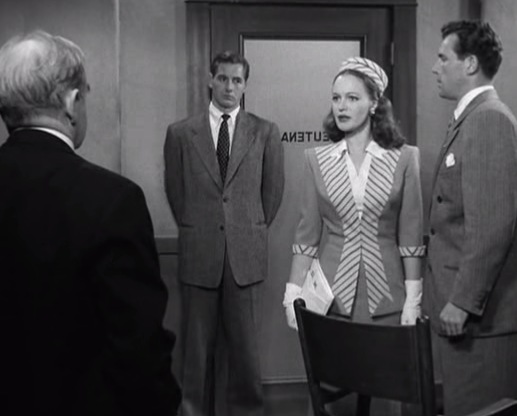
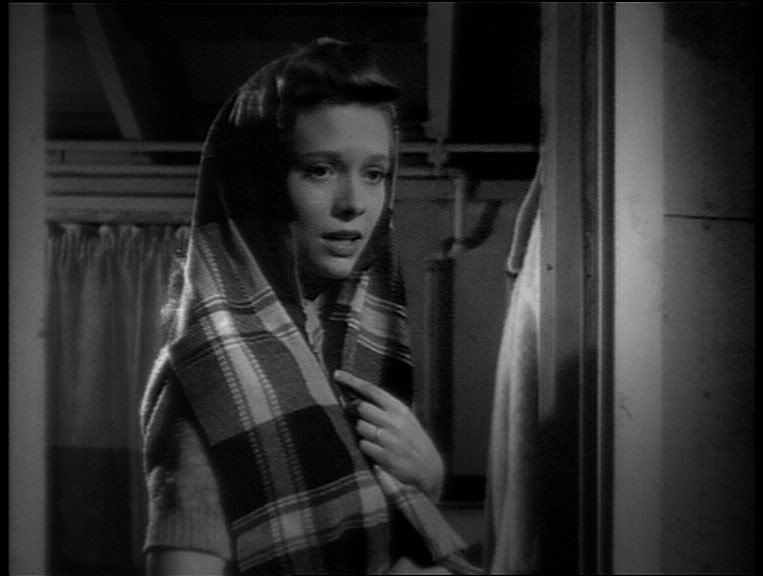
Film review: REPEAT PERFORMANCE (Alfred L. Werker, 1947)


Just before the turn of the New Year of 1947, renowned stage actress Sheila Page (Joan Leslie) shoots her emotionally abusive husband Barney, having reached her limit regarding his philandering and alcoholism. She regrets it immediately, wishing for the opportunity to go back in time to avoid making this mistake. Miraculously, as the clock chimes midnight, her wish is granted, and she finds she has been transported back to the beginning of 1946.

Alfred L. Werker’s drama plays like a blend of It’s a Wonderful Life with Groundhog Day, via the well-known trope of errant husbands. There is no doubt of the protagonist’s devotion to her cheating husband, even if, like Bette Davis’ character in Of Human Bondage, he doesn’t display any qualities that merit such love.

Despite Barney being a total cad, it is revealed that he, a playwright, gave Sheila her first big break as an actress, and thus, her patience towards him is heavily inflected with gratitude. But as her close friend William notes, ‘You can’t feel grateful to him forever. That’s going to wear thin at some point’.

Whilst Sheila’s success as an actress is part of the reason why she loves him so much, it’s precisely this why Barney’s so embittered towards her. Just as his play was the springboard for Sheila’s career, it was also the last good thing he produced, and watching his wife thrive whilst his own career stagnates fomented increasing feelings of bitterness towards her.

Friday, April 28, 2017

Great Villains Blogathon: Richard Attenborough in BRIGHTON ROCK (1947).

This is my contribution to the Great Villains Blogathon hosted by Silver Screenings, shadowsandsatin and Speakeasy. I have decided to cover Richard Attenborough as Pinkie Brown in John Boulting’s atmospheric Brighton Rock (1947).


Friday, August 12, 2016

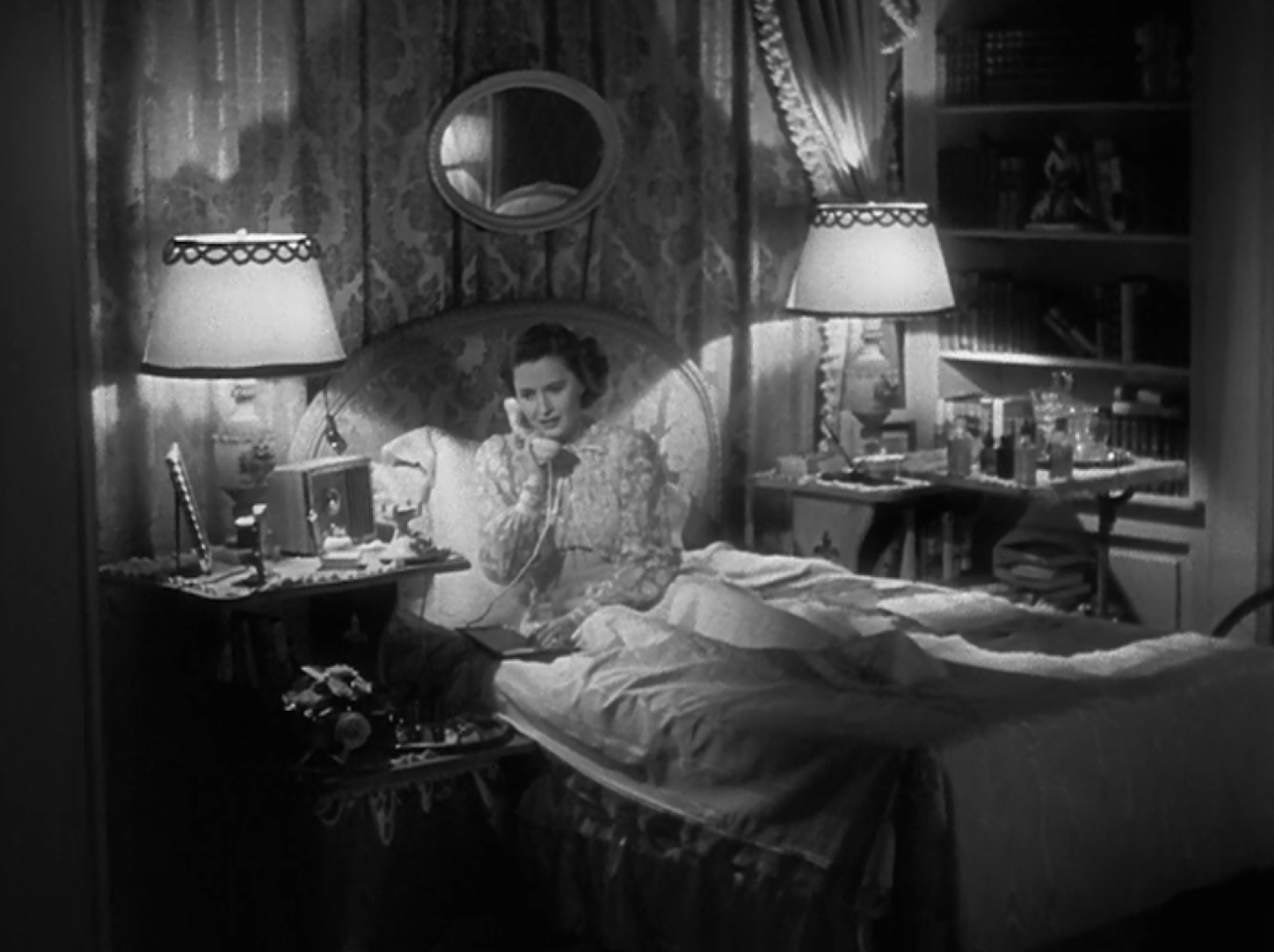
Film review: SORRY, WRONG NUMBER (Anatole Litvak, 1948)


This post is as part of Midnite Drive-In’s Film-noir blogathon. Movie bloggers all over the internet are coming together to discuss a wide range of film noirs, both well-known and less established, so do head on over to that fabulous blogathon and enrich your film knowledge!

-- 

Leona Stevenson is the rich only daughter of a pharmaceutical magnate. She is also invalid, and in NYC from Chicago to consult with a doctor about her health issues. At the start of the fil m, it is apparent that her husband is avoiding her, screening her calls. His absence is even more gaping by the empty chair he leaves, which Leona addresses plaintively. In a stroke of (mis)fortune, she overhears two men’s plots to murder a woman at 11:15pm, with the time meticulously chosen so that the sound of the crime will be masked by a passing train. 

She reports it to the police and then her father, but both efforts fall on deaf ears. As she becomes increasingly agitated alone in the Manhattan apartment, she tries to locate her errant husband, only to inadvertently piece together the context of the phone call she overheard, which she involves her more than she’d care for.

One of Barbara Stanwyck’s four Oscar nominations for Best Actress, Sorry Wrong Number came out four years after her iconic turn as conniving seductress in Double Indemnity. Both are film noirs with a heavy sense of foreboding, but playing a bedridden character, her physical repertoire is limited here. Whilst she slinked around (who can forget that anklet and the way she shimmies down the stairs to show it off?) in Double Indemnity, she spends the majority of Sorry, Wrong Number fretting in bed. It’s a difficult role that only someone with the screen presence and acting guile Stanwyck is blessed with could pull off.

Graciously for her, she does get to stand up at some point in the film: a good proportion of the 
story is told via flashback. We discover how she and her husband (Burt Lancaster) met: he was actually at a dance with a girl called Sally Hunt, who plays an integral part in helping Leona piece together the clues. Leona, never having been deprived anything she wanted in her life, boldly makes a play for Henry. He’s initially put off by her entitled attitude, but, nonetheless, his head is turned by her wealth. Stanwyck conveys her character’s bratty attitude wonderfully: in one scene, she regards her husband with a contemptuous glance in that signature way Barbara Stanwyck looks people up and down. You mirror Lancaster's character's feeling of belittlement when it occurs.

Lucille Fletcher penned the script for Sorry, Wrong Number, which was originally a radio play by her. The translation is effective: few sets are required in Sorry, Wrong Number, and the art decoration of Leona’s grand but stuffy bedroom is conveyed excellently: she has expensive trinkets and bottles, but her loneliness is clear. The moral that money can’t buy happiness is an age-old one in cinema, but this message is conflated with another: money being the root of all evil, which motivates some shady actions by certain characters. Thus, the script, ahead of its time in this sense, touches on an almost Kafkian problem: the more Leona feels her husband pulling away, the more she tries to throw money in the problem, which in turn, makes him increasingly more detached towards her.

The cinematography dextrously plays with light and shade, true to the genre, to create ambiance and dread throughout the film. Also, in the vein of film noirs, there are few truly "good" characters (I would argue only Sally, Leona's former classmate who's love she stole in such a cavalier manner, is), and plenty of murky ones. Even our protagonist, who finds herself in increasing danger, is somewhat hard to take and completely root for, her arriviste persona accentuated by her plush wardrobe, multitude of expensive rings, and Stanwyck's virtuoso performance as a woman who refuses to see what's going on right under her nose, causing the audience to fear the moment the House of Cards will crumble.


The employment of flashbacks and the film being played in real time give Sorry, Wrong Number a real sense of urgency, and the protagonist being confined to their room gives them a powerless sense that makes this film a worthy predecessor to the more polished Rear Window. The beating heart of the film is Barbara Stanwyck; I can’t believe she never won a proper Oscar during her lifetime especially when frauds like Jennifer Lawrence and Natalie Portman have them! As mentioned, Leona is not likeable at all, treating other characters in the film as below her and talking down to everyone. Yet Stanwyck is able to inject sympathy into even an upstart like this! By the end of the picture, she has you rooting for Leona, warts and all.

The Academy gave her an honorary award in 1982, whilst she was still alive, though, for “For superlative creativity and unique contribution to the art of screen acting”, and that is exactly what she has, in spades, here. Without her, Sorry, Wrong Number would have been a fairly exciting film. With her, it’s a complete and utter thriller.

Monday, February 14, 2011

Film review: FEAR IN THE NIGHT (Maxwell Shane, 1947)

Right now, the Film Noir Blog-a-thon is occuring, hosted by the very brilliant The Self-Styled Siren and Marilyn Ferdinand. The blogathon is occuring as part of a fundraiser to raise money for The Film Noir Foundation, a very worthy cause which helps to restore classic films. Click here to donate.

When looking for a film to review for the blogathon, I couldn't decide between reviewing or re-reviewing some of my all-time favourite noirs (Sunset Blvd., Mildred Pierce, Laura, Double Indemnity to name but a few), or to watch something new. In the end I opted for the latter -- because why not watch a new film in the hope of discovering a new gem? -- and I picked the somewhat obscure 1947 Maxwell Shane picture, Fear in the Night.


Vince Grayson (DeForest Kelley) dreams that he kills a man and when he wakes up he finds he has bruise marks around his neck from the guy trying to strangle him in self-defence. Seriously spooked out, he tries to hand himself into the police by telling his brother-in-law, Cliff, a cop, only to be told (quite fairly) that he cannot be arrested for a crime that he committed in his sleep, "you're dreaming. You've had those things before". 

Monday, January 17, 2011

Film review: THE PARADINE CASE (Alfred Hitchcock, 1947)


You’ve seen Mrs Paradine. What does she look like?” asks Gregory Peck’s on-screen wife Gay Keane (played by Ann Todd). To which Peck’s Tony Keane, the defence lawyer trying to prove the innocence of said Mrs Paradine, a woman on trial for poisoning her elderly blind husband to death, answers “Strangely attractive.” 

Sunday, October 10, 2010

10.10.10.

Photobucket

4.3.2.1 (Noel Clarke, 2010)
4.3.2.1 tells the story of four female friends in inner-city London who inadvertently get embroiled in a diamond heist. At the start of the film, they meet up in a café, then part ways for their own mini-adventures, not knowing that, over the next 48 hours, their paths will cross in more unorthodox ways. The film follows directly after they have parted ways, channelling the misdemeanours of each girl for the next few days. So far, so Tarantino. Except that, whilst I may find QT a little irksome in his continual self-advertising and self-love, at least he had something to be smug about. Noel Clarke, not so much. There’s split screen and samurai swords (as well as a tacky lesbian sex scene so that the lads are entertained) aplenty, but this film is a heavy case of style over substance. There are plotholes amongst plot holes in the film, and by fragmenting the foursome, it is difficult to find a single one who I cared about; Ophelia Lovibond is the self-harmer who is still bruised from an abortion she once had, Shanika Warren-Marland is a lesbian and wants everyone to know it, Tamsin Egerton a spoilt piano prodigy who swans about in New York spending her parents’ money and losing her virginity, and Emma Roberts a long-suffering checkout worker who pines for better days. None of the four leads give any kind of acting that’s worth a damn, Emma Roberts is and continues to have the kind of face that I feel needs a slap, though I will give credit where credit is due – whilst she can’t act for toffee, Miss Egerton does have astounding legs. The performances all uniformly below-par (bar perhaps Eastenders’ Michelle Ryan, who’s turn as a psycho bitch is at least entertaining), the dialogue is superficial and at times, cringe-inducing (Warren-Marland’s Kerrys sports a T-shirt saying Vagetarian, and the film’s shallow treatment of abortion leaves a lot to be desired) and despite the promising premise, ultra-cool settings in London and New York (my two favourite cities in the world) and soundtrack that hits more than it misses, this film is nonetheless an awful attempt to be with it. As a result, there is no story, no characters, and no quality. When you're an even worse British film of 2010 than Shank, you know you've got problems, blud.

Photobucket

Made in Dagenham (Nigel Cole, 2010)
From an unspeakably poor British film, to a much, much better one. Nigel Cole’s film tells of the Dagenham Ford strike in 1968. Led by feisty but down-to-earth Rita (Sally Hawkins, always lovely), the car-seat makers of the Ford plant decide that they deserve better, and, guided by Bob Hoskins, they take matters in their own hand. An unashamedly pro-women film, this delight does girl power far better than 4.3.2.1 ever could. As with 4.3.2.1, it’s anything but subtle (many characters have monologues and soliloquies talking about the strifes of being a woman) but such is the quality of Billy Ivory’s screenplay, that the film never feels manipulative, or force. And, unlike 4.3.2.1, the acting is stellar. Sally Hawkins is wonderfully natural and sweet, Bob Hoskins is amusing, Geraldine James is very very moving, and Rosamund Pike, though underused, illustrates the film’s key point that one should never skim the surface and automatically disregard a woman as just a pretty face. The costumes captured the earthy Essex chic wonderfully and overall, I walked out of the cinema with a big smile on my face.

The Prestige (Christopher Nolan, 2006)
Now, as you know, I wasn't the biggest fan of Inception. OK, that’s an understatement; I detested it and wanted my money back. But, I know that Chris Nolan is a mighty talented film director, and I wanted to reinforce this point by revisiting one of his more underrated films – The Prestige. Christian Bale and Hugh Jackman play magicians who’s friendship turns sour when a magic trick gone wrong has the latter’s wife dying. From then on, friends turn to enemy as the two continually look for ways to jeopardize each others’ magic acts. A wonderful study of obsession, The Prestige also boasts a clever look into the world of magic performance, as well as some REAL magic, which still turns my head. For once, Scarlett Johansson didn’t bug the crap out of me in her performance, and dual casting of her and Rebecca Hall had me cracking a smile at the Vicky Cristina Barcelona link. Michael Caine is as Michael Caine always is, awesome, and the cinematography, score and editing are all accomplished. Much, much, much more magical than Inception can ever hope to be.

The River (Jean Renoir, 1951)
In short, one of my favourite films of all time.
Photobucket

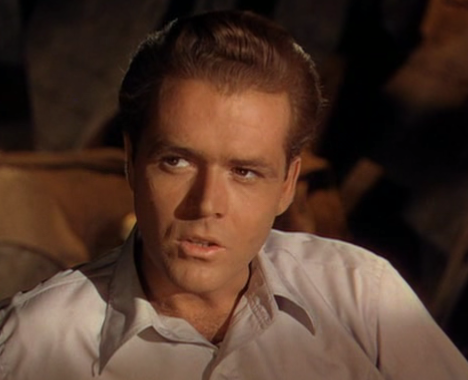
The film follows three girls – Harriet, Melanie and Valerie, and how their lives are changed by the arrival by a dishy (but troubled) soldier, Captain John (Thomas E. Breen, delicious). As an impressionable youth who often falls into and out of love, I connected with each of the three girls and their plight, and thought the portrayal of their crushes/infatuations accurate and true to life. The acting wasn’t really the best, but that is of secondary importance when much of the film is a love letter to India, and it is filmed so completely and utterly gorgeously. The lingering close-ups on the girls’ faces when they watch their beloved John are claustrophobic, but fully capture what it’s like to be young and in love, and the languid, philosophical pace of the film, whilst it may jar for some, really rang a bell with me. The ideal kind of film to watch in your PJs. Lush.

Sideways (Alexander Payne, 2004)
Paul Giamatti stars as Miles Raymond is a divorce, a jaded middle school teacher, aspiring writer and wine lover, on a road trip with his friend, bit-part actor Jack (Thomas Haden Church), the week before Jack’s wedding. Miles wants to play golf, taste wine and wind down, Jack would prefer to chase women and bonk about a bit before getting wed. Such is the set-up for Alexander Payne’s bittersweet and highly intelligent film, the ultimate “anti road trip movie”. Though I’m perhaps a bit young to appreciate the full genius of this film (certain scenes dragged on for me and it veered dangerously close to just the wrong side of pretentious), one thing I cannot fault about it is Paul Giamatti’s performance, the epitome of mensch. He turns Sideways into a mediocre comedy into a strong comedy-drama with his perfect comedy timing and emotional depth in the more controlled scenes. Furthermore, his romance with Virginia Madsen’s (also divorced) smart and sexy waitress Maya is awkward, initially somewhat embarrassing and unsure, as a believable romance should be. I don’t often care whether or not 40-somethings get the women of their dreams, but such is the power of Giamatti’s performance, that, for him, I did.

Out of the Past (Jacques Tourneur, 1947)
Film noir with Robert Mitchum, Kirk Douglas and Jane Greer, the former of which whom irked me in her irritating performance as the femme fatale who does nothing but cause trouble for men. Jacques Tourneur gets the best out of the rest of his cast, though, and thanks to that, his measured direction and the clever camerawork, this can be ranked as one of the finer film noirs of the 40s. Indeed, the impending sense of doom had me in a dread throughout, even though I knew it was just a film.

Saturday, September 11, 2010

From top to bottom, she's a woman, sunshine.


Set in Argentina, Johnny Farrell (Glenn Ford) is a young, suave hustler who drifts from place to place, with nothing but a loaded die for company. One day, amidst a mugging, he is rescued by Buenos Aires casino magnate Ballin Mundson (George Macready) and the tycoon, spotting a diamond in the rough, employs Farrell as his henchman. The two men enjoy a sucessful relationship, for along while acknowledging the only third party as Ballin's cane.

However, emotions become complicated when Ballin marries a beautiful but heartless woman, the eponymous Gilda (Rita Hayworth). Unknownst to Mundson, his loyal devotee and his new bride were once together, in a relationship that is the very definition of "tempestuous". Needless to say, that relationship did not end well, leading to both parties loathing each other, but also paving the way for one of the most wickedly entertaining three-handers in cinema.

Rita Hayworth shimmies across the stage in a wide range of figure-hugging silk dresses, her curves accentuated with shiny, bold belts. Her performance outshines ever the sparkliness of her belts, as she exudes sultry elegance in every frame. Her character is jaded, cynical and has no qualms with using and abusing any men she comes across, but one smouldering look from her and it's not hard to see why she has men going gaga for her.

Her chemistry with Glenn Ford (whom she would later bed in real life) is sizzling and their exchanges demonstrate perfectly that fine line between love, hate, and how easy it is for the two to fuse. It is this edge to Gilda and Johnny's repartee that make them such a curious couple, and their anti-hero characters so compelling.

So sexy that I'm surprised certain parts were permitted by the stuffy Hayes Code of the time and featuring two very different renditions of what is now one of my favourite songs Put the Blame on Mame, Gilda is a representation of the ultimate battle of the sexes. The film has been read by some has having soft homoerotic undertones between Ford's character and Macready's, but, I read it differently.

The love Johnny Farrell feels is all for the titular character, but, such are his jealouses and insecurities, that he fooled himself into believing otherwise, that he hated her and could do without her.

When she returns into his life, with her usual arsenal of conniving games, his world is rocked again, and so begins their vicious circle.

And, to be honest, that is what love is all about, really.

Sunday, May 30, 2010

On to the Next One.

Photobucket

Catwoman (Pitof, 2004)
Halle Berry plays Patient Philips, a mild-mannered artist who, after stumbling upon the secret that a popular anti-aging cream is toxic, is killed by some henchmen, only to come back to life thanks to a cat, Midnight. In doing so, she has also inherited super-human powers from the cat, such as agility, eyesight, etc, and whilst she uses most of these new powers for the greater good, there are times when it overtakes her and turns her into someone she doesn't quite recognise. In retrospect, every bit as silly and bad as the critics slated Catwoman to be, but still rather good fun in short bursts (Benjamin Bratt is and always has been, lush) if you don't take it seriously enough.

Photobucket

People Will Talk (Joseph L. Mankiewicz, 1951)
One of Mankiewicz's most underrated films, People Will Talk centres around Cary Grant's well-liked Dr. Praetorius and two strands in his life, firstly, that of him falling in love with one of his patients Deborah (Jeanne Crain), who tries to top herself when she finds out she's pregnant out of wedlock (this was the 50s, after all), and the second of his affiliation with his elderly friend Mr Shunderson. The performances here are uniformly excellent, particularly from the two romantic leads, who have a very passionate (despite no real action) scene when he visits her house. There are engaging subplots and one-liners aplenty, and the usage of Brahms was excellent, rendering the film an extremely enjoyable comedy of manners.

Photobucket

The Da Vinci Code (Ron Howard, 2006)
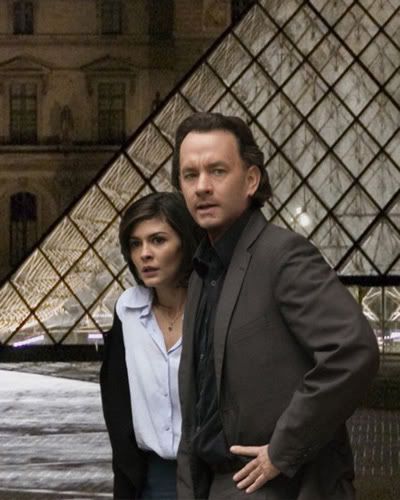
Complete and utter nonsense, and at 140 minutes running time, the nonsense outstayed its welcome by a good hour. That said, I did enjoy Ian McKellan's kooky performance as Leigh Teabing, and was indulged by some of the touristy shots of Paris and London. Hans Zimmer's score was the stuff of musical dreams and it suited the tone of the film perfectly, and I've always liked the source material (frivolous as it was), so there was an element of adventure that appealed to me. That said, there were far too many gaping flaws for me to ignore. Firstly, the all-round quality of the acting. Tom Hanks does nothing other than half-gurn, half-groan his way through the film, Audrey Tautou (someone who I ordinarily adore) looks awkward and Alfred Molina, Jean Reno and especially Paul Bettany as Silas are borderline laughable. And then there's the direction from Ron Howard, which just doesn't fit. Bah.

Two Girls and a Sailor (Richard Thorpe, 1944)
I enjoyed the dancing, but I tired of playing guess who with the romantic plot. Choc a bloc full of talented performers, the film ended up somewhat less than the sum of its parts.

Sunday, March 21, 2010

You’re very unsatisfactory, scram.

Photobucket
Only saw six movies in two weeks. Poor.

Dorian Gray (Oliver Parker, 2009)
Curious little adaptation of Oscar Wilde’s world-known novel. The acting from Ben Barnes was ok, Colin Firth was amazing as ever and I was absolutely beguiled by Ben Ben Chaplin’s depiction of Basil Hallward, but Rachel Hurd-Wood was turdtacular. Dorian Gray’s downfall was interesting and bizarre at the same time, and the way the painting of him deteriorated over time was genuinely creepy. The rest of the film itself was pretty unspectacular.

Bright Star (Jane Campion, 2009)
I expected to loathe this film, as Luke and I saw the trailer to it many, many times, and lol’d each time. However, I ended up loving it. I just adored how unashamedly old-fashioned and uncool the film was, as well as the sheer love and depth of emotion on display. Ben Wishaw and Abbie Cornish made a terrific couple and their interactions were beautiful. The entire film built up to one, solitary kiss (aye, there are no bunging scenes at all in this love story), and the kissing, when they came, were so moving and powerful. The ending, as you’ll know, was heartbreak, but I got a bizarre sort of relief from the sadness and woe. Gorgeous movie, inside and out.

Inglourious Basterds (Quentin Tarantino, 2009)
Photobucket
LOVE THIS FILM

Hairspray (Adam Shankman, 2007)
Photobucket
Aww! One of the sweetest, loveliest, most enjoyable films I’ve seen in my life. Nikki Blonksy is terrific fun in the lead, and I loved so many of the songs: The Legend of Baltimore Crabs, I Can Hear the Bells, Good Morning Baltimore, Mama I’m a Big Girl Now, and more. The supporting cast were all wonderfully charming: Amanda Bynes, adorably dappy, Queen Latifah oozed wisdom, Michelle Pfieffer made a delicious bitch and John Travolta was loltacular. Also, I feel so dirty saying this considering the amount I’ve slagged him off in the past, but, I’m starting to accept my crush on Zac Efron. He can be rather awesome sometimes, and in Hairspray, he was. Anyway, so much fun, and I loved all the messages it promoted: equality, the power of friendship, and it’s what on the inside that counts.

The Last Seduction (John Dahl, 1994)
Famous for that scene against a fence, Linda Fiorentino is half-fierce, half completely psychotic as Bridget, a modern day femme fatale. The background music was so Sex and the City-esque, which gave mixed messages about the genre about the movie, but, not putting it into boxes, I totally enjoyed it .The plotting was intelligent and appropriately cruel and there were plenty of moments of black comedy.

The Major and the Minor (Billy Wilder, 1942)
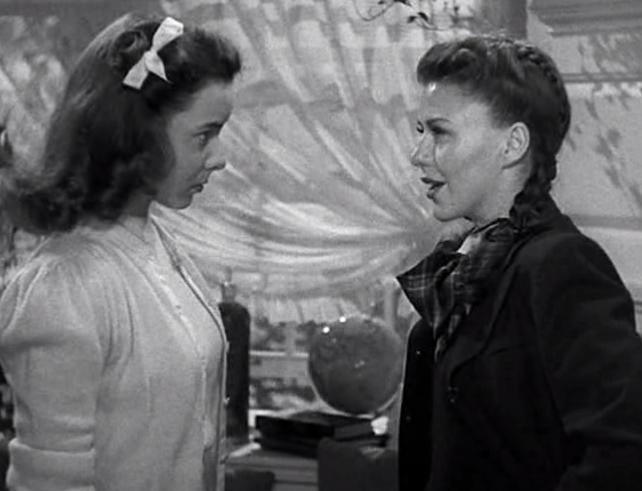
Terrific fun! Ginger Rogers ditches the all-singing, all-dancing schtick she usually does (though she does get to display her happy feet, albeit briefly) plays a woman who masquerades as a 12-year-old girl to avoid paying the full train fare. In doing so, she meets Ray Milland’s army major, a nice, charming, but slightly guileless guy who believs her when she lies about her age. He takes to becoming her uncle and introduces her into his world (including a less-than-keen fiancé), but, rather predictably, both parties end up falling for each other. A wonderful prelude to the gender-swapping in Some Like it Hot, The Major and the Minor instead deals with age-lying, with Ginger Rogers giving a brilliantly double-edged turn; sweet and sour, she’s 12 and 21 at the same time. There are some sequences when the young army trainees who date Rogers try to shag her which border on paedophilic, but on the whole, it’s a wickedly funny comedy of errors. The title is also a work of genius =)

Monday, March 01, 2010

I didn't mean to break it, b-b-b-break it babe.

Photobucket

Funny People (Judd Apatow, 2009)
Adam Sandler plays a jaded comedy star who, on discovering he may die of leukaemia, takes a step back and tries to sort his life out, with the help of eager-to-please Seth Rogen. This film dragged far too much for me, not gonna lie, and a lot of the jokes weren’t even funny. Rogen was charming in his own way, but Sandler, who seems to have three modes, two of which I love – serious actor Sandler and loveable comedy gold Sandler, instead spent most of the movie in the third mode – irritating goon Sandler who laughs at his own unfunny jokes. The subplot with ex-girlfriend Leslie Mann and her husband Eric Bana made me lol, quite a bit, but on the whole, 150 minutes running time was about 140 too many. Not that funny.

The Naked City (Jules Dassin, 1948)
Absolutely wonderful film noir set in New York, both a joy in terms of plotting and tension as well as technical elements- editing and cinematography (particularly the dark, ominous shadows) stunned. New York is caught in both its glory and its fugliness, just how I like it. The Naked City set the tone for many other (and inferior) modern day thrillers, such as The Black Dahlia. As per most crime movies, there's a murder, there's an investigation and there's a case of did-he-didn't he, but it never gets old. If I had any criticisms with this film, I suppose it would be that it resembles plenty other noirs, I’ve seen before, but the film manages to have its own plot and the semi-documentary style gives it an extra edge.

Up (Pete Docter, 2009)
Well, you had my initial reaction and full review here, but needless to say, I loved it. Beautiful, beautiful movie, so witty and cute and featuring that transcendent 4-minute clip at the start which stayed with me longer than any other 2009 film scene, and most other films scenes, come to think of it. "Tonal modulation" is a phrase I use frequently, but that four-minute vignette had it in spades, highlighting the sweet moments and the sour ones of Carl's life. I'm informed that my initial supposition that the bit I'd interpreted Ellie to have been told she was barren was actually being told she had miscarried, and that Disney dared to touch upon this, in their poignant way, completely blew me away. The bright colours, clash of happy and sad, and ultimate portrayal of love in this film is too beautiful.

Photobucket

In a Lonely Place (Nicholas Ray, 1950)
Nicholas Ray does dark dramas with impending sense of foreboding better than anyone, and this is no different. The chemistry between Gloria Grahame (who deserved more starring roles) and Bogie is incredible, the man himself giving one of his finest performances, a wonderful example of how love can make a man vulnerable. The "did he/didn't he" element lacks a little punch as so many poor imitations have been churned out, but with zingers of lines like “I didn’t say I was a gentleman, I said I was tired”
and “I always go home with the man who brought me”, In a Lonely Place is far ahead of the crap they churn out today. Classic noir.

44 Inch Chest (Malcolm Venville, 2009)
Basically in this movie, Ray Winstone’s wife Joanne Whalley leaves him for another man, completely bruising him. His mates kidnap the bastard that done it leave him in a room alone with Winstone, whilst they wait impatiently outside, wanting him to hurry up and kill him so they can go down to the boozer. The language in this film is coarse for coarse’s sake, with John Hurt in particular doing a none too impressive impression of Ben Kingsley in Sexy Beast, with his wild abuse of the c-word. Winstone is, by his own standards, not up to much in this movie (though his woefully underwritten character has a lot to do with that), but Tom Wilkinson, as the hardman with a heart who still lives at home with his mother, Stephen Dillane as the curt accomplice and Ian McShane, playing terrifically against type as a coy homosexual, make terrifically great fun, almost making this movie worth watching.

À ma soeur! (Catherine Breillat, 2001)
Um, ew. I watched this with my best friends Luke and Anna and we were just so sickened throughout. Catherine Brellait needs locking up or something, paedo. I can’t think of any redeeming qualities in this movie whatsoever. The sister in the movie was a particularly nasty piece of work, and the scene in which she gets taken up the chuff by some pervert whilst her little sister watches is beyond grim. This isn’t cinema, this is child exploitation. That said, at least the fat girl in question is a looker.

Sunday, February 21, 2010

"Luck is what happens when preparation meets opportunity.”

It’s a clear case of quantity over quality this week; I watched a fair few movies, but most of them were unbearably, unforgivably, pants.

The Grudge III (Toby Wilkins, 2009)
Poorly acted and scripted, and about as terrifying as doing my laundry without any fabric softener. Then again, the only reason I watched it was because it has Beau Mirchoff (he plays Wisteria Lane hottie Danny Bolen in Desperate Housewives) and he was criminally underused.

Julie and Julia (Nora Ephron, 2009)
A sweet enough idea but the film sadly turns out to be a little drab. I found all the hoo-ha over Streep’s performance nonsensical as she did nothing but sport a crappy accent (she did much better work in It’s Complicated). Amy Adams was at her charming best and I found her half of the film semi-engaging, particularly when she gets her blog up and running.

Laura (Otto Preminger, 1944)

The only film I saw this week that I would deem excellent. Gene Tierney plays the eponymous female who, at the beginning of the film, is being presumed dead. As the film develops, a very tangled web of jealousy, love and possession are uncovered. The cast are collectively brilliant, in particular Tierney and Dana Andrews.

Furthermore, the scene in which Laura returns to her house is one of the most finely orchestrated I’ve scene; the camera seems to widen to allow the full shot of the detective sleeping there, and the sound, which features a brief second of nothing but a clock ticking, captures the suspense perfectly. Great movie.


Monday, March 20, 2006

Film review: MILDRED PIERCE (Michael Curtiz, 1945)

Mildred Pierce is not having a good day. After an argument with her husband (chiefly about how she spoils her daughter), he leaves her for another woman. She turns to her daughter Veda for consolation, who merely whines about the state of a dress her mother has spent money on for her.


Desperate to gain her daughter's affections, Mildred finds a job as a waitress, and soon after gains the qualifications to launch her own brand of catering, gaining her success and wealth, as well as the attentions of a wealthy playboy Monte Beragon. But what Mildred really wants – the love of her daughter Veda - is still not received, and despite going to extreme lengths, never receives it.


In the lead role that won her an Oscar, the inimitable Joan Crawford is superb. In a time when melodrama was all the fashion, she goes all out in her performance, exhibiting a wide range of emotions. But despite the over-the-topness of her style of acting, she manages to make her character believable and accessible, and the audience are able to feel her love for her daughter, if not understand it. Veda is a black-hearted brat, and Ann Blyth depicts the sly cruelty of her character with frightening accuracy. The women are joined by an array of talented male players too.

There’s a clever storytelling device that has been adopted for this movie, of telling the story of Mildred’s life back in flashbacks. That, aided with Mildred’s narration, gives the film a hard, film-noir, edge, and there is plenty of 40s style suspense presented to us by capable hands. Under the direction of movie luminary Michael Curtiz, this is further accentuated.

But Mildred Pierce is in essence a melodrama (Max Steiner scoring? Hello?), and an extremely fine one too. Though the characters we meet are all quite detestable, Mildred, brought to us with perfect care by Crawford, is one that we’re rooting for throughout.

A