Showing posts with label Thomas Newman. Show all posts

Sunday, February 02, 2020

BAFTA predictions, 2020.

My predictions last year were decent, especially in how I anticipated that we'd give Best Film to Roma, a move that was not mirrored by the Academy Awards, who went for Green Book.

Thus, as is a tradition on my blog, I'd try my hand at predicting tonight's British Academy Film Awards! Remember, the below is who I think will win, which very rarely overlaps with who I think actually should win.

Best Film: 1917


Sadly, I think this uninspired Dunkirk rip-off will triumph, even though it's not a patch on Dunkirk, and feels like watching someone play a computer game for 2 hours. I see BAFTA falling for the 'made to look like it was filmed in one shot' gimmick, and even more sadly, the Oscars to do the same next week.

Monday, August 01, 2016

Film review: FINDING DORY (Andrew Stanton and Angus MacLane, 2016)

Disney Pixar have made some incredible movies, several of which are in my personal top 100 movies list (such as Up, WALL-E and Inside Out.) Finding Nemo is my favourite of all of those; a film so beautiful and affecting that just hearing the track ‘Nemo Egg’ brings me to tears. Finding Nemo's message of the importance of family, and the lengths one will go to protect them, really struck emotional chords with me.

I was full of trepidation for the sequel, Finding Dory, a film which I thought really did not need to be made, full of Marlin-esque fear that, like he almost did in the first film, this pointless follow-up would cause me to "lose" Nemo.

(I picked this poster because the tagline is the T-shirt Margot Robbie wears as Harley Quinn in Suicide Squad, which is out this Friday and I'm stoked for!!)

And, sad to say, my fears were realised. The issue with Finding Dory that troubled me was how artificial the conflict was: in one of his strops, Marlin says to Dory, “Go right over there and forget, Dory. That's what you do best.” Now, I get that people say things they don’t mean when their emotions get the best of them, but even in a fit of rage, you wouldn’t say something that hurtful to a friend, especially a friend who played no small role in getting your son back in the first film. People audibly gasped in the cinema when he said that, which illustrates that the writers overplayed their hand and misjudged the tone.

I feel like I’ve been criticising scripts left, right and centre this year (The Neon Demon was poorly written, that bad Chinese romance I watched had a bad script, yada yada yada), and probably, line-for-line, Finding Dory is no worse written than something like Despicable Me, a film I have quite a soft spot for. But in that one line, it just felt like the writers of the film realised they didn’t have enough for a feature length film, so had to manufacture some drama, in doing so, make Marlin make this harsh comment which was really out of character. Furthermore, as part in punishment for what he said, Nemo takes a rather annoying turn in this film as well, constantly chastising his father and acting bratty, which again, undercuts their father/son bond that the first film built so effectively.

Other elements of the screenplay that jarred were that weird, unfunny Sigourney Weaver onrunning joke (like, what? This is about fish, not aliens, so I didn’t even see the point of it), and the lazy characterisation of Hank, the seven-tentacled octopus. Stanton et al were obviously trying to place a ‘crusty old cynic’ character into the storyline, but that trope was employed to much better effect in the form of the mean restaurant critic in Ratatouille, because they explored why it was that he was so jaded. In Finding Dory they just shove a bad-tempered character in as a foil to Dory's good nature, but we already had Marlin for that. 

This is predominantly why Finding Dory isn't fit to tie Toy Story 2's laces in the sequel stakes: in Toy Story 2, the writers both retained the central dynamic between Buzz and Woody, as their friendship, like Marlin and Dory's, is crucial to driving the plot and getting audience members connected to the characters and their plight. Furthmore, the characters introduced in Toy Story 2 were welcome and contributed to the quality of the film (I'm thinking of awesome cowgirl Jessie). This is definitely not the case in Finding Dory, where existing characters are hard done by in terms of character development, and new characters are downright superfluous.

This is epitomised in these two Cockney sea lions (voiced by Idris Elba and Dominic West; the film’s producers desperately trying to appease adult audiences with a The Wire reference, there) that felt like Pixar were trying to regain the belly laughs they had with the seagulls in Finding Nemo (rather than chant 'mine! Mine' the sealions chant 'off! Off!'), but it didn't work, especially as the way the two sea lions ganged up against a third, cross-eyed lion, felt borderline ableist.


The film's pedestrian plot (Dory finding her parents, who she suddenly remembers she'd lost) is given more emotional gravitas than it deserves by Thomas Newman's sensational score. The more eagle-eyed readers of my blog may remember that Finding Nemo features my favourite film score of all-time, so good that they often use excerpts of it on The Apprentice. The score for Finding Dory, whilst not quite as good as that (nothing ever will be), has to work twice as hard, given it is almost the only thing (along with Ellen DeGeneres voicework) that is selling this contrived story to us. The addition of a plaintive violin to highlight Dory's sense of isolation definitely contributed to the emotion of the film, and, as he did in The Shawshank Redemption, American Beauty and WALL-E, Newman deftly allows his music to accompany the plot without feeling intrusive. It's a travesty that this genius doesn't have an Oscar.


In isolation, Finding Dory isn’t a bad film at all. It’s got charm aplenty (baby!Dory with her massive  purple eyes and high-pitched voice is absolutely a-dory-ble #IllGetMyCoat) and in terms of jokes-to-laughs ratio, it scores above your average cartoon. Plus I simply couldn't hate a film that gives two members of the Modern Family cast voice roles. But Pixar isn’t an “average” studio, and its predecessor most certainly not so. I’ll be kind and make like the good-natured heroine of this film and invoke her memoryless property in awarding my rating. If I were to grade it in comparison with the first film, my score would be dramatically lower. 

Put it this way: as Sia's cover of 'Unforgettable' came on over the closing credits, I was hoping that Finding Dory would achieve quite the opposite in my mind.

57/10

Sunday, January 16, 2011

Three film reviews: 127 HOURS (Danny Boyle, 2010), THE SOCIAL NETWORK (David Fincher, 2010) and THE TOWN (Ben Affleck, 2010)

Screening log 10/01/11-16/10/11

I watched three films this week, all 2010 releases, two set in Boston, one set in between a rock.

127 Hours (Danny Boyle, 2010)


You’ve seen the trailer, you’ve heard the hype, you know what it’s about. While I don't treat IMDb scores as gospel, the film received a notably high rating on the site, so truth be told, I expected more. Instead, I found 127 Hours to be fairly boring at points. What we have here is about 60 minutes of material dragged out into a cinema release with the help of some fancy digital effects. 

Tuesday, July 29, 2008

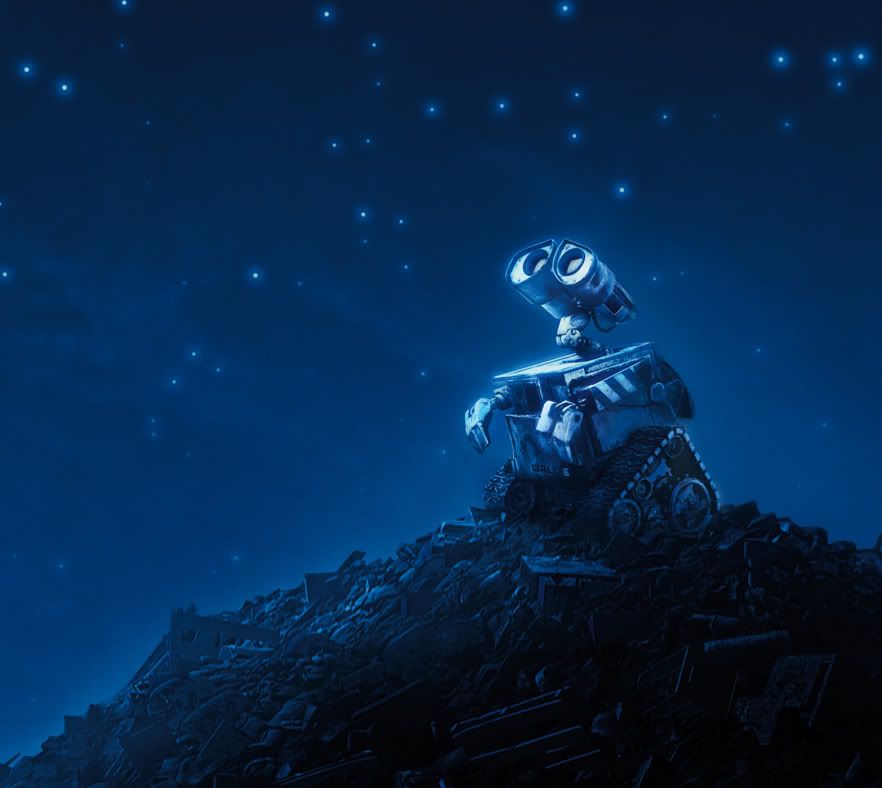
Wall-E review.


(Sorry dears, I’ve been on holiday and hence no posting. But on holiday I saw The Dark Knight & Wall.E, so, reviews follow!)

It’s several hundred years into the future and grubby little Wall.E is the last remaining robot on Earth, programmed to collect garbage around the world. By now the Earth has become such an unliveable mass of scum and debris that the humans had vacated the planet long ago, shirking responsibility for the mess they made to live it large in space.

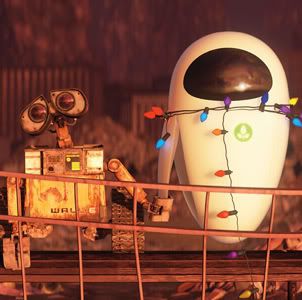
Wall.E’s only company is a little cockroach that follows him about, until one day a spaceship lands in his vicinity, bringing with it Eve, a high-tech, no-nonsense pod robot that has been programmed to search for traces of life on Earth. Wall.E spies on Eve, and he is in turns bewildered and bewitched by her, but the principle emotion he feels toward her is love. So much love, in fact, that when the spaceship comes back to take Eve back, he follows his Goddess onto the ‘ship and it takes them to where all the humans have relocated; floated around in Space and with no intention of going home.

Any initial doubts I had about whether Pixar could pull off a futuristic robot movie were immediately quashed when we were introduced to the enigmatic robot himself. Wall.E’s existence is a mundane one; forcing rubbish into cube after cube, which he piles together to make towers of rubbish, but he finds pleasures in the household items he encounters – a spoon, a light, a bra. Back in his “home” – an upturned schoolbus he resides in, he gathers together all the items he collects, and falls asleep Hello, Dolly!, from which he becomes particularly fascinated with the act of holding hands, and wishes he has someone to do it with.

The romance between Wall.E and Eve is believable (yes, believable!) and poignant; I had tears in my eyes when he was tending to her and holding an umbrella to shield her from the rain, even though it resulted in himself getting electrocuted. Though the film is about robots (humans don’t feature until the second half, and even then they are just fat rolls operating electrical chairs, a sad reminder of where our society is headed) and the only words exchanged by the two leads are each others’ names, this is one of the must “humane” movies I have ever seen, with a lot of soul.

Beauty dominates practically every frame. The initial scenes of Wall.E captured the desolate, crumbling state of Earth, but Pixar has found loveliness in the most unexpected of places. This is Pixar’s most ambitious movie to date, and the landscapes and details are appropriately cinematic (the planet is captured with such meticulous pans and fade-outs that it feels almost Shawshank Redemptionly, no real surprise when we consider that Roger Deakins worked as a visual consultant on the movie). Another filmmaker who helped make The Shawshank Redemption the masterpiece that it was, Thomas Newman, also contributed to Wall.E, and his score, whilst not matching his personal best of the other Pixar movie he wrote for, Finding Nemo, still ranks as one of his best, particularly in his usage of the harp, which lends an otherworldly feel to the film throughout.

(Ahem. Sorry for all the references to The Shawshank Redemption here.)

My only qualm with Wall.E is that there isn’t enough humour in the movie. In a way, this is Pixar’s darkest movie to date; with its messages about society’s need to wake up to the problem of global pollution, commercialism, mass obesity and whatnot. The cheeky filmmakers even managed to slip in their own message to Disney; when the president in the old clip says “stay in the course.” But all this means that, whilst there’s the odd visual gag or two, Wall.E is not really all that funny, with no definite belly laughs. With last year’s Ratatouille also failing to tickle my funny bones, I worry that Pixar are becoming darker and darker these days, and leaving the comedic roots that served them so well in the past.

However, despite the fact that I cried more than I laughed, Wall.E still gets a resouding thumbs up from me. The animation is flawless, the entertainment is countless and for once, I became interested in sci-fi. And the denouement shows that it’s not too late; redemption is still available and we can still save the world if we really want to.

9/10.

Saturday, June 23, 2007

My 20 favourite pieces of music composed for a film, ever.

In conjunction with Damian's excellent Film Music Blogathon at Windmills of My Mind.

One Zummer once said, “Film is a predominantly visual medium, which means the general purpose of a music score is to capture and reinforce the essence of a film, generally without drawing attention to itself.” Well, I’m sorry, but I disagree. Being a musician myself, I feel that music is one of the principal, if not the principal element to telling a story, and if the score ends up being so beautiful it outdoes the film itself, then so be it. Today, I’ve chosen my 20 favourite pieces of music ever composed for film, and invite you to listen to their mastery. (Some you can enjoy in the form of YouTube vids, others through downloads.) And note - quite a lot of Newman on here, because, he's kind of my favourite composer. Ever. Ever. Ever!!!!!!

01. The Heart Asks Pleasure First (Michael Nyman, The Piano)

Take from the words of poet Emily Dickinson, this is my choice for favourite, most haunting, and best piece of music ever composed for film. This piano piece enhances the ethereal, raw emotions felt by Ada in the movie, and also just happens to be a case of darn good music, Nyman's execution of this score is nothing less than perfect, and the playing blew me away.

02. First Day (Thomas Newman, Finding Nemo)


I thought I may have quite a lot of Newman (my favourite film composer) on this list, et voila, I was right! Finding Nemo is my favourite film score, and it was so hard to pick a favourite from the list, but finally, I settled for First Day, which is played early on in the film over the shot of Marlin taking Nemo to his first day at school. With pizzicati and orchestra, Newman captures the vast nature of the ocean, and hints at the playfulness and peril to follow. It’s just exquisite.

03. Comptine d'un autre été: L'après midi (Yann Tiersen, Amélie)
So good, that Tiersen ripped himself off and re-used it in Goodbye Lenin, this gorgeously sad piece that encompasses both the beauty of Paris and the joie de vivre of the film. A true example of how music can lift one’s soul into Heaven.

04. Prologue (Alexandre Desplat, Birth)
Along with Newman, Desplat is the most talented working composer of today, and his work on Birth epitomizes this fact. Although difficult to choose a favourite of his, I went for Prologue from Birth, simply for the eerily scary way it suited the images, and set the tone for the rest of the movie.

05. Love Theme (Ennio Morricone, Cinema Paradiso)

06. The Wings (Gustavo Santaolalla, Brokeback Mountain)

It's brief, but it's also undersated, heartbreaking, and utterly brilliant. Santaolalla deservedly won the Oscar for his work here.

07. Dead Already (Thomas Newman, American Beauty)


08. Theme from Schindler’s List (John Williams, Schindler’s List)
To be honest, there's nothing to say here that I haven't covered in my review of the score, but I'll just say it again - I had the pleasure of learning this stunning track for my grade 7 violin, and unlike most of my violin pieces that I learn, studying this simply enhanced my adoration for the piece. It meanders through octaves, with elegance and grace, with heartbreakingly simple harmonic progressions that truly touch the soul. Possibly one of the most recognisable pieces of music composed, and rightly so.
09. First Snow (Clint Mansell, The Fountain)
Sadly, I don't have my iPod with me (I left it at school, I'm an idiot, I know) , so I can't upload this genius of composition, but another track on the Fountain score that I loved to pieces was Death is the Road to Awe, which, despite its quasi-emo title, is utterly beautiful.

10. Drive Away (Thomas Newman, Lemony Snicket)
Showing that there is no end to his talent, this idiosyncratic electric-guitar led piece somewhat recalls Newman's work on the Erin Brockovich score, but here, it is jazzy and snazzy piece, and much more unforgettable than that of anything on the Brockovich score. As I said in my review of the soundtrack, it is a true eargasm.

11. Balcony Scene (Craig Armstrong, Romeo + Juliet)
12. Road to Chicago (Thomas Newman, Road to Perdition)
13. Your Hands are Cold (Dario Marianelli, Pride & Prejudice)
14. The Necklace and the Return and Finale (Bernard Herrmann, Vertigo)
15. Soy Marco (Alberto Iglesias, Hable con Ella)
16. And that Right Soon (Thomas Newman, The Shawshank Redemption)
17. Hedwig’s Theme (John Williams, Harry Potter)
18. Gabriel’s Oboe (Ennio Morricone, The Mission)
19. Camera Obscura (Alexandre Desplat, Girl with a Pearl Earring)
20. Filter Attempt (Thomas Newman, Finding Nemo)


Thank you for reading, now...

'Ello.
If you liked that...

Bear with the blog, and here are a few of my older posts that I recommend:

My review of Brokeback Mountain - my 6th favourite film of all time, and the best review that I've ever written. Enjoy.

My favourite screenplay of all time - a nice lil' look at my favourite script, to my favourite movie.

The day I met Sophie Kinsella/Madeleine Wickham