As you may have gleamed from my review of Suicide Squad, I didn't think too much of Cara Delevingne's performance which her father bought her. I even wrote a poem about it:
I may have spent quite a large chunk of last weekend Snapchatting friends videos and images of me whining about Delevingne's Razzie-worthy acting. Because it's not like me to go on about things, now is it? (On a completely unrelated note, do you remember in 2013 when The Guardian ranked Eden Hazard 100th in the world? A HUNDREDTH I TELL YA).
--
By the by, the BBFC responded to that insufferable e-mail I sent them. As you'll notice, I basically got fobbed off with a generic response. They even included links to the guidelines. As if I haven't studied those and memorised them off by heart! The BBFC is like, my specialist topic, yo!
But oh well. I'll just have to let bygones be bygones and accept Too Young 2: Never Goneas one of the titles the BBFC rated 15, that I think is a dubious 15.
Suicide Squad, for all its talk of 'sustained threat', proved to be a bit of a bubblegum 15 in the end (I found the threat in the 12A-rated 10 Cloverfield Lane more intense). But I am grateful to the BBFC for awarding it, because it meant there were no kids in the audience, and I got to see it in relative peace.
However, I believe there was an oversight at the BBFC when they compiled their short insight. It's 15 for 'sustained threat, moderate violence' but they forgot 'strong horror'.
The horror in question being Cara Delevingne trying to act.
It’s always going to be hard establishing yourself in a band that features four other band members who are all considered to be much more glamorous than you, what with Nadine Coyle and her bold, fearless voice, and Cheryl Cole’s undeserved status as the ~Nation’s Sweetheart~.
And, indeed, after Girls Aloud went on a break – much to the heartbreak of their fans, yours truly included, the solo efforts from Madams Coyle and Cole haven’t exactly blown the world away, proving to be nothing more than catchy, if forgettable, pop ditties.
So it was fair to say then, that Nicola Roberts, always maligned as “the ginger, unsmiling one”, didn’t exactly have a hard act to follow, and could almost be forgiven for allowing her album to plunge into the same depths of mediocrities that the other two did. If anything, many probably expected as much from Nicola, for, as mentioned, she was often outshone by other members of Girls Aloud, for whatever reason. In fact, her solo album,Cinderella Eyes is comfortably, comfortably better than anything released by Nadine or Cheryl – put together.
With the sound much more reliant on electronic synths rather than the everyday poppy sound that Nadine and Cheryl chose, Nicola also pens her own lyrics, and it is the combination of the fresh sound and her unflinchingly honest words that make for a winning combination.
Whilst the first single from the album, Beat of My Drum, was a catchy dance track with just the hint of bite, there are tracks on the album that are loaded with even more spice and emotional layers. Gladiatoris a cheeky, hyper dance track with an intro to rival even that of Girls Aloud’s Biology- check out her swagger as she hollers “We love you faking cos you make the effort to pretend,” a line that blows anything fromClose to Loveout of the park in terms of innuendo.
Unlike Cheryl Cole, who has the vocal range of about one octave, Roberts is much more vocally diverse, and even then, is not afraid to push her vocal boundaries- on this album, she raps, sings, hollers, sometimes all in the space of one song. This is epitomized in Cinderella Eyes, which features her speaking lyrics, as well as a striking falsetto on the “Cinderella, are you happy?” part.
The standout track on the album for me, though, is Sticks and Stones, which could not be more autobiographical. The gentle piano chords are a perfect complement to Roberts’ inner soliloquy “couldn't you tell lies to me? Couldn't you say I'm pretty?”. In a four-minute track, years of inner turmoil come out. The issues of feeling ugly, self-loathing, wanting to fit in will sit well with all of Roberts’ target audience, but the fact that she has genuinely experienced everything that she has written about gives the song a raw, authentic edge. It moved me to tears.
One of the things I loved most about Girls Aloud was that I could always connect to their song lyrics, particularly the ones about the tribulations of being in love, and Nicola Roberts stays true to this with her songYo-Yo, “don’t want to be the last to know, will it be a yes or no?”, about women and the men who lead us on for their own wants. In every sense, this is an album from a woman who has a lot to sing about, whether it be about feeling insecure, being wrapped around the finger of someone who’s just using us, or simply growing up.
What’s more, Nicola Roberts isn’t afraid to drop the odd expletive. I loved it when Girls Aloud swore, infrequent as it was – “shut your mouth because your shit might show” on No Good Advice was one of my all-time guilty pleasure song lyrics, and hearing the sweet, angel-faced Liverpudlian lass open her potty mouth is as much of a joy, as exhibited on Take a Bite and I. The combination of her life experiences, surprising amount of spunk and the ingenious electro-beats behind all her sings makes for a totally winning combination.
Those of us who thoroughly know our Girls Aloud inside and out out, have always known what a joy Nicola voice is – check out her embodying sexy sassiness on Sexy! No No No… in her “from top to bottom I’m a woman, sunshine” part, and the sweet melancholia in her voice during The Loving Kind’s gorgeous “I’ll do anything, sing songs that lovers sing” refrain. So it isn’t the quality of her voice that is so much the big surprise of Cinderella’s Eyes. But, rather, that she has stepped out and produced a genuinely fantastic solo album, which, in isolation, could well grace my top 20 albums of all times list. It has an entire rollercoaster of emotions, from joy, heartbreak, despair and lyrics that exhibit a real wisdom beyond her years.
Not a word of lie, I could, quite comfortably, compile a list of top 20 favourite lyrics from this album and they would all be poetry to rival that of Blake or Keats.
These are not tentative, baby steps into the world of solo-dom. This is a bold, in-your-face, I’m-here-deal-with-it album from Miss Roberts, and all the better for it. It is the best thing I have heard all year, and could well be one of the best albums of the new millennium.
Grade: A
For more of my album and concert reviews, click here.
Ohai. I'm kinda obsessed with Girls Aloud. So without further ado, my 2010 in a couple of GA lyrics, and how I hope my 2011 will be, in a few others.
2010
Gone are the days of magic. Those times were cool - Rollin' Back the Rivers in Time
I dont believe in Romeos, or heros any more - Life Got Cold
It really doesn't phase me how you spend your time - Call the Shots
Was it just the margaritas, or are you lookin' at me? - Wake Me Up
Now just when things are going groovy
I see the rain clouds coming in
Wham-bam my life's a disaster movie- Deadlines & Diets
One little slip and I hit rock bottom/Life is waiting but I'm not stoppin' no - Girl Overboard
Boy did you ever think that lovin' would be nothing more than walking me home? No No - Sexy! No No No...
But then my face turned pink cos/I believed him when he said he'd call - Real Life
Hey, what you got to hide? I get angry too, well I'm a lot like you - I'll Stand By You
When you’re standing at the crossroads, And don’t know which path to choose - I'll Stand By You
My Aladdin's lamp is down and I gotta fear, ooh baby right here - The Promise
Heart aches, God, it nearly breaks it/Ciao, I'm waiting for your call - Singapore
2011
I've been waiting all this time for you. And I've been hating all this talking baby, black and blue - Waiting
in the head don't count for nothing, you gotta move that ass/Revolution in the head don't count for nothing, you gotta beat the past - Revolution in the Head
Shoulda jumped a little higher, shoulda flutted my mascara like a butterfly - The Show
Here we go! Here we go! I'm your sugar-coated doll and you're my hero - Here We Go
I know the love shouldn't so hard and sometimes we're standing in the dark, but you light up everywhere I go - Untouchable
I can't speak french, so I'll let the funky music do the talking, talking - Can't Speak French
I got my hands already to touch your soul, gonna get the energy to wire me close to you, got my eyes on the prize I see - The Promise
From top to bottom I'm a woman sunshine - Sexy! No No No
Pretty soon shit will happen what a wonderful world - Androgynous Girls
Back to the Girls Aloud obsession once again! One of the many things I love about their songs is that I can always recognise something of myself in their lyrics. So here are 10 of their song lyrics which I feel I connect to:
01. “Without any meaning, we’re just skin and bone, like beautiful robots dancing alone” – Untouchable
02. “Boy did you ever think that loving would be nothing more than walking me home? No no” – Sexy! No No No…
03. “My Aladdin’s lamp is down and I got a fear, ooh baby, right here” – The Promise
04. “It might sound crazy but your voice still leaves me all funky” – Whole Lotta History
05. “You could be the one that’s the head of the pack, babe. You could be the power stealing the whole damn show” – Crocodile Tears
06. “Surfing channels ‘til I bleach out the pain” – Memory of You
07. “I got you, I know your game. Doesn’t mean I know how to play” – History
08. “Gone are the days of magic, those times were cool. I tried to make love not hate, what was I to do” – Rolling Back the Rivers in Time
09. “I've been waiting all this time for you / And I've been hatin' all this talkin', baby, black and blue” – Waiting
10. “Wake me up before I drop out on you / You treat me rough to show that you care / And I just can't refuse baby” – Wake Me Up
Oh, would you look at that, nearly all of them relate to love, and the pangs of disappointed love. Typical Bung!
Now, I’ve always been a big Girls Aloud fan, but it took my lengthy commutes to work this Summer with nothing but my big-ass iPod for company to appreciate the full genius of their song lyrics, rather than just view them as a fun girl-band. In fact, I used to only ever notice Cheryl's beauty and Nadine's t'riffic voice, but recently I've got a whole lotta love for Kimberley, and acknowledge that Sarah and Nicola both have their moments too. As an ensemble, I just can't get enough of 'em, and so wish they'd get back together. Thus, as I did with Regina Spektor ages back (and by ages I do mean ages, 2 years ago, Jesus), I thought I’d do my top 10 of their songs. I’ve given this a fair bit of thought, and it’s not been easy to leave out some songs, but, finally, I think I’m ready to unleash it!
Because ten just isn’t enough for this insanely wonderful five-some: The Loving Kind, Watch Me Go, Graffiti My Soul, Here We Go, The Promise are runners-up
10. She
The B-Side to The Promise, and, whilst the frontline single itself is a terrifically cheery and feel-good song about falling in love despite everything, She turned my head even more. The beat in She is one of Girls Aloud’s sexiest, as are the lyrics, about a she-wolf and how she prowls, set to a combination of sultry singing and cheeky chanting. And Nadine, who I’ve always believed to have the best voice in the band, gets to really give a pipes a good blasting in the song’s closing refrain, which she completely nails; her delivery of “you in the middle, get your coat, let’s go!” manages to be both bossy and alluring.
09. No Good Advice
“Shut your mouth, because your shit might show” is one of Girls Aloud’s feistiest lyrics, but it suits No Good Advice, a song which showed that they aren’t just like every other goody-goody girlband on the scene, and that they have more of an edge to them, an edge which brings out the inner rockstars in them. The delivery of the spirited lyrics are especially so from Nadine and Cheryl, who do some ballsy voice work here, and the funky guitar and drums in the background complement the lively tone of the song. Essentially, it’s a song about rebelling about the (well-intentioned) things your parents say to you, and do your own thing instead (the part of the song wherein the girls say a litany of things they can do without – absolute genius). Which, to be quite honest, I complete connect to.
08. Sound of the Underground
Back in the day of Popstars: The Rivals, this was their first song, which they beat their opponents with for the spot of Christmas no. 1, and, eight years on, it has more than survived the test of time. The bassline wouldn’t be out of place in a Tomoyasu Hotei instrumental and the beat is wonderfully metallic, but you’ve also got the catchy lyrics (of which Nadine’s delivery hints at the promise of a great singer to come).
07. Fix Me Up
For a long, long time, this was my mobile ringtone, and certainly one of their catchiest (and bawdiest) songs. Essentially, it’s about being horny and wanting to bung your man, but such is the cheekiness of the lyrics and the band’s delivery of them (Sarah Harding, perhaps construed as the most fun-loving of the band, unsurprisingly takes centre stage here) that the song remains on just the right side of seediness. It’s a funky, funny, enjoyable choon.
06. Control of the Knife
My favourite rendition of this is easily from the Tangled Up tour, wherein Cheryl puts her exquisite dancing talent to good use by taking centre stage. The “trick me” part, which doesn’t feature in the single, is a very ingenious use of Kelis (see also: integrating Rihanna’s Disturbia in Sexy! No No No… in the Out of Control tour). With an intrepid move into the world of reggae and ska, Control of the Knife is a mish-mash of musical flavours, topped off with a great horn solo, showing that, it’s often just as much about the instruments and producers as it is about Girls Aloud themselves.
05. Something Kinda Ooh
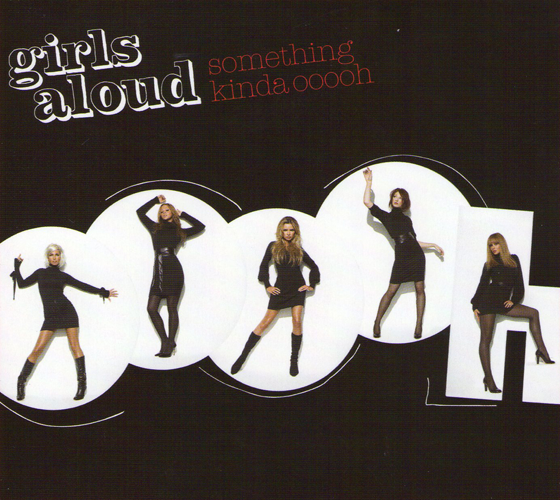
Something Kinda Ooh, which receives my vote for sexiest GA music video and has had me repeatedly questioning my sexuality (the silhouettes! The cars! The skimpy outfits!), is easily the best one to dance to on cheesy nights out and in the cheese rooms in Oceana. The adrenaline-pumped bass, the jolly guitar riffs, Nadine Coyle rapping, it all comes together to create what is – and will continue to be – a nightclub favourite. I still get insanely happy when I hear the girls’ voices chanting “I GOT TO HEAT IT UP, GOTTA, GOTTA HEAT IT UP.”
04. Call the Shots
One of my favourite songs to listen to whenever I’m irked with men, I really dig the message of being strong and not giving into men and their damn petty games. The ooh-ing and aah-ing give the song a little added spice, and the backing track wouldn’t be out of place in a 90s disco, which gives the whole thing a wonderfully nostalgic feel. The line “I won’t cry because I’ve stumbled through this far” shows the mature, sensitive side to the band that may not have been as well-exhibited in the past, and the whole package is just a wonderfully bittersweet and elegant affair.
03. Can’t Speak French
“Not that one!” my workmate exclaimed when I revealed my list to her after finally constructed it, for, whilst extremely re-playable and featuring a music video that makes a playful nod to the Marie-Antoinette lifestyle of gorgeous costumes and hedonistic lifestyles, Can’t Speak French is far from being one of the deepest songs ever written. But by keeping it simple, I find Can’t Speak French easy to bop along to and connect with, especially the underlying message that often, it is difficult to convey the depth of our emotions through words, so we let our actions do the talking. Plus Cheryl’s “I gotta let you know” refrain contains what is quite possibly her strongest vocal work; I think it’s absolutely lovely.
02. Untouchable
When I think about how my initial reaction to hearing this song was “yawn”, I cannot help but cringe. Thankfully, I came to my senses, and saw this song for what it really was: pure poetry. Lyrics-wise, I feel this is Girls Aloud’s most beautiful song. Clocking in at just under seven minutes long, the band take their sweet time with this one, and texturally, it happens to be one of their most ambitious songs as well. But the gamble pays off. Moving, deep, and very, very classy, Untouchable shows that Girls Aloud don’t have to be loud to be brilliant. The tone of the song can be interpreted as sad, but I also get a strange sense of uplift whenever I hear it too, which is the mark of a good piece of art. Plus there is one line in it that never fails to give me shivers – Nadine’s stunning “Without any meaning, we’re just skin and bone, like beautiful robots dancing alone”, which, to me, is like Keats for the 21st century. Sublime.
01. Sexy! No No No…
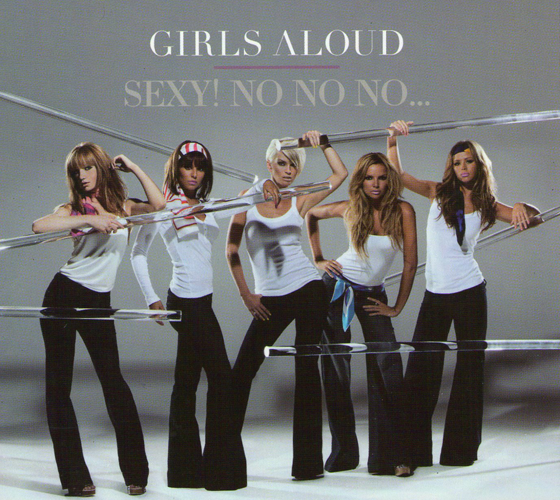
In a word, complete and utter musicalling genius. Although the music video still disturbs me, I simply cannot resist the sultry, girl-power and downright swagger of this song. The bass and guitar riffs are terrific, funked-up pop music, as is Nicola hollering “from top to bottom I’m a woman, sunshine”, which easily takes my vote for the best delivery of a lyric within the band, though there are countless other lines which I quote on a daily basis, “Did you ever think that loving would be nothing more than walking me home”, “I’ll give you nothing ‘til you show me something”, etc. The lyrics, which are relatively obscure, are generally telling of a woman not giving away her affection, and making a man “chase” her, which, I approve 100% of. The song has no structure to speak off, no chorus, bridge and verse, like the majority of their songs, and for that, it jarred when I first heard it, but on repeat listening, I was as hooked as an England left back to his mobile phone (I kid, Ashley, I kid because I love. Clean sheet against Arsenal on Sunday, yeah?) Topped off with a bass which samples “Hair of the Dog” and tonnes of stringry guitar, Sexy! No No No… is an amazing song, whether it be to dance to, sing to, or feel like a woman to (for other songs that fulfil this latter function, listen to Portishead’s Glory Box), and there will never, ever, be anything like it. Perfection? Hell yes.
I'm cleaning up all my floppy disks from yonks ago (oh, and Anahita, I've found two more ridiculously written film scripts for us to lol at! :)), and one of the treasures I've dugged up is a poem I wrote, I think it was for a Geography assignment, on immigration.
Anyway, the sentiment's there, I just don't think I should have introduced rhyme. It sounds funny. And the last sentence is a blatant steal from the Fargo tagline!
Tired and hungry, Dying for food. My brother is crying, In a gloomy mood.
I cry for help, They don’t understand. I’m speaking another language, They don’t lend their hand.
I steal some scraps. It’s nowhere near enough. But I am used to it now, Living this life rough.
I’m lost in this planet, On the run from the law. I can’t find a home, Living this poor.
My parents are missing, I miss them a lot. My heart feels like stone. My legs tied in a knot.
But yet I keep on running, Never looking behind. Just me and my brother, And my cunning and my mind.
I escaped at a young age, I was forced to run away. I would have been murdered, Had I chosen to stay?
I’m now at a new place. Somewhere I haven’t already been. But I must be careful, I cannot be seen.
Each road is an option, Which way do I lead? Will I end up in circles? What are these signs that I can’t read?
When I entered this new country, I thought we’d be safe. But there are problems, here too; They guide us away.
So I cross the border, Wondering what this new area will bring. A lot can happen In the middle of nothing.
Continuing with posting essays from my English Literature AS. You're welcome!
Dramatic monologues vary in length and tone, but each has something that distinguishes itself as a dramatic monologue is by having a fictional narrator, a fictional setting and a turning point, and written for a reader. The characters betray themselves unintentionally through their actions and the things they say, and very often the writers have a purpose for writing the monologue. Robert Browning was one of these, the poet thought to have perfected the dramatic monologue form. The three that I will be looking at are “Porphyria’s Lover,” “My Last Duchess” and “The Bishop Orders his Tomb at Saint Praxed’s Church.”
The narrators are fictional characters, but their motives for narrating the monologues are very different. The Duke of “My Last Duchess” is negotiating for a new duchess, and speaking to someone, presumably a loyal devotee to the new lady’s family. The eponymous “Last Duchess” is a painting on the wall that the Duke chooses who to show to, and often it is difficult to see which the Duke is proud of more – the painting, or the duchess, “I call that piece a wonder now.” This is one of the ways that Browning conveys the Duke’s sense of ownership and materialism, another line being, “Notice Neptune, though,” which shows his love for artificial beauty, usually in the forms of paintings, and now the duchess is just another painting to add to the collection, “Fra Pandolf by design.”
The fictional setting of “Saint Praxed’s” is the bishop on his deathbed, speaking to three monks, revealed to be his sons. This is in itself a way of revealing the bishop’s unchristian nature. He is speaking orders for the layout of his tomb, and it is again unchristian to be so preoccupied with material things. He should be giving advice to these monks, but is instead only speaking to them to give instructions on constructing a magnificent monument to his existence, “Well, go! I bless ye,” only thanking them when he knows the job will be done.
“Porphyria’s Lover,” is the retelling of events that happen on a night between the Lover and Porphyria, seen from his point of view, and despite some attempt to empathise with her, “No pain felt she,” it is a one-sided account of a love story. Because it does not have an implied listener and the Lover is reveals himself by speaking his thoughts allowed, it resembles a soliloquy. Here, the reader takes the part of the silent listener.
Each dramatic monologue has some clear cut themes and some appear in more than one. “My Last Duchess” and “Porphyria’s Lover” both deal with themes of possessiveness and patriarchy. The narrators feel they have acted correctly in killing their partners, and from the line, “And yet God has not said a word!” it is the woman is in the wrong. This shows the chauvinistic edge of distrust of women in the men, and that they have corrected the women for wronging them, “Or that in you disgusts me,” and that the Duke sees sin in everything that the duchess does, and none of his own. The Duke does not ever reveal anything about his wife’s personality, which suggests he never made the effort to try and understand her. He sees her as an object rather than a person. The two poems are also themed around murder in love. In “My Last Duchess” the act of murder is not revealed until the end, “As if alive” which increases impact.
“My Last Duchess” and “Saint Praxed’s” concern materialism. In “Saint Praxed’s,” a large amount of what the bishop says, on his deathbed, is to do with material things, such as, “some lump, ah God, of lapis lazuli,” and “Did I say basalt for my slab, sons?” and the Duke likes to show off his objects as well, “Will’t please you sit and look at her?” The Duke feels he is above everyone that his last Duchess smiled at, “My gift of nine-hundred-year olds name was anybody’s gift,” and essentially, that he is above her, “I choose never to stoop.” The Duke is materialistic in his love for all things elaborate, “Notice Neptune, though, taming a sea-horse, thought a rarity, Which Claus of Innsbruck cast in bronze for me!”
Obsession also features. The bishop is obsessed with having the best tomb, and has been planning on it for a long while, and had “fought with tooth and nail” to save the burial spot for it. He is also obsessed with the lapis lazuli for his grave, and he mentions it three times. The Lover in “Porphyria’s Lover” is obsessed with Porphyria, and fixates on her hair, “And all her yellow hair,” in the end, killing her with it at he turning point of the monologue, “And strangled her.”
In “Porphyria’s Lover,” the Lover frequently repeats the word “mine,” and this contributes to the patriarchal theme of men owning their women and that he loves the idea of having her. But, from “she rose, and from her form,” to “And give herself to me forever,” the Lover stays in passive voice, “When no voice replied.” This makes it sound as if Porphyria is doing all the work, “She put her arm about my waist” and she is the sinner. The lover also uses the weather to act as a metaphor for the Lover’s emotions of anger and betrayal in the piece, “sullen wind” and “it tore elm tops down for spite.” But she is also the one who can rid his feelings, “shut the cold out and the storm.”
The Duke speaks more conversationally throughout, and when revealing his crime, “Then all smiles stopped together,” he almost treats the line as a joke. He does not take the murder seriously, and obviously feels no remorse towards it, “Herself be lessoned with,” seeing hers as a child that needs correcting. Whilst he speaks to the silent listener, the Duke’s arrogant personality is conveyed through his cold formality, and his unfulfilled desire for his wife to be just as aloof, “too easily impressed”. When the implied listener finally reacts by rising to leave, “Will’t please you rise?” the Duke does not realise that they are leaving due to fear and disgust. He also switches topic easily, from talking about how he gave orders to kill his wife to the meeting with the next proposed wife, showing he has no reservations about disposing of the next one if he needs to.
The bishop is a character who wants his legacy to live on after he has died, and he realises he is losing time. In his monologue, he uses many “ands:”
“And then how I shall lie through centuries,
And hear the blessed mutter of the mass,
And see God made and eaten all day long…”
This builds a hurried atmosphere, and we understand how the bishop feels. When he begins to reminisce, “Your tall pale mother with her talking eyes,” religion is far down on the list, “Saint Praxed at his sermon the mount.”
Browning presents each of the three narrators as sinful, corrupt characters, and this is apparent in what they say and the things in do. One of the biggest similarities between poems is that both the Duke and the Lover, have committed murder, and the bishop is clearly not celibate, which is what he should be. “So fair she was!” shows he once had lusted after a woman. The Duke was not even the one who murdered his Duchess, as he felt too superior for that. Instead he “gave commands.” He speaks of the how she angered him, “She thanked men, good! but thanked …” and it is revealed that all she did was act pleased at simple gifts, and for him to get angry at this, shows his lack of self-control.
The men killed for different reasons. The Duke did so because he grew jealous of the simple action of the Duchess smiling in times of gratitude, “Somehow – I know not how – as if she ranked…” This type of behaviour would usually be overlooked, but not with the Duke, who is very possessive of his things. His actions seem more shocking when he reveals the Duchess’ young age, “the white mule.”
Although it is not certain why the Lover murdered Porphyria, it seems most likely because he couldn’t have her, being in a lower social status, “From pride, and vainer ties dissever”. After she has died, he pretends she is living, “I propped her head up as before,” and perhaps in this he finds Porphyria’s presence most reassuring, and that he loves her so much that he would still want her after death. However, he is slightly afraid to touch her at first – he compares opening her eye to “shut bud that holds a bee” - he still finds her beautiful, but is afraid of her “sting,” because she is the wrong.
The Duke in “My Last Duchess” is reassured by manmade items of art such as paintings, or his title. He feels threatened by things he cannot control, such as nature or the Duchess’ smile, “she had a heart – how shall I say? Too soon made glad,” and will dispose of them.
The way in which the bishop speaks changes says something about his disposition - he begins with a quotation, “Vanity saith the preacher, vanity!” then moves on to reminiscing, and towards the middle begins to plead with the monks for the sake of his tomb, “My sons, ye would not be my death?” The bishop clearly has much to say, and knows that there is not enough time to say it all, so will not waste any of it being religious. Some of his lines are shocking because of the way he sexualises objects that are seen as holy: “Blue as a vein o'er the Madonna's breast ...,” and his pagan attitude becomes apparent through, “and one Pan/ready to twitch the Nymph’s last garment off,” and similar lines. He obviously does not have a true bishop’s best interests at heart, and wishes to be remembered for his tomb rather than his achievements.
Most of “Porphyria’s Lover” is written in the poetry form of ABABB, which creates a less tense, more spirited atmosphere. Rhymes are used effectively in the lines, “In one long yellow string I wound/Three times her little throat around,” making the subject appear almost as a joke. “My Last Duchess” is in rhyming couplets, which conveys the Duke’s education and desire to perform rather than tell. The poem has enjambments, and when the ends of sentences do not come, this shows that the sentences have to be altered in order to rhyme, and that the Duke is a performer, out to impress. He also asks rhetorical questions and has sudden pauses, which increases the dramatic impact of his monologue.
Unlike the other two, “Saint Praxed’s” features iambic pentameter but blank verse - no rhyme patterns; instead it has interrupted sentences, which builds to his sense of dementia and confusion. By speaking without flowery dialogue, Browning uses the bishop’s lack of sophistication to convey how the bishop is running out of time. This makes it more like a natural speech, and at the moments where the bishop is at his most confused, the poem resembles a soliloquy.
All three men in the monologues are also greedy in their own ways – the Lover, for Porphyria’s love: “And give herself to me forever,” the bishop, for a tomb better than Gandolf’s: “I fought/With tooth and nail to save my niche” and the Duke, for his duchess, the painters, and his material objects: “Which Claus of Innsbruck cast in bronze for me!” Browning had opinions on the male-dominated society of Victorian times, and, whilst he does not always write his messages clearly in the poems, explicitly, or implied, he manages to convey the character of his narrators well. Each character has a secret which they reveal in the monologues, and they are dark, disturbing secrets which reveal dark, disturbed characters, but I feel these poems have just reached the surface; there is much more about these characters to learn.
I'm currently not in a very good mood, so I just thought I'd post one of the finest pieces of bitchery in poetry: Slough by John Betjeman, as read with disgust by The Office's David Brent:
Come friendly bombs and fall on Slough! It isn't fit for humans now, There isn't grass to graze a cow. Swarm over, Death!
Come, bombs and blow to smithereens Those air -conditioned, bright canteens, Tinned fruit, tinned meat, tinned milk, tinned beans, Tinned minds, tinned breath.
Mess up the mess they call a town- A house for ninety-seven down And once a week a half a crown For twenty years.
And get that man with double chin Who'll always cheat and always win, Who washes his repulsive skin In women's tears:
And smash his desk of polished oak And smash his hands so used to stroke And stop his boring dirty joke And make him yell.
But spare the bald young clerks who add The profits of the stinking cad; It's not their fault that they are mad, They've tasted Hell.
It's not their fault they do not know The birdsong from the radio, It's not their fault they often go To Maidenhead
And talk of sport and makes of cars In various bogus-Tudor bars And daren't look up and see the stars But belch instead.
In labour-saving homes, with care Their wives frizz out peroxide hair And dry it in synthetic air And paint their nails.
Come, friendly bombs and fall on Slough To get it ready for the plough. The cabbages are coming now; The earth exhales.
· Slough, one of Betjeman’s most cutting poems, was published in 1937 in the collected works Continual Dew. Slough was becoming increasingly industrial and some housing conditions were very cramped. In willing the destruction of Slough, Betjeman urges the bombs to pick out the vulgar profiteers but to spare the bald young clerks. However, on the centenary of the poet's birth, Betjeman’s daughter apologised for the poem. Candida Lycett-Green said her father "regretted having ever written it". During her visit, Ms Lycett-Green presented Mayor of Slough David MacIsaac with a book of her father's poems. In it was written: "We love Slough"
· Slough is written in the conventional quatrain scheme, with rhyme pattern of AAAB. Betjeman’s usage of three rhymes in each stanza adds an ironic lyrical quality to a poem describing a place as “Hell” and the shorter fourth line of each stanza acts as a conclusion of the quatrain. These are shorter, using hard words such as “belch” and “yell” to add impact. Slough is divided into ten stanzas, showing there is plenty of information to convey about this area.
· Whereas many of Betjeman’s poems are about his love of topography, Slough expresses his hatred of this area. This is apparent from the beginning, where he asks for “friendly bombs, come fall on Slough.” The juxtaposition of “friendly” and “bombs” are ironic, and paint a Hellish image, of the area, and this is sustained with words like “Death”, “mess” and “Hell.” Furthermore, the imagery of the poem is violent and horrific, “They’ve tasted Hell”, and “dry it in the synthetic air”, further adding to the negativity of Slough.
· War imagery is rife, from the repetition of “tinned”: “tinned fruit, tinned milk, tinned bins”, which creates the image of rationing and constriction. Betjeman then personifies this with “tinned minds, tinned breath”, implying that it is not just the area that is bad, but the people too. His social satire continues when he mentions “that man with the double chin” and “the bald young clerks”, further continuing the “repulsive” description of Slough. The people, like the place, are conveyed violently, with repetitions of “smash”.
· However, Betjeman does not just satirise the appearances of these people, but also their personalities. They tell “boring dirty jokes” and are by his description “mad”, showing that the terrible state of Slough reflects in its residents, and that “it isn’t fit for humans now.” He describes the residents as uncultured, “It’s not their fault they do not know the birdsong from the radio”, and uses vulgar words to reflect the vulgarity of their actions, “belch” and even implies misogyny, “Who washes his repulsive skin in women’s tears.” Furthermore, Betjeman offers sarcastic sympathy to the “cheats” by repetition of the phrase “It’s not their fault”, which suggest the opposite, and that his derogatory comments to the people are deserved.
· Many of the key words and phrases in Slough deal with the superficial, which could be used to convey his dislike of change. He describes the banal actions with derision, “with care/Their wives frizz out peroxide” and “bogus Tudor bars”, which, relating to “tinned minds”, show the people’s inability to appreciate the better aspects of life. Instead of “see the stars”, they “belch.”
· The final stanza repeats the first line of the poem to accentuate the awfulness of it. When the last line, “the earth exhales” is completed, the reader feels the full sense of the “Hell” and repulsion that has been apparent throughout.
picture of Rooney Mara that is nothing to do with article but putting it in because a commenter said I needed more photos
Slough is written in the conventional quatrain scheme, with rhyme pattern of AAAB. Betjeman’s usage of three rhymes in each stanza adds an ironic lyrical quality to a poem describing a place as “Hell” and the shorter fourth line of each stanza acts as a conclusion of the quatrain. These are shorter, using hard words such as “belch” and “yell” to add impact. Slough is divided into ten stanzas, showing there is plenty of information to convey about this area. The poem has a regular form, reflecting Betjeman’s decisiveness and determination to have the place blown to “smithereens”.
Whereas many of Betjeman’s poems are about his love of topography, Slough expresses his hatred of this area. This is apparent from the beginning, where he asks for “friendly bombs, come fall on Slough.” The juxtaposition of “friendly” and “bombs” are ironic, and paint a Hellish image, of the area, and this is sustained with words like “Death”, “mess” and “Hell.” Furthermore, the imagery of the poem is violent and horrific, “They’ve tasted Hell”, and “dry it in the synthetic air”, further adding to the negativity of Slough.
War imagery is rife, from the repetition of “tinned”: “tinned fruit, tinned milk, tinned bins”, which creates the image of rationing and constriction. Betjeman then personifies this with “tinned minds, tinned breath”, implying that it is not just the area that is bad, but the people too. His social satire continues when he mentions “that man with the double chin” and “the bald young clerks”, further continuing the “repulsive” description of Slough. The people, like the place, are conveyed violently, with repetitions of “smash”.
However, Betjeman does not just satirise the appearances of these people, but also their personalities. They tell “boring dirty jokes” and are by his description “mad”, showing that the terrible state of Slough reflects in its residents, and that “it isn’t fit for humans now.” He describes the residents as uncultured, “It’s not their fault they do not know the birdsong from the radio”, and uses vulgar words to reflect the vulgarity of their actions, “belch” and even implies misogyny, “Who washes his repulsive skin in women’s tears.” Furthermore, Betjeman offers sarcastic sympathy to the “cheats” by repetition of the phrase “It’s not their fault”, which suggest the opposite, and that his derogatory comments to the people are deserved.
Many of the key words and phrases in Slough deal with the superficial, which could be used to convey his dislike of change. He describes the banal actions with derision, “with care/Their wives frizz out peroxide” and “bogus Tudor bars”, which, relating to “tinned minds”, show the people’s inability to appreciate the better aspects of life. Instead of “see the stars”, they “belch.”
Interestingly for Betjeman, there are no contrasts in tones of the poem, with only a hateful voice used throughout, which adds to how strongly Betjeman’s hatred of the place is. However, there are contrasts in scope. Whereas the first and last stanzas represent the macrocosm of Slough, speaking of it generally, the rest of the poem looks at individual examples. By doing this, Betjeman adds to the idea that all of Slough is “dirty” and that there are no redeeming qualities to it,
Although Betjeman never once explicitly says that he despises Slough, it is still apparent that he does, through many of his descriptions and anecdotes, as well as calling for a bomb to “blow to smithereens” the area. The usage of this colloquial word suggest that he does not have enough of an opinion of Slough to use a better word.
The final stanza repeats the first line of the poem to accentuate the awfulness of it. It ends with a note of calmness, as if Betjeman has imagined the bomb to have gone off. When the last line, “the earth exhales” is completed, the reader feels the full sense of the “Hell” and repulsion that has been apparent throughout.
--
If you found this interesting and would like access to my other GCSE and A-level English lit essays, email me at lemon_and_lime7@hotmail.com