Showing posts with label literature. Show all posts

Thursday, April 02, 2020

10 Most Attractive Men in a 2019 Film

2018's list, in case you wanted to get a flavour for Emsy's taste in Hollywood hunks!

10. Lakeith Stanfield, Knives Out (new entrant)


Sunday, June 02, 2019

Bar review: ADVENTURE BAR (Clapham High Street)


Having visited and reviewed the Adventure Bar in Covent Garden, I postulated whether the chain's venues outside of central London were better than the flagship one. The fact that DUSK (a terrific app that allows you have a free drink a night) featured Adventure Bar when I happened to be at Clapham Junction, meant I could put this hypothesis to the test.


Thursday, November 16, 2017

Album review: REPUTATION (Taylor Swift)

A month shy of turning 28, Taylor Swift has been around the block and suffered a few knocks to her standing (not to mention her heart) for her troubles. Her sixth album comes at some time when some self-reflection is much-needed.


With a title like ‘Reputation’, she’s certainly cognisant of that artefact. It would be trite to dub her 15-track album as a ‘confessional’, as she’s always been very forthcoming about wearing her heart on her sleeve, and channelling her painful life experiences into song-writing inspiration, but there's a salient self-awareness in this album that was perhaps lacking in her previous work.

Friday, October 13, 2017

LFF Film review: ON CHESIL BEACH (Dominic Cooke, 2018)


Summer 1962. In a Dorset hotel, overlooking the seaside, two virgins, Edward and Florence, navigate their wedding night with shared trepidation, although the root of their anxiety are worlds apart. He, a History graduate from a humble but loving home, can’t wait to get his hands on his beautiful bride. She, a talented violinist from a richer family, is filled with revulsion at the thought of sexual contact with anyone.

Thursday, August 17, 2017

Book review: THE LOST SYMBOL (Dan Brown)


Robert Langdon, the Harvard professor whose impressive cognitive abilities was put through their paces in Angels and Demons and then The Da Vinci Code, finds himself at the centre of another mystery. This time, it involves the kidnapping of his close friend, Peter Solomon, a renowned member of the Freemasons. Along with Peter’s scientist sister Katherine, Langdon must piece together the fragmented clues to get Solomon’s abductor the information he strives, if he wishes to see his friend alive again.

Saturday, June 10, 2017

Book review: DAUGHTER (Jane Shemilt)


Although Jane Shemilt writes in lucid, gripping prose, her first novel suffers from several flaws.


Saturday, November 05, 2016

Film review: SOMEONE TO TALK TO [一句顶一万句] (Liu Yulin, 2016)

A couple get married, full of love and hope for their future together. Several years down the line, they barely speak a word to each other. Around their anniversary, one discovers the other has been cheating on them and filled with murderous rage, revenge becomes their raison d'être as they do everything they can to ruin their spouse's life.


Actually, I'm not retelling the plot for Gone Girl, but Liu Yulin's debut movie Someone to Talk to. Adapted from the 2011 Mao Dun Literature Prize, 一句顶一万句is an economical yet intimate look at what happens after the love has gone out of a marriage and feelings of resentment at having one's heart broken fester.

Niu Aigo (Hai Mao) is the jilted husband, who tries his best as the patriarch of the family, but unfortunately his modest earnings as a cobbler and simple vision for their future aren't to the pleasure of his wife, who has outgrown him, and has an affair with the wealthier local wedding planning magnate. The film is considerably less kind to her, and rightly so, given she makes comments that make her seem like a  right gold-digging shrew. Woman knew her husband was poor when he married her; she doesn't get to screw everything up when that slowly sinks in.

In only his second film role, Hai Mao is just wonderful as a man who, after being wronged, is all affront and sharp edges, until self-realisation (and a few convenient plot machinations) give him the self-realisation to let go and become a stronger person for it.

His character essentially goes through all five stages of grief through the course of the film, and in doing so, exhibits some spiteful colours. But it's a testament to Mao's humane, heartfelt performance that even at his lowest points, you're rooting for this guy to pull through. His character was reminiscent of John C. Reilly in Chicago, another pitiable cuckold, and it's rare that cinema not only focuses on the person who's been left behind, but the person who was left behind happens to be male.


Someone to Talk to also features a subplot about Aigo's older sister's ill-fated online dating adventures and how she eventually settles, because, as she matter-of-factly states, 'I'm 39. I couldn't get anyone younger'. This kind of pragmatic, frank dialogue makes Someone to Talk to by far the most honest Chinese film I've seen this year (although there's not much in the way of competition).

Liu Yulin directs the story in such an unfussy, natural manner, with a working class Chinese town as the backdrop, I was invested in the plot in a way other films with more frills have failed to achieve. One scene, where Aigo angrily takes his frustration at his wife gallivanting out on his young daughter, carried genuine pathos and was far more powerful than anything I watched in yesterday's manufactured, sappy, The Shite Between Oceans.


I like a good revenge flick a hell of a lot more thanas much as the next person. Films like Gone Girl and The Girl with the Dragon Tattoo contain scenes which imbue me with sadistic wish fulfilment at various men who have wronged me. I myself can nurse a grudge for quite a while, although my modus operandi is significantly less bloody and a tad pettier than anything Amy Dunne or Lisbeth Salander confect; that bellend Stefan who racially abused me over a year ago is immortalised in my Fantasy Football team name, 'Stefan is a Kuntz'.

But there's a lot to be said for Someone to Talk To's more forgiving approach. 

Someone to Talk to is a sincere and profound look at loneliness and the multifaceted nature of marriage, elevated by the magnanimous treatment it gives its protagonist. It illustrates how toxic holding onto past transgressions can be, not just to oneself, but to those that we love. Ultimately, it encourages the protagonist and the audience to look beyond, not behind.

Perhaps it's time I, like Aigo, made like Elsa from Frozen, and Let It Go. Good news for Wasteman, Watford fan and The Wolf of Fleet Street, then.

8/10

--

If you enjoyed this review, do check out my other ones, which include a fair few Chinese movies.

Monday, September 02, 2013

The Casual Vacancy (JK Rowling) review


Released last year to bated breaths and eager eyes, The Casual Vacancy is J.K. Rowling’s first foray into the adult-book market. Having held back from reading it when it first came out so I could savour every page and give the book the measured, impartial critic it deserved (the worry was that, had I devoured it so quickly like I did with the final Harry Potter book, I would miss nuances like I did with my first time reading of HP VII, so keen was I to get to the end of the saga), I found myself extremely disappointed with The Casual Vacancy, which was, at best, overly-detailed and ambitious, and at worst, a self-satisfied, muddling mess.
The action kicks off when well-loved Parish Councillor Barry Fairbrother bites the dust due to a surprise bout of aneurism in his brain. Initially, the townpeople of Pagford, the fictitious West Country town where the book is set, mourn his death, but soon, practicalities kick in. His death leaves a “casual vacancy” to be filled, and three men put themselves forward: Miles Mollison, a lawyer and family man is the frontrunner, being the son of Howard Mollison, the leader of the Parish Council, but there is also Deputy headteacher Colin Walls, who wants to run out of love of Barry, as well as bullying petty crook Simon Price, who, on hearing of the unofficial perks of being on the council, can’t resist the idea of receiving some bribes of his own.
Having penned the source material of the box office smashes Harry Potter, one can’t help but think she’s got half a mind of the movie rights of this book. For, whilst the setting, Pagford, is a small town, the themes of the book are anything but. Adultery, drugs, self-harm, racism, abuse, duplicity, you name it, this book’s got it. There are several families which come into focus, and the actions of each have repercussions on other people, some of these which trigger off a Domino effect into something much larger. But whilst this makes for interesting films, such as Magnolia or Short Cuts, on paper, it harder to keep track of, particularly at the start when she juggles between narratives and it is hard to keep up.
That is not to say the book is a total failure. As with Harry Potter, there are moments of extreme wit – her describing of a teenage boy band that one of the wives in the novel becomes obsessed with can only be sculpted on One Direction, and is an incisive comment on how little there is to live for when the spark goes out of a marriage. Similarly, in the latter act of the book, when the action really takes off and people begin posting on the Pagford town message board as The_Ghost_Of_Barry_Fairbrother, chaos, and dark humour, reigns. As with some of the later Harry Potter books, when Rowling gives the internal monologue of the characters in The Casual Vacancy, she offers a window into their psyches, however dislikeable, and it takes a talented writer to do that.
But even as the most ardent Harry Potter fangirl, I cannot overlook all the flaws in this novel. First and foremost, it strives for so much, and in doing so, achieves so little. I read this book whilst also reading Tampa by Alissa Nutting and Cell by Stephen King, and compared to this book, the narratives of those two are so straight-forward and unpretentious, it made me want to cry tears of joy. Even if we put my inability to follow the plot down to me being a bit dense, there are other things – Rowling’s depiction of a crack addict and the conditions she lives in could be lifted right out of an anti-drugs campaign they made for teenagers, so laden are they with caricature.
Very few characters in the novel are likeable. Sukhvinder Jawanda is one of the few that I liked, and it is credit to the novel that she gets a brief glimpse of redemption. But I despised pretty much everyone else in the novel, so much so that, when tragedy did strike at the end, that I was left with a hollow “so what?” feeling that contrasted with the endless tears I shed in reading the Harry Potter books, and even then, you could feel Rowling desperately trying, to no avail, to pull at her readers’ heartstrings. The teenagers are painted with a general paintbrush, the majority of them being antagonistic, ungrateful to their parents and far more interested in getting laid than studying. I’ve been a teenager and that’s just not how it is. Where has Rowling been getting information, episodes of Skins?
Where the teenagers are whiny little gimps, the adults are described as hypocrites who are only out for mercenary gain. They only think of themselves and aren’t able to see how their own kids are rebelling right under their eyes. Whilst no doubt haphazard parenting exists, for there to be so many poor parents, all so closely linked, beggars belief.
Recently, Miley Cyrus cringed out the world at the MTV Awards by “twerking” and basically just trying to shed her good girl image so much that it reeked of desperation and trying too hard. With The Casual Vacancy, JK Rowling is doing the literary version of exactly the same thing. Sex, drugs and gratuitous swearing (hell, I’m a tetchy football fan with an attitude problem and I don’t even swear as much as the saps in this novel do), I cringed on pretty much every page. That Rihanna’s “Umbrella” was used as a motif throughout the novel just compounds the humiliation that was reading The Casual Vacancy.

Tuesday, June 18, 2013

Book Review: Murder Most Fab (Julian Clary)


Having just suffered his first love and heartbreak, Johnny Debonair is uprooted from his farmhouse in Kent to the big city, where his grandmother enrols him in drama school, believing the change will do him good. However, his classes are filled with self-absorbed people, who think too highly of themselves, and he soon becomes disillusioned with acting, long realising that he won’t be going anywhere with his pipe dream.

An alternative route would be to follow the footsteps of his flatmate Catherine, a brassy nurse who supplements her meagre NHS salary with occasional dalliances into high-end prostitution. Soon, both get kicked off their day jobs and become full-time hookers, and uproot from scummy Lewisham to a classier joint in north London, along with an expensive cocaine addiction to match. In his travails as a gigolo, Johnny happens to screw the right people that lead him to become a popular television presenter, but it doesn’t come cost-free, the cost being a few casual murders.

I’m unfamiliar with Julian Clary’s stand-up comedy, but having read this book, I’m definitely going to browse some of his acts on YouTube. The novel is bawdy, morally ambiguous to the extreme and sixty different kinds of hilarious. Johnny’s experiences of being a rent-boy to a range of clientele vary from the amusing to the downright gritty and disturbing, but all the way through the author maintains a jaunty, upbeat tone, however degrading the stuff Johnny has to do. Similarly, it’s clear Catherine isn’t satisfied with her lot as a prostitute, complaining in one chapter “My fanny’s like a cake mix”, but hey-ho, that’s the hand life’s dealt with her, so she might as well enjoy all the Gucci handbags she can along the way.

As you’d expect in a novel about murder, there are a few twists and turns embedded throughout the story, and, whilst you have to suspend disbelief for some of them, it all adds deliciously to the bubbling witch’s brew of a plot. Blending a crime novel with such a jovial comedic tone isn’t easy, but Clary carries it off with considerable ease, even managing to get us to root for Johnny, a dark, twisted kind of way.

Each of the characters, whilst first appearing like caricatures, still feature astute observations, from those of the snobby British class system, to the trite-but-true fact that money doesn’t make you happy. Perhaps the character that Clary paints in the most fashionable light throughout the novel is Johnny’s mother, a hippie, free-loving nature lover. She is one of the few unpretentious people in the book, and she is happier for it; by shaking off the social norms that shackle her, she finds herself and the happiness that her son never truly attains.

Smut splashes off every single page, but at the centre of Murder Most Fab is a huge heart. This sounds paradoxical, considering the main character bumps several people off in it, but Clary manages it, all the more impressive considering this was his debut novel.

Despite Johnny’s oh-so-glamorous celebrity lifestyle, his life story is ultimately tinged with an  undeniable undercurrent of malaise, malaise at having lost his one true love, met up with him again, but then been relegated to being a mere sideline in his life. It is Johnny’s longing for this person that motivates his actions throughout his life, and whilst he does things that we as the reader wouldn’t be caught in a million year’s doing, reading about his adventures in doing so sure is an riotous, witty, and unbelievably funny ride.

Grade: A

Sunday, September 09, 2012

Film Review: Anna Karenina (Joe Wright, 2012)

Adultery. It’s always made for some of the most delicious film, TV and book storylines (and, as a Chelsea fan, I can't say I'm a stranger to my player's committing it #trollface). Indeed, between 1873 to 1877, Leo Tolstoy used it as the basis of his novel, which he published in eight parts. Joe Wright, always one for a literary classic (Pride & Prejudice, and to a lesser extent depending on how much you rate McEwan, Atonement), adapted this 19th century Russian lit classic to the big-screen. After scouting across the continent for filming locations, he finally settled for the unusual, somewhat Dogville-esque of having the vast majority of the film filmed on a stage. The big difference between Anna Karenina and Dogville however, though, is where the latter barely had any set at all, with the locations and props chalked into the wooden floorboard, the set of Anna Karenina, whilst discernibly all a stage, is vast and opulent, with moving backdrops and richly designed interiors aplenty. The purpose of Wright choosing to having the movie filmed on a stage was because he said that Anna felt like her entire life was “on a stage”, and, indeed, the scenes where she faces society and stylistic touches are added (such as dancing couples freezing into a tableau whilst she dances with Count Vronsky) are certainly very effective indeed.

 Performances in Anna Karenina are uniformly excellent. I remember, a decade ago, when Bend it Like Beckham first came out. It was a cute little movie about a girl juggling the pressures of her society and what she wanted, but one of the things that also stood out was Keira Knightley as the feisty friend who helps her get into a local girl’s team. It wasn’t the most polished performance, but then again, in Bend it Like Beckham, it didn’t need to be. A year later was Pirates of the Caribbean, where once again, she was appropriately spirited (her delivery of “you like pain? Try wearing a corset” is classic), but seemed to be continuing a trend of delivering solid, not spectacular, supporting roles as the pretty lady. Add in a few ill-fated turns in the likes of Domino, King Arthur and The Jacket, and the running joke amongst Brits was that Keira Knightley, though a pretty face (and a very beautiful one at that, something that is exhibited very well by Jacqueline Durran’s lavish costumes in Anna Karenina), wasn’t much scrub at acting itself.

Well, the era of mocking Knightley’s acting prowess is well and truly over, because she was quietly strong in Atonement, captured Lizzie Bennet’s playful cheekiness in Pride & Prejudice, and also more than up to the task as the crazy patient in A Dangerous Method. In Anna Karenina, she is excellent; I’d even go as far as to say she was awards-worthy. The thing about her Anna is, that not many viewers, reading the plot précis on the page, would have a whole lot of sympathy for a woman who voluntarily jacks in a comfortable marriage including a son she dotes on, all in pursuit of carnal desire with an admittedly dashing Count (Aaron Taylor-Johnson, who wouldn’t say no). But Knightley imbues Anna Karenina with all the elements of her character, not just the ~selfish horndog~. She is a caring mother, a loyal sister to Stepan Oblonksy (a serial cheat, played with humour by Matthew Macfadyen; some would regard this is a quasi-incestuous casting, seeing as he played Mr Darcy in Pride & Prejudice, and that) and overall, Tolstoy and Wright would have us believe, not a bad person. I certainly didn’t think she was, and that is all to the merit of Keira Knightley’s wonderful performance. It is funny, because one of the things she is oft-criticized for in her acting (the way her lip pouts and her jaw juts out) is snuffed out for the majority of the film, and it is only when her affair with Count Vronksy sours that it re-emerges, yet, ironically, this quite suits Knightley’s acting and certainly helps convey the mad, irrational woman Anna is being driven to become.

 The support is also terrific, save perhaps Aaron Taylor-Johnson, who I still have my reservations about. Save his ridiculously obvious fake moustache, he more than looks the part of Count Vronksy, with his piercing blue eyes and thick muscular arms. But when delivering his lines, he comes across as a bit needy and drippish, rather than the potently sexual being that Vronksy is, and that Anna couldn’t resist. As such, it’s fairly easy to envision Anna turning him down, and one has to suspend some belief when Anna initially succumbs to her lust for her. Jude Law, on the other hand, as Anna’s stuffy, boring, but loving husband, is magnificent. It’s a thankless role, as the man 20 years her senior who sees his wife as beyond reproach, but his love and trust in her only stifles her further, but he delivers it with such subtly and nuance that the love triangle aspect of the film is appropriately murky in that I genuinely couldn’t take a side.

Then there is the subplot about Konstantine Levin (played by Bill Weasley off the Harry Potter films, Domhnall Gleeson) and his enduring love for Oblonksy’s wife’s sister, Kitty (newcomer Alicia Vikander, a very pretty Swedish actress). Whilst Anna Karenina’s love affairs are complicated in that she has two men to choose from, Levin is confused and increasingly antagonised by the state of Russia, and therefore it is his philosophies that hold him back. Some of his conversation with the workers in his father’s manor go on a little bit longer than necessary and certainly aren’t amongst the film’s most memorable moments, but indeed, this is a common criticism of Tolstoy’s source material; the love/sex stuff is ace, but the Russian politics bored even the most learned of literary critics. So we can’t fault Wright, or Gleeson too much for that. Furthermore, the Levin/Kitty romance forms the most emotionally affecting scene in the film; Levin, having gone away for months after his initial marriage proposal was rejected by Kitty, comes back to see her, where they speak wordlessly to each other using only cubes of letters; a sort of 19th century hangman/Scrabble amalgamation. As Kitty admits she was wrong to turn him down, Levin lifts his hands to reveal three simple letters; I L Y. Perhaps it doesn’t sound like much on the page, but on the screen, and with the earnest facial expressions of the actors thrown in, it really was a cathartic moment of redemption for Levin, one of the few genuine good guys of the piece.

 Overall, Anna Karenina is one of the most exciting things I’ve seen in the cinema this year, which is truly high praise for a 19th century set Russian love saga with not a car chase in sight. Joe Wright deserves much praise for his brave take on a literary classic and his cast more than step up to the task, with Knightley, Law and Gleeson all show-stealing. As with many other Focus Features films (Brokeback Mountain, The Constant Gardner, Swimming Pool), the film is a treat to look at, with its swirling camerawork and the set which changes in front of your eyes. Anna Karenina caused controversy aplenty when it first came out due to its depiction of infidelity, but in truth, there is so much more to the book, encompassing themes of love, life & death, conformity, femininity and individualism. In just over two hours’ running time Wright was never going to cover every single one of them, but the end product, like our fearless, misguided lead, is beautiful to look at.

Grade: A-

If you enjoyed this post, check out Poker Blogs' review of 21!

Monday, January 02, 2012

Sherlock.

In time for the New Year comes a second series of Mark Gatiss and Steven Moffat’s wildly inventive Sherlock, which takes the classic stories from Arthur Conan Doyle and sets them in the hustle and bustle of London. Smartphones, blogs, laptops and fancy gadgetry all become part of the story-telling as Doyle’s clever creations are given a modern day spin, and heading all of this unlikely but massively successful creation are the odd couple of Benedict Cumberbatch as the genius but extremely irritating epoynomous character and Martin Freeman as his long-suffering army doctor friend and housemate, Doctor Watson.

The season starts where series one had left off, and thus in, quite literally, an explosive manner as Holmes and Watson are in a swimming pool room, face-to-face with Sherlock’s nemesis, the brilliantly dastardly Jim Moriarty. He is seconds, nay, nano-seconds from doing away with the pair of them when Moriarty receives a phonecall which pulls his attention away from the two and gives them a lifeline. We see that this phonecall came from none other than a vampily-clad woman, and not only that, but she seems fond of playing sex games with other women. The woman – as she will be called by Sherlock – will play a huge part in the episode, as it is really centred around her. It is of course, the only person who has ever proved a match for Sherlock Holmes, Irene Adler.

Irene Adler is played by young riser Lara Pulver, and from the moment we lock eyes with her on screen, we know we are witnessing someone special. Looks-wise, God spared no expense with her- beautiful eyes, the skin of an angel and the body of a Greek goddess, as well as a voice that exudes femme fatale all over. It was an important call in casting one of the fiercest female literary creations and the show’s producers could have easily opted for the easy option and gone for a more mainstream actress, but they put faith in Lara Pulver and she has repaid them handsomely with a fabulous performance that exudes sex and more than holds her own against the show’s talented and experienced males.

The episode, “A Scandal in Belgravia”, is loosely based around the Conan Doyle short story “A Scandal in Bohemia.” Except now, Irene Adler is a high class call girl who specializes in whip-play rather than an opera singer, and she has a collection of photos on her camera-phone rather than one bulky photo. These photos are of Adler with a female member of the Royal Family (or thereabouts), and Mycroft Holmes has enlisted his little brother (who’s relationship with is the very definition of love/hate) and Dr Watson to go get those pictures back.

Along the way, there are twists and turns aplenty. I was blown away by the ingenuity of the first series with how it subverted the Sherlock blueprint and managed to use modern day technology as part of the story-telling and detective process, and wasn’t sure if it would feel quite as fresh this time. Reality? It felt better. Doctor Watson’s keeping a blog is an amusing sub-plot and there is one terrifically crafted scene in which Sherlock Holmes, due to becoming somewhat of a C-list celeb due to said blog, is photographed by the paparazzi, a stream of photos which find their way to broadsheet papers, including The Guardian. Wonderfully filmed and a witty nod at the media obsession that we as a nation are getting.

As far as awkward, rude detectives go, this is also the first time Sherlock has shown interest in another woman. Irene Adler is stunning to look at, no question about it, but what really draws Holmes to her is her intellect. She is always three steps ahead of the chess game – each of her phones, combinations etc have two PINS – one which will open the safe and one which will alert the police, and even when you think she’s reached the end of the road and run out of lives, she manages to surprise you. There is one scene in which she half-seduces Sherlock by leaning into him, which plays out as one of the most erotic things I have seen in TV – yet no kissing or sex was directly involved. Incredible.

The first episode of Sherlock had everything I could possibly have wanted from a TV show and more. A showdown in Buckingham palace? Check. Some kick-ass fighting? Check. Retribution for some of the goons who hustled poor Mrs Hudson? Check. Some knowledge into the games Britain and Germany played with each other in the war? Check? A password that had me baffled for the whole episode and then finally, when it was revealed “Ahhhhh!”? Checkmate. The acting was faultless, with the camaraderie and banter between Holmes and Dr Watson timed to perfection. Something that has always bothered me about Holmes – although I wouldn’t expect him to be any different – is that he never gives Dr Watson the credit he deserves for everything he does for him, and this is exhibited here, when poor Dr Watson loses yet another girlfriend due to his need to protect Sherlock. The script was a work of genius, and I cannot but tip my hat to Gatiss and Moffat. All in all, the show was an overarching triumph. Next Sunday now seems an age away.
Grade: A+

Sunday, May 23, 2010

Swimming Pool Sunday (Madeleine Wickham)

Photobucket


Louise Kember, separated wife and mother of two, decides to spend a hot Sunday afternoon with her daughters, Amelia and Katie, at the pool of wealthy local family the Delaneys, who open it once a year for charity. Sounds reasonable enough. Except that Sundays are supposed to be the day the girls spend with their father, Barnaby. He had made intricate plans of his own to go fishing with his girls, and now that his plans have been scuppered, he, hurt and bitter, is at the house to glower at Louise resentfully. However, the air soon turns even more sour when their youngest Katie fatally injures herself trying to dive, and suddenly the ill-feeling between Louise and Barnaby is just the beginning in the ensuing recriminations and drama that follow.

Madeleine Wickham (the real name of the author who, under alias Sophie Kinsella, penned the terrifically enjoyable Shopaholic series as well as one of my favourite chicklits of all time, Can You Keep a Secret?) generally tends to write in a slightly darker tone for the few books she’s released under he true name, and with the themes of greed, discontentment and grief in Swimming Pool Sunday, this is no exception. Furthermore, whether as Kinsella or Wickham, the author picks London as the backdrop to most of her stories, particularly the Chelsea/Kensington/Fulham area, where one can only assume is where she grew up. 

However, she chooses to set this novel in the countryside, something the protagonist Louise is less than satisfied with. After the initial romance experienced with her estranged husband Barnaby, comes the less-than-glamorous minutiae of being a mother. For someone who was once involved in the glitzy process of aiding her father in running for elections, this contrasts starkly with the life she’d dreamed of having, and her resentment at Barnaby’s willing to “settle” for a simpler life is one of the chief causes of their falling apart. Another is the arrival of a smarmy but sexy lawyer Cassian, who immediately sees Louise’s political connections as a route into getting what he wants. It is he who suggests that Louise and Barnaby sue the Delaneys for Katie’s accident, and after some swift and ill-advised thinking, the beleaguered parents are soon on board.

In the Delaney’s household, however, they have a lawyer acquaintance of their own, a far more sympathetic character in the form of Alexis, a mature, older man who immediately senses something may be wrong and tries to do all his can to prevent the Delaneys – who have suffered loss of their own when their son died of a blood clot in his brain – from having to pay for an accident that arose from them trying to do a good deed for charity. This good lawyer/bad lawyer dynamic raised between Alexis and Cassian makes for a intriguing read, and Wickham is clever not to succumb to the much-documented cliché of depicting all lawyers as soul-sucking mercenaries. Alexis himself has a relatively engaging sub-plot involving his Summer romance with a beautiful-but-naïve local musician, Daisy, although Wickham seems unsure as to what the purpose of this little mini-romance is.

Although the novel took a while to get started, once the ball was rolling, we were into the territory that Wickham writes best – about humans, human flaws and doubts, and human interactions. Neither Louise nor Barnaby are bad people; they are, in fact, both good (only Cassian is the downright bad character in the story), but ones who have let their folly shape their paths in the past. People taking their anger out at one person by treating other’s badly is nothing new, but in Swimming Pool Sunday, Wickham allows for them to realise the error of their ways and rectify it before they make the same mistakes again. A satisfyingly deep read.

Wednesday, February 25, 2009

Amazing quote from The Hottest State.

A lot of bad things are going to happen to you. First off, you’re going to die. So, that said, there’s not much to worry about. No matter what else happens, you really only have two options: you can either handle things well and be happy, or you can handle them poorly and be miserable.

dsfdfdfdf

Friday, October 10, 2008

A Look Back at Tess of the D’Urbervilles.

Bung.

Thomas Hardy’s famous novel Tess of the D’Urbervilles was not a universal hit when it was first published in 1891, and met more than its fair share of controversy. Society at that time, it seemed, were not particularly receptive a novel that sympathised with women, that sympathised with the lower class, or was willing to challenge the social and sexual codes of the time. Over 100 years on, society is a lot more accepting to the ideas raised in his novel, and, just before the release of the next Bond film, the BBC have found the perfect time to re-invigorate Hardy’s novel onto the small screen.

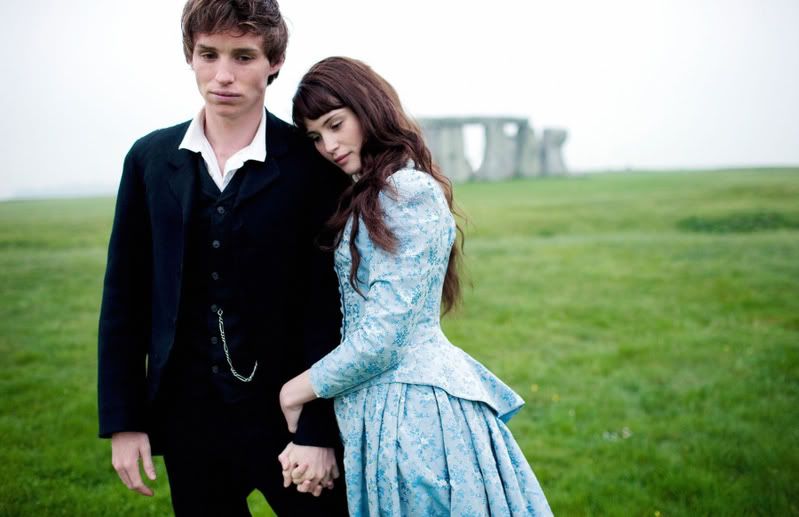
22-year-old Kent-born English rose Gemma Aterton, who appears in three 2008 releases – RocknRolla, Three and Out, and Quantum of Solace, plays the low-born but beautiful country girl Tess who catches the eye of the immoral Alec D'Urberville, who, after persist and failed attempts to win her heart, takes advantage of her tired state one night, leaving her wounded and broken, but also leaving her a mother, to a stillborn baby. Things get better for Tess when she meets her supposed soulmate in Angel Clare, who falls for her too (and this time, the love is requited), but her shady past (to no fault of her own) continues to catch up with her, and finally, her honest soul lets her down when she admits to her newfound husband about her past endeavours, and he hypocritically rejects her.

Having had read the novel, I knew how the story went, but that didn’t stop me from feeling for Tess as strongly as I did the first time I read the novel. In their adaptation, the BBC choose not to blur the line between whether or not it was seduction or rape – they depict the event as rape (which is also how I interpret it). Tess’ subsequent downfall is heartbreaking, not least because of the raw, gut-wrenching performance from Gemma Aterton, who, accent aside, captures all the qualities of Tess Durbyfield – kind-hearted, sincere, loyal, naïve, and prokects them into a brilliant performance. Her final scenes with Alec, in particular, broke my heart.
Overall, despite a few drawbacks, I found Tess and beautiful and moving adaptation of Hardy’s novel, and I look forward to seeing more of Miss Aterton!


So, for those of you who watched this, what did you make of it?

Sunday, October 05, 2008

Bung.

01. September: How was it for you?
02. What colour is your mobile phone?
03. What do you think is the longest you can without accessing the internet?
04. Your favourite musical number from a Disney film?
05. What was the last book you read, and was it any good?

Bung

Friday, July 04, 2008

Four brief book reviews.

I’ve been a bit behind on the whole “a book a day” thing, as well as reviewing them for the blog. But anyway, here’s four books I read this week:

- Memories of My Melancholy Whores (Gabriel Garcia Marquez)
Underwhelming, to say the least. It was turgid, dull and extreeeeeeemely unsexy (I don’t want to hear about a 90-year-old man’s waning libido, cheers). Marquez, you can and have done so much better.

- Dumb Witness (Agatha Christie)
One of my favourite Agatha Christie mysteries. Not quite up there with The ABC Murders and And Then There Were None, but certainly one of her finest, in terms of plot, character development, and narration. The idea - of Poirot investigating the murder of a woman who sent him a letter long before she died - is ingenious, and there are various twists and turns throughout.

- Star Struck (Val McDermid)
Emma 4-xing loves this book!!! After I ploughed through my own “script” of Butterfly, I thought the two words “crime comedy” would instil nothing but a shudder in me. I was wrong, for Star Struck has got crime and humour in spades. It’s about Kate Brannigan, a P.I. in Manchester who has been hired to be the bodyguard of famous TV star Gloria Kendel, who has been getting death threats. But once she takes on the job, it's more than just scary letters that she has to contend with as a celebrity mystic-meg type gets murdered. The book encapsulates all of Kate’s life, from her employees who are getting arrested or hooking up in cyberspace, to her brooding boyfriend, to all the eccentric people she meets on the job. Kate Brannigan is an amazing role model. Honestly, with the influx of wags and empty-headed glamour models that we're seeing in the Media, reading about Kate, with her Thai-boxing, Chinese food eating, fast-talking ways was an absolute breath of fresh air. Star Struck is very clever, well-written and insightful, it played a bit like an episode of Jonathan Creek as written by Sophie Kinsella. I absolutely adored it. (And I've just found out that there are about 5 more Kate Brannigan books written! *is happy*)

- The Lady and the Unicorn (Tracy Chevalier)
If anyone can make the process of painting and creating and weaving a tapestry interesting to a complete art-phobic like me, it’s Tracy Chevalier. Girl with a Pearl Earring was one of the most beautiful and underratedly sexy books I’ve ever read. TLATU is a little less subtle in its characters’ carnal desires, and I for one couldn’t see what all the women in the book saw in Nicholas (who didn’t sound that fit, imo) and why they were willing to run the risk of getting pregnant by him. That said, the narration, which jumps from character to character, is really well done – their inner monologues are completely believable and it’s refreshing to hear a story from different angles. And a tapestry of a unicorn sounds sublime.

Friday, June 27, 2008

The Tesseract (Alex Garland)

Thank the lord for audiobooks. If it wasn’t for Martyn Reed’s voice reading me Alex Garland’s second book, The Tesseract, I would have died of boredom this past two days tidying my bedroom. As it was, with the convoluted plot being read to me whilst I did my summer cleaning, it was actually a pleasant experience.

I’ve not read Alex Garland’s debut, The Beach, but I’ve seen the film version of it, and, whilst I loved all the shots of Leonardo DiCaprio with his shirt off, I thought the film itself was ploddy and at parts, unintentionally hilarious. That said, it was still fairly thrilling, and thrill is something that The Tesseract offered from the start to finish.

Told in four parts, The Tesseract begins with Sean, a sailor on the shipping waters of Manila, waiting in a run-down motel for the gangster, Don Pepe to pay him a visit. Next, the story shifts to a doctor, Rosa, who is waiting for her husband Sonny to come home, as she reminisces about her first love, Lito. The next story follows two young Filipino hustlers, Vincente and Totoy, as they wander the streets of Manila in search of some easy dosh. And then there’s the finally, so climactic, so wonderfully clever in weaving the three threads together, that it makes Magnolia look like Little Britain.

The ambitious plot device made The Tesseract are hard story to write, but Garland completely succeeds. His modulates tone perfectly; from the nervous panic in Sean’s strand, to the romantic and bittersweet telling of Rosa’s romance of Lito, to the philosophical musings of Alfredo, a psychologist who Vincente and Totoy go to to sell their dreams to. At times, the pseudo-science gets a bit grating, and the flashback-within-flashback strategy left me a bit confused. I liked the novel most when it played things simple; and my favourite plot of the three was by far Rosa's, the tale of her and Lito was handled very beautifully.

Towards the end, Garland ran the serious risk of running himself off at a tangent, but luckily, he kept the story in control. The finale is as interesting as it is satisfying, tying in all three plot strands with one denouement, like the converging Tesseract of the title.

Oh, and the book was read aloud by Martyn Reed, who has a lovely voice; very deep and enigmatic.

Wednesday, June 25, 2008

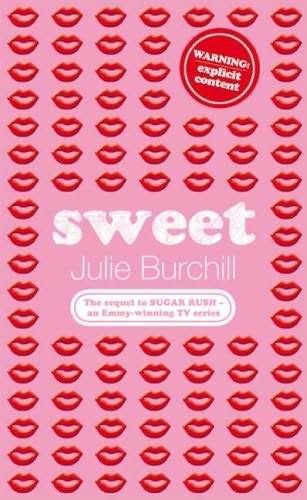
Sweet (Julie Burchill)


I haven’t read the first Julie Burchill novel for teenagers, Sugar Rush, for which this is the sequel to, nor have I seen the TV programme of it, but I found this book on the ground when walking home yesterday (yep, really!) and the garish pink cover made me stop, read the blurb, and decide that on this occasion, it was finder’s, keeper’s.

Sweet tells the story of Maria “Sugar” Sweet, who has just been released from prison for grievous bodily harm. At 17, she’s already married and got a daughter – both of whom aren’t there when she’s released. Yet Maria is more pissed off about the fact that her husband ran off with her iPod than her daughter. Nice.

Anyway, the novel follows Sugar as she tries everything she can do get out of Brighton. Her first job is doing cleaning up for a pair of gay fashion designers, who decide to use her as their muse for their latest “product” (it later turns out that product is a range of clothes inspired by chavs.)

Sugar is a larger-than-life character, completely sure of her Goddessness and more than a bit of a slut, jumping from one guy to the next. Although she thinks she might be lesbian (there are frequent references to Kim, the girl who loved her, and Sugar didn’t realise she loved until it was too late), that doesn’t stop her from bedding her workmate Asif, making plans to shag a Chinese doctor she liked the look of, as well as snogging the face off anyone she meets.

I found it very hard to like Sugar, who is one of the most selfish, mercenary and insensitive people I’ve ever read about. Yet, I was totally drawn into her world (probably because it’s so different from mine.) She comes out with some of the most shocking and crass things – such as asking her 35-year-old pregnant mother, who wants her baby terminated, if she’d like to be pushed down the stairs to save money on an abortion, as well as referring to gays and lesbians in the widest range of derogatory terms I’ve ever heard. Plus, remember, she’s a mother. And she doesn’t care.

But I couldn’t help it, I felt myself giggling wickedly at everything Sugar said, and even empathising with her occasionally. Julie Burchill writes in the most colloquial way, but she does it so well and the book feels more like a chat with Sugar than anything else. Plus, the ghost of Kim hangs about through the entire novel, and you can feel Sugar letting her guard down about her one true love, who she’d (I’m guessing) manipulated and bullied in the first novel, only to regret it when it was too late. There was one passage in the novel where Sugar was remembering all the good times with Kim, and lamenting her loss, and that was Burchill’s way of showing that the cold bitch does have a heart after all.

Riotously good fun, shocking, rude, vulgar, unrealistic, yet utterly compelling, I was completely won over by “Sweet”, and will now be backtracking to read “Sugar Rush.”

Sunday, June 22, 2008

The Wasp Factory (Iain Banks)

The Wasp Factory follows life of 16-year-old Frank, a truly sadistic and disturbed kid who likes to torture animals and has to date, killed three people (all children that are related to them), lives with their dad whose brother Eric has just escaped from a sanitarium.

When I was recommended this book, I was told that there was going to be a twist, so, all the way through, I was trying to guess it. I thought that the twist was going to be that Frank never killed those three people. Whilst that could be true (we only have his word to go by, after all), the twist is even more audacious and much more original than that, and it was doubly ironic considering how Frank spent a lot of the novel going on about how much he hated [them]. I was a bit bemused by it.

The book itself is like watching a catfight; not pretty, but impossible to draw your eyes away. The imagery of how he tortured the rabbits was disgusting, but the bit that practically had me reaching for the sick bucket was when Frank described the ordeal that his brother went through when tending to a baby at the hospital. It. Was. Horrible.

Although The Wasp Factory never quite reaches the levels of gleeful sadism that I dreaded, due to me having high expectations for the wickedness, I was still thoroughly disturbed and shocked by it. Frank is one of the most macabre yet interesting literary characters I’ve read about (he sees death as natural and feels no qualms about killing, yet felt compelled to kill his cousin to balance out the numbers in terms of gender), Banks creates him excellently and builds their world and their mindset. It’s an unpleasant book and thus unlikely to make it on my list of favourites, but it’s a fine Gothic tale that receives my recommendation – if you can brave it.